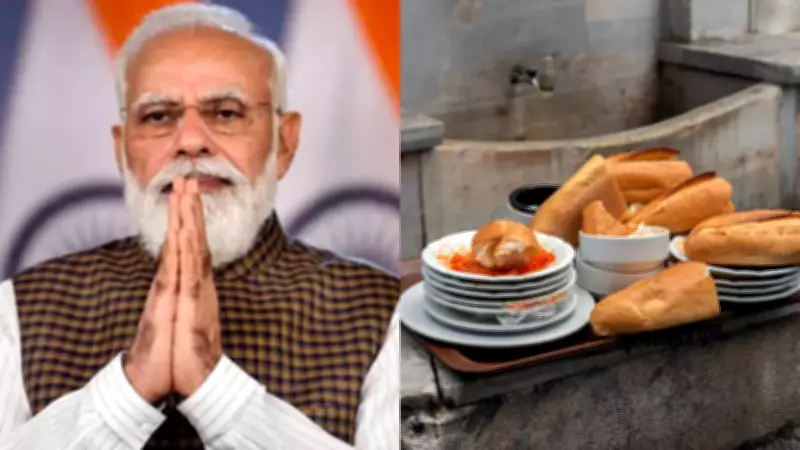
Food is one of the basic fundamental rights of human beings. But when this fundamental right becomes a wastage, it becomes an alarming sign for the nation. The amount of food wasted in Indian households every year could feed almost 377 million people, states the World Resources Institute. With an average of 55 kg of food waste generated per capita annually by households, as estimated by the Food Waste Index Report 2024, the total food waste generated in India amounts to a staggering 78.2 million tonnes. At present, this has become a serious issue and needs due attention. According to reports, Prime Minister Narendra Modi has been highlighting this issue since 2017.
What Did PM Modi Say?
In 2017, while addressing the nation in the 30th episode of his Mann Ki Baat programme, PM Modi expressed his concern over food wastage and called on the nation to fight against this menace. He said, "Since I have started doing this programme, many people have expressed concerns to me about food wastage. We take more than required on our plate, which we are not able to finish even." Expressing concern over the issue, he asked, "Have we ever thought about how much food we waste? Ever pondered if we don't waste food, we can feed the poor?" "Even our mothers teach us to take only that much what we can eat. We should understand that ignoring the issue of food wastage is anti-social and an injustice to the poor," he added. Prime Minister Modi further asserted that cutting down on food wastage will also lead to personal savings. "I feel that awareness on this issue should increase. I know a few young men who are working in this direction as they have developed a mobile app with which they arrange collection of leftovers. You will find such people all over India. Their work can inspire us not to waste food."
What Do the Statistics Say?
According to a study published by PMC, titled 'Food waste in Indian households: status and potential solutions,' a report by the Food and Agriculture Organization (FAO) states that India had the highest number of undernourished people in the world in 2020. According to the Food Waste Index Report 2021 by the United Nations Environment Programme (UNEP) and The Waste and Resources Action Programme (WRAP), 931 million tonnes of food waste was produced in 2019, with households accounting for 61%, food services for 26%, and retail for 13%. The report estimated that Indian households generate 50 kg of food waste per capita per year, resulting in a total of 68,760,163 tonnes annually.

Reasons for Wastage
According to the same study, reasons for food waste include miscalculations in meal preparation, a lack of appreciation for food, and a weakening of traditional Indian value systems. The study also identified two potential solutions for controlling or eliminating food waste: exploring alternative methods of food consumption and enhancing the family culture surrounding food.

What Does the Ministry Say?
According to government data from the Ministry of Consumer Affairs, Food and Public Distribution, Department of Consumer Affairs, when the question on food wastage was raised in Lok Sabha in 2025, it was stated that the United Nations Environment Programme has indicated in the Food Waste Index Report that 68.7 million tonnes of food is wasted annually in Indian homes, ranking India second worldwide in terms of household food wastage. The ministry replied, "As per UNEP Food Waste Index Report 2024, the estimated food wastage in India in 2022 is 55 kg/capita/year, which is significantly lower than the global average of 79 kg/capita/year." Regarding measures, it was mentioned that FSSAI has taken proactive steps to reduce food wastage, accelerating the 'Save Food Share Food' initiative to promote surplus food donation and prevent food waste in the food industry, including food caterers. To combat the problem of minimal outreach of surplus food distribution agencies, a pan-India network of surplus food distribution agencies has been created as the Indian Food Sharing Alliance (IFSA). Eighty-two agencies have been registered under IFSA, reaching out to over 90 cities. There is a dedicated website for Share Food that provides a city-wise list of IFSA members and information on prevention of food waste. FSSAI also actively promotes initiatives at various platforms to sensitize citizens and food businesses, including caterers, about the prevention of food waste and donation of surplus food.
3 Tips to Reduce Food Wastage at Home
1. Planning and Shopping
Before shopping, keep a running list of meals and their ingredients that your household already enjoys. That way, you can easily choose, shop for, and prepare meals that you are likely to consume. Also, look in your refrigerator, freezer, and pantry first to avoid buying food you already have. Make a list each week of what needs to be used up and plan upcoming meals around it.
2. Cooking and Preparation Tips
Leftovers should not be thrown away but rather repurposed. Repurpose ingredients in soups, casseroles, stir-fries, frittatas, sauces, baked goods, pancakes, or smoothies. You will avoid wasting these items and may even create new favorite dishes. If safe and healthy, use the edible parts of food that you normally do not eat. For example, stale bread can be used to make French toast or croutons, beet greens can be sauteed for a delicious side dish, and vegetable scraps can be used for soup stock.
3. Storage Tips
Properly store fruits and vegetables for maximum freshness; they will taste better and last longer, helping you to eat more of them before they go bad. Most fruits, as well as vegetables that tend to rot (such as mushrooms and peppers), should go in the low-humidity drawer of the fridge.