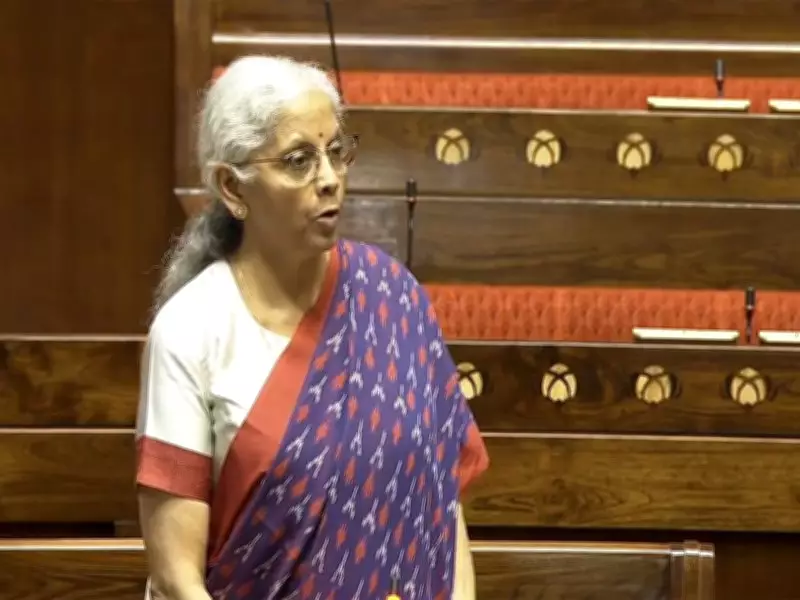
Government Allocates Rs 57,381 Crore to Economic Stabilisation Fund, Sitharaman Announces
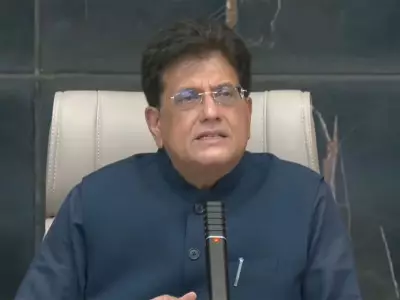
Union Finance Minister Nirmala Sitharaman, while replying to the debate on the Appropriation Bill, 2026 in the Rajya Sabha on Tuesday, revealed that the government has allocated Rs 57,381.84 crore toward the Economic Stabilisation Fund. This move is part of a comprehensive strategy for budget disbursement and fiscal management aimed at addressing immediate financial needs and long-term economic goals.
Defence and Health Allocations Highlighted
Sitharaman detailed that approximately Rs 41,430 crore is designated for defence services. She explained that these funds are primarily directed toward spectrum charges and the ex-servicemen contributory health scheme. "We are paying the spectrum charges which in any way will come back to the CFI and also for the ex-servicemen contributory health scheme, for which we are giving Rs 6,140 crores, which will benefit the ex-servicemen in their health requirements," she stated.
Fertiliser Subsidies for Rabi Crop Preparedness
The Finance Minister also highlighted a significant allocation of Rs 19,230 crore for fertiliser subsidies. She clarified that this expenditure is intended to meet additional requirements and unforeseen contingencies, particularly for importing fertiliser for the Rabi crop. "I want to draw the attention of the House to the fact that this is only to meet additional requirements under the circumstances. This is for meeting any exigencies that may arise, Rs 19,230 crores, particularly for getting ready for importing fertiliser for the Rabi crop," Sitharaman explained.

LPG Production Boost and Self-Reliance Initiatives
In the LPG sector, Sitharaman noted that despite global turbulent times, domestic LPG production has increased by 25%, with the entire output directed to domestic consumers. She emphasized that while nearly 65% of India's LPG is imported, with 90% of that coming from the Strait of Hormuz, the government is taking proactive steps to avoid shortages. "But we are not just depending on getting the steady flow even in troubled waters," she stated, highlighting a shift toward self-reliance.
On March 8, 2026, the government directed refineries and petrochemical complexes to maximize LPG production by diverting propane, butane, and propylene streams to the LPG pool. Sitharaman linked these developments to the broader 'Atmanirbhar Bharat' initiative, noting that the ability to ramp up domestic LPG production by 25% overnight is the outcome of a deliberate, decade-long energy transition strategy launched by Prime Minister Narendra Modi in 2014.
She stressed that "nothing is a standalone" and that "everything in this policy seems to come together in the name of Atmanirbhar" to effectively meet emergency situations and enhance national resilience.