

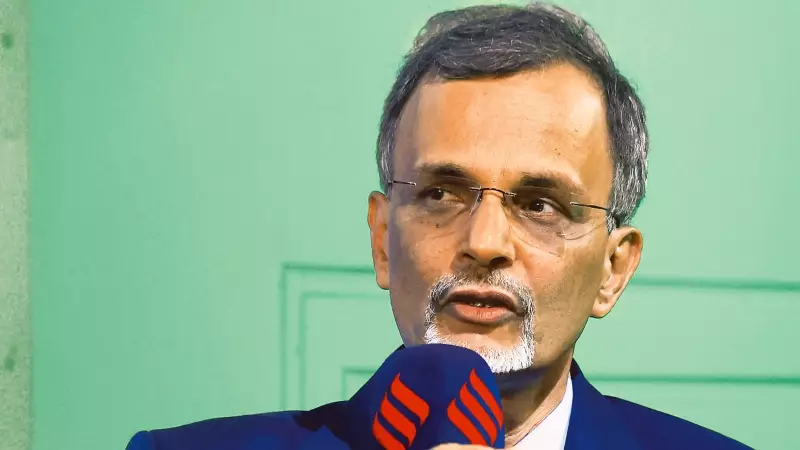
The Indian rupee crossed a significant psychological threshold on Wednesday, sliding past the 90-per-dollar mark for the first time ever. Despite the currency hitting fresh record lows, the government's top economist, Chief Economic Advisor V Anantha Nageswaran, has expressed a stance of calm assurance, stating he is "not losing sleep" over the decline.
Calm Amidst the Currency Storm
Speaking on the sidelines of the Confederation of Indian Industry's India Edge summit, CEA Nageswaran addressed the rupee's sharp fall with notable composure. "I am not losing sleep over it," he told reporters. He projected confidence in a turnaround, adding, "It (rupee) will come back next year. Right now, it is not impacting inflation or exports." His comments align with the Finance Ministry's recent Monthly Economic Review, which noted the rupee's fall has been gradual and in line with broader emerging market trends.
Understanding the Rupee's Slide
The rupee's breach of the 90 level comes after it flirted with the mark on Tuesday. The currency has been under sustained pressure throughout the calendar year, depreciating by over 5 per cent against the US dollar and earning the tag of the worst-performing currency in Asia so far in 2025.

Several interconnected factors are driving this depreciation:
1. Trade Agreement Delay and Export Impact: A primary reason is the continued delay in concluding a free trade agreement with the United States. Since late August, Indian goods entering the US have faced a cumulative tariff of 50 per cent, severely denting export competitiveness. This is reflected in the latest trade data, which shows India's exports fell by 12 per cent year-on-year in October, while the merchandise trade deficit widened to a record $41.7 billion.
2. Reduced RBI Intervention: The Reserve Bank of India (RBI) appears to have adopted a less aggressive stance in defending the rupee. After selling nearly $400 billion of foreign currency on a gross basis in FY25 to support the exchange rate, the central bank's intervention has scaled back significantly. In the first half of the current fiscal year (FY26), it has sold only $44 billion.
3. Foreign Investor Exodus: Capital flows have also turned unfavourable. Foreign portfolio investors have been net sellers in Indian equity markets, with outflows in 2025 totalling close to $17 billion. This marks a stark reversal from the $21 billion of inflows in 2023, which slowed to a trickle of just $124 million in 2024.
Outlook and Implications
The CEA's relaxed posture hinges on the assessment that the current depreciation is not stoking inflationary pressures or significantly hampering export volumes in the immediate term. The government's view suggests a tolerance for currency flexibility to absorb global shocks, rather than deploying extensive foreign reserves to rigidly maintain a specific level.
However, the rupee's weakness, if it persists or deepens, could eventually translate into higher costs for imports like crude oil and electronics, potentially feeding into broader inflation. The focus now shifts to whether the anticipated recovery in 2025 materialises, driven by potential improvements in global risk sentiment, a resolution of trade tensions, or a shift in monetary policy cycles by major central banks.
For now, the official message from the top economic advisor is one of measured patience, betting on the economy's fundamentals to guide the currency back to firmer ground in the coming year.






