

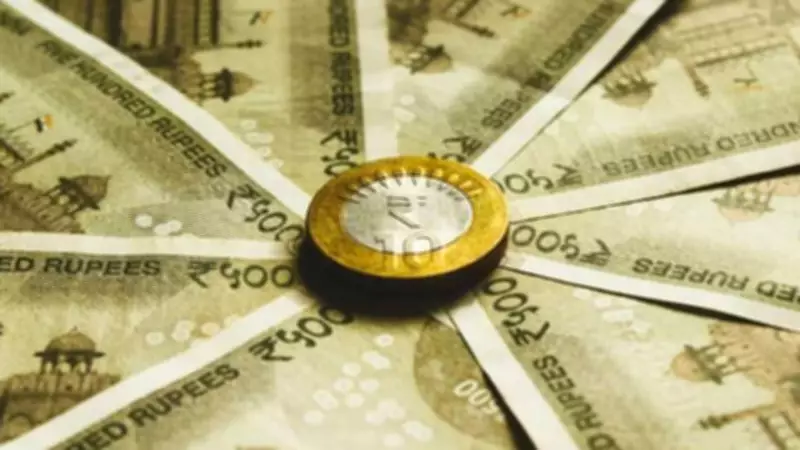
Rupee Stages Historic Rally on India-US Trade Agreement
The Indian rupee experienced a significant surge on Tuesday, appreciating by 124 paise to settle at 90.27 against the US dollar. This marks a substantial improvement from the previous close of 91.51, representing a gain of 1.36 percent. This rally stands as the currency's best single-day performance since December 2018, driven primarily by positive market sentiment following the announcement of a bilateral trade deal between India and the United States.
Trade Deal Details and Market Impact
The breakthrough came after US President Donald Trump announced the agreement, which includes a reduction of reciprocal tariffs on Indian goods to 18 percent from the previous 50 percent. This development has effectively alleviated months of geopolitical uncertainty that had been weighing heavily on the rupee's performance.
Dilip Parmar, Research Analyst at HDFC Securities, commented: "The Indian rupee staged a historic rally today, securing its highest single-day gains since December 18, 2018. This surge comes on the heels of a long-anticipated US-India trade agreement, a breakthrough that has effectively dissipated the fog of geopolitical uncertainty that weighed on the currency for months."

The agreement has significantly improved market sentiment, with expectations of stronger trade flows and potential inflows from foreign investors boosting confidence in the domestic currency. This marks a reversal from the situation in August last year, when President Trump increased tariffs on Indian goods to 50 percent, comprising 25 percent reciprocal tariffs and an additional 25 percent linked to India's purchase of Russian oil.
Background: Rupee's Recent Weakness
The rupee had remained weak for the majority of 2025 due to several factors:
- Concerns over higher reciprocal tariffs imposed by the US
- Continued outflows from foreign portfolio investors (FPIs)
- Delays in finalizing the India-US trade deal
As a result, the local currency depreciated by approximately 5 percent throughout 2025. In 2026 so far, FPIs have offloaded Rs 34,056 crore worth of domestic shares on a net basis, adding to the Rs 1.66 lakh crore sold in 2025.
Expert Analysis and Future Outlook
Anindya Banerjee, Head of Currency and Commodity Research at Kotak Securities, noted: "The Indian rupee has remained relatively weak versus Asian peers, reflecting its use as a policy buffer during recent trade tensions with the US. With inflation contained, currency weakness could be tolerated without significant imported inflation, leaving the rupee trading at a valuation discount driven largely by risk perception. The recent trade agreement and tariff reduction to 18 percent open the door for modest appreciation, but the pace and extent will depend on RBI intervention thresholds, given the priority of maintaining export competitiveness."
Jateen Trivedi, VP Research Analyst for Commodity and Currency at LKP Securities, provided technical analysis: "The immediate resistance for the rupee is seen around 89.90, while 90.50 now acts as an important base support. As long as the rupee sustains above the 90.50 zone, overall bias remains positive, with appreciation likely to continue if global risk sentiment remains stable and capital inflows strengthen."
HDFC Bank's economists expect the rupee to trade in a range of 89-91.50 over the quarter, supported by the positive trade deal announcement and improvement in seasonal capital inflows. For FY27, they estimate a range of 90-92 for the USD/INR pair, factoring in a moderate pace of depreciation.
The trade deal breakthrough represents a significant turning point for the Indian currency, which had been under pressure for an extended period. Market participants will be closely monitoring how this development translates into actual trade flows and foreign investment patterns in the coming months.






