

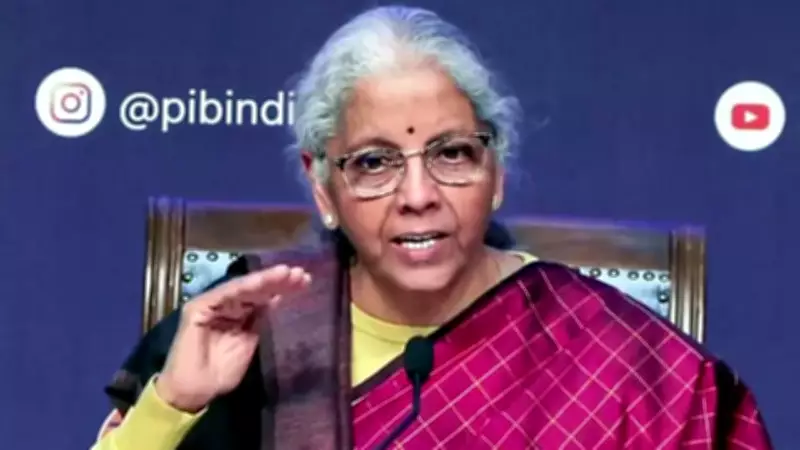
NEW DELHI: Union Finance Minister Nirmala Sitharaman on Sunday delivered a comprehensive presentation of the Union Budget 2026-27, lasting 1 hour and 25 minutes, marking her record ninth consecutive budget. The budget included several significant announcements spanning income tax, defence, railways, MSMEs, healthcare, and other key sectors.
Prime Minister Modi Hails Budget as Historic
Shortly after the presentation in the Lok Sabha, Prime Minister Narendra Modi described the budget as "historic" and a "high flight toward Viksit Bharat" by 2047, underscoring its importance in India's development trajectory.
Top 10 Announcements from Union Budget 2026
Defence Allocation
The Union Budget 2026 has allocated Rs 7.85 lakh crore to the Defence Ministry, an increase from Rs 6.81 lakh crore in the previous year. Out of this total, Rs 2.19 lakh crore is earmarked for modernising the armed forces, including Rs 63,733 crore for aircraft and engines and Rs 25,023 crore for the Navy. The remaining Rs 5.54 lakh crore will cover running expenses, with Rs 1.71 lakh crore allocated for pensions.

Railways Infrastructure
Finance Minister Sitharaman proposed seven high-speed rail corridors connecting major cities: Mumbai-Pune, Pune-Hyderabad, Hyderabad-Bengaluru, Hyderabad-Chennai, Chennai-Bengaluru, Delhi-Varanasi, and Varanasi-Siliguri. These corridors aim to promote an environmentally sustainable passenger system. The Railways has been allocated a robust capital expenditure of Rs 2,93,030 crore to boost infrastructure-driven growth and fast-track the vision of Viksit Bharat. Additionally, a new dedicated freight corridor linking Dankuni in West Bengal to Surat in Gujarat was announced to ensure efficient and eco-friendly movement of goods across the country.
Income Tax Reforms
Sitharaman announced that the Income Tax Act, 2025 will come into effect from April 1, replacing the six-decade-old tax law. The new law simplifies rules and forms, making compliance easier for taxpayers, and is revenue neutral with no change in tax rates. It reduces sections by about 50%, removes ambiguities, replaces the assessment year with a single "tax year," and allows TDS refunds even if ITRs are filed late without penalties.
Rare-earth Development
The Budget proposed supporting mineral-rich states like Odisha, Kerala, Andhra Pradesh, and Tamil Nadu in setting up dedicated rare earth corridors. This initiative builds on the ‘Scheme to Promote Manufacturing of Sintered Rare Earth Permanent Magnets’ launched in November 2025, which has a financial outlay of Rs 7,280 crore. The scheme aims to create 6,000 metric tonnes per year of integrated REPM manufacturing capacity in India, covering the complete production chain from rare-earth oxides to finished magnets.
Healthcare Boost
The Union health ministry has been allocated Rs 1,06,530.42 crore in Budget 2026-27, a 10% increase from last year, according to news agency PTI. FM Sitharaman announced a scheme to set up five regional medical hubs with private-sector support to boost medical tourism. Existing allied healthcare institutions will be upgraded, and new ones established, training 1 lakh professionals across 10 disciplines over the next five years. A Rs 10,000 crore investment is proposed over the next five years to make India a biopharma manufacturing hub, establish 1,000 clinical trial sites, and strengthen the Central Drugs Standard Control Organisation.
MSME Support
The minister proposed a three-pronged strategy to boost MSMEs, including a dedicated Rs 10,000 crore fund to help them grow as 'Champions'. In her Budget speech, she said the Modi government’s reforms aim to create jobs, increase productivity, and accelerate growth. She outlined “three kartavyas”: accelerate and sustain economic growth, fulfil aspirations and build capacity, and Sabka Sath, Sabka Vikas. Under the first, she highlighted six interventions, including support for Champion MSMEs.

Education Initiatives
The budget also included a boost to education with a National Institute of Design in eastern India, five university townships near industrial corridors, and a girls’ hostel in every district for STEM students. Four telescope facilities for astrophysics research will be set up, and a high-powered 'Education to Employment and Enterprise Committee' will align skills with jobs and emerging technologies like AI. Under 'Orange Economy', FM also proposed content creator labs in schools and colleges to create 'future-ready jobs'.
Banking Sector Review
A "High Level Committee on Banking for Viksit Bharat" was proposed to review the sector and align it with India’s next phase of growth. She said the committee will focus on financial stability, inclusion, and consumer protection. Highlighting the strength of India’s banking sector, she noted strong balance sheets, record profitability, improved asset quality, and coverage of over 98 per cent of villages.
Agriculture Reform
The Budget outlined a major reform for the agriculture sector, with the FM announcing the launch of 'Bharat Vistar', a multilingual AI tool set to integrate AgriStack portals and ICAR's agricultural practices with advanced AI systems. This initiative aims to transform how farmers access resources and make decisions.
Khelo India Mission
Under Budget 2026-27, the finance minister unveiled the Khelo India Mission to revamp the sports sector over the next decade, focusing on talent identification, coach training, sports science, and modern infrastructure development.
This budget presentation by Nirmala Sitharaman not only sets a new record but also lays a comprehensive foundation for India's growth across multiple sectors, aligning with the vision of Viksit Bharat by 2047.





