

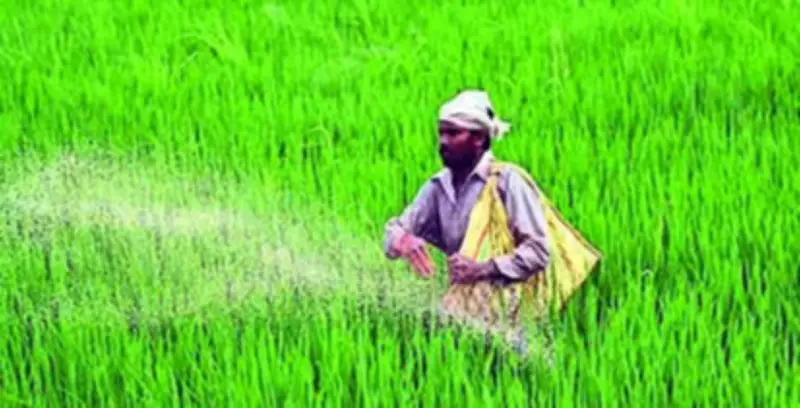
Hyderabad: Farmers in Telangana have poured an astonishing Rs 30,000 crore of their own money into digging nearly 1.5 million borewells between 2014 and 2024, expanding irrigation and almost doubling cultivated area across districts.
A new report from Professor Jayashankar Telangana Agriculture University, released on its foundation day on Friday, warns that this irrigation boom has come at a cost: paddy now dominates 83% of cropped land, raising alarms over groundwater depletion and long-term ecological balance.
The report, titled 'Telangana Agriculture Towards 2047–Challenges and Policy Directions', authored by vice-chancellor Aldas Janaiah and agricultural economist Samarendu Mohanty, highlights how borewell irrigation has intensified farming but entrenched a water-hungry, mono-cropping system centered on rice.

“While the extent of cultivation has increased, the more important factor is that the yield per acre has not improved. This situation is referred to as horizontal expansion. What we need is vertical expansion, which would allow us to divert many acres for other crops while still maintaining the required level of rice output,” said Janaiah.
Key Challenges
The document flags five pressing issues: overconcentration in rice cultivation, groundwater stress across districts, low and unstable farm incomes due to mono-cropping and high input costs, weak value addition and limited market integration, and technology and institutional gaps.
To counter these risks, the report suggests crop diversification into pulses, oilseeds, millets, fruits, and vegetables with incentive-based support. It also proposes water-efficient practices like micro irrigation, precision nutrient management, crop rotation, and climate-resilient systems.
Technology and Financial Resilience
It emphasizes technology adoption through AI-enabled advisories, satellite crop monitoring, and digital market intelligence, while stressing on financial resilience via expanded crop insurance, sustainability-linked credit, and stronger farmer producer organizations.
The document also lays stress on rural enterprise development, women-led initiatives, youth skill building, and strengthened extension systems like Rythu Vignana Kendras.
Empowering Women
Beyond irrigation and crop patterns, the report underscores the social dimension of sustainability. It calls for empowering rural women through agri-enterprises, equipping youth with digital and climate-smart skills, and strengthening farmer producer organizations to ensure collective bargaining power.
By linking technology, finance, and community participation, the vision is to build a resilient agricultural ecosystem that can withstand shocks and thrive beyond 2047, the document says.






