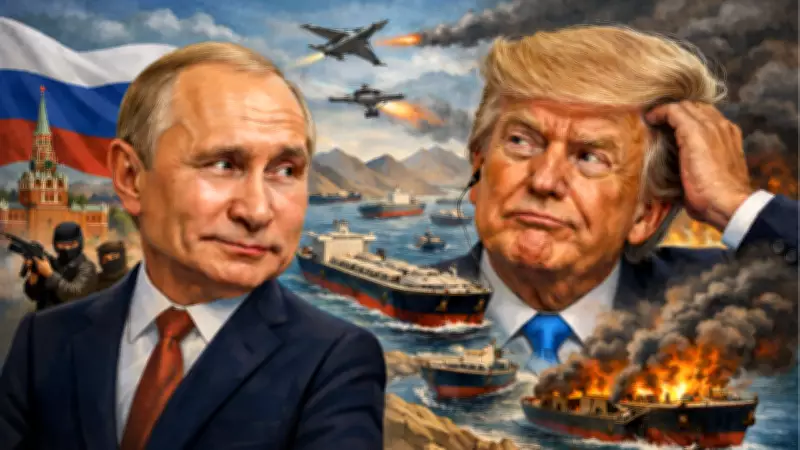
US Facilitates Russian Oil Sale Amid Iran-Israel War, Oil Prices Surge Past $100
The ongoing conflict between the United States, Israel, and Iran has entered its third week, with the global oil market emerging as one of the most significant casualties. Missile strikes across the Gulf region and drone attacks targeting energy infrastructure have sharply driven up crude prices, compelling Washington to undertake a geopolitical pivot that seemed improbable just months ago: facilitating the sale of Russian crude oil.
Iran War Chokes Global Oil Supply
The hostilities have severely disrupted energy flows from the Middle East, an area responsible for approximately one-third of global oil production. Iranian missile strikes and counter-operations by US and Israeli forces have unsettled shipping routes, sparking fears of a total blockade of critical Gulf infrastructure. Insurance costs for tankers have skyrocketed, ports have suspended operations, and major shipping companies are rerouting vessels away from the combat zone. According to the International Energy Agency (IEA), this situation represents the biggest oil supply disruption in history.
Oil Prices Surge Above $100
The economic impact was immediate and severe. Brent crude has surged past the $100-per-barrel mark, a level not observed for several months, and is now roughly 35% higher than pre-war levels. Markets are reacting not only to the direct conflict but also to the escalating risk that key transport routes in the Gulf could be compromised. This mounting pressure has forced the United States to urgently seek methods to inject additional supply into the global market.

In a defiant statement posted on Thursday, US President Donald Trump emphasized America's position as the world's largest oil producer, noting that rising prices generate substantial revenue. However, he underscored a greater priority: stopping an evil Empire, Iran, from having Nuclear Weapons, and destroying the Middle East and, indeed, the World.
The 'Stranded' Russian Solution
One immediate consequence of the Iran war has been the sudden availability of large volumes of Russian oil. While Middle Eastern supplies are obstructed, significant quantities of Russian crude remain idle. In an unexpected move, President Trump has opened the door for stranded Russian oil to reach global markets through a temporary 30-day waiver, while simultaneously preparing a massive release from America's Strategic Petroleum Reserve (SPR).
According to ship-tracking data compiled by Bloomberg, approximately 30 tankers carrying Russian crude and fuel are currently in Asian waters, holding cargo that can now be sold following the US waiver. These vessels contain at least 19 million barrels of crude and about 310,000 tonnes of refined products, including naphtha for plastics manufacturing and diesel—fuels that have experienced price surges since Iran effectively disrupted shipping through the Strait of Hormuz.
The waiver coincides with hundreds of vessels carrying crude and refined products like diesel and jet fuel being stuck near the Strait of Hormuz, unable to move freely due to the escalating conflict. Russia responded swiftly to Washington's decision. Kirill Dmitriev, head of the Russian Direct Investment Fund, stated that this move implicitly recognizes Moscow's role in stabilizing global energy markets, asserting that without Russian oil, the global energy market cannot remain stable.
Trump's Past Stance on Russian Oil
This policy marks a complete reversal from Trump's previous position. In July 2025, he announced a 25% punitive tariff on India, specifically citing its purchase of Russian crude as enabling Moscow's war in Ukraine. By January 2026, pressure intensified when Trump endorsed the Sanctioning Russia Act, a bill proposing 500% tariffs on nations continuing to bankroll Russia's war efforts. However, as the Iran conflict pushed oil prices beyond $100, earlier rhetoric about Russia's war machine has shifted toward the language of market stability.

Speaking aboard Air Force One this week, Trump defended the decision to allow Russian oil to flow again, suggesting it would alleviate pressure. White House Press Secretary Karoline Leavitt indicated that the move also reflects Washington's view that India has been cooperative on sanctions enforcement, describing India as good actors who had previously halted purchases of sanctioned Russian oil.
US Ambassador to India Sergio Gor highlighted the broader energy risks posed by the Gulf conflict, noting that Iran is attempting to blockade the Strait of Hormuz and recklessly targeting commercial vessels, including those with Indian casualties. He emphasized India's role as a vital partner in ensuring global price stability.
Strategic Reserves and Strait of Hormuz Fears
Washington is also preparing to flood the market with 172 million barrels from the Strategic Petroleum Reserve. Combined with the Russian waiver, the objective is to establish a supply buffer before conditions in the Strait of Hormuz deteriorate further. One of the primary concerns driving this policy shift is the risk of disruption in the Strait of Hormuz, a narrow waterway through which nearly one-fifth of the world's oil supply passes.
Iran has repeatedly warned that if the war intensifies, it could take action in the strait. Iran's new Supreme Leader, Mojtaba Khamenei, indicated that blocking the waterway remains a strategic pressure tool, stating that the leverage of blocking the Strait of Hormuz must certainly continue to be used. He added that Iran has identified additional locations to open new fronts if the conflict persists. However, Iran's UN Ambassador, Amir Saeid Iravani, later clarified that Tehran has no intention of closing the strait while emphasizing Iran's right to protect security in the waterway.
Even the mere possibility of disruption has been sufficient to push oil prices higher and unsettle global markets. For now, the 30-day waiver serves as an emergency Band-Aid. Energy markets are closely monitoring whether this injection of Russian crude can cool prices or if further escalation in the Middle East will overwhelm Washington's efforts. What remains clear is that the Iran war has compelled the United States into an uncomfortable alliance with market reality, prioritizing lower gas prices over the complete isolation of Moscow.