

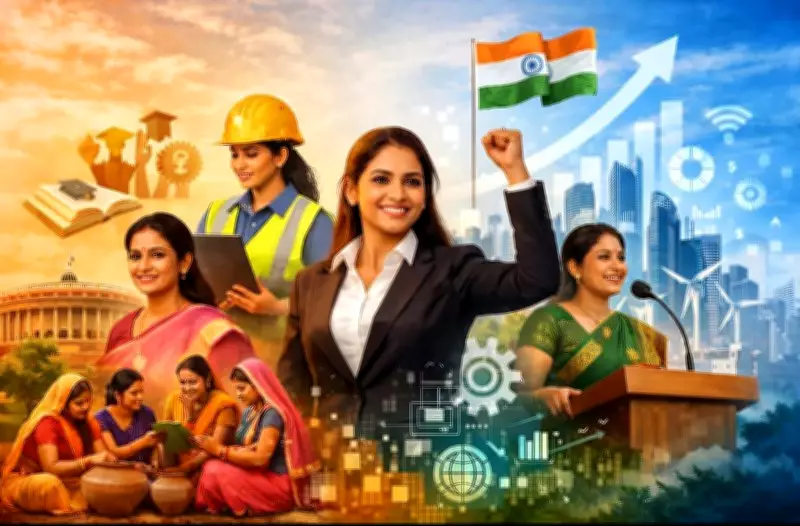
Women-Led Development Emerges as India's Most Powerful Economic Engine
Empowering women has transcended its traditional role as merely a social objective in India. It has now been firmly established as the fundamental catalyst for achieving inclusive economic growth, enhancing governance structures, and building a more resilient national economy. This strategic shift represents a profound evolution in the country's development paradigm.
The Evolution of Women's Empowerment Discourse
Each year, International Women's Day serves as a significant moment to refocus attention on gender equality and women's advancement. In the Indian context, the conversation surrounding women's empowerment has undergone substantial transformation over recent decades. Historically, government policies and initiatives largely positioned women as passive recipients of welfare-oriented programs.
These earlier approaches concentrated primarily on essential areas such as maternal health services, nutritional support for women and children, and basic educational access. While these foundational efforts addressed critical needs, they often operated within a framework that viewed women's development as separate from mainstream economic progress.

From Beneficiaries to Economic Drivers
The contemporary perspective marks a decisive departure from this traditional model. Today, women are increasingly recognized as active agents of economic change and powerful contributors to national development. This recognition is grounded in substantial evidence demonstrating how women's participation strengthens multiple sectors simultaneously.
Economic research consistently shows that economies with higher female labor force participation experience more sustainable growth patterns. When women enter the workforce, they tend to reinvest a significantly higher proportion of their earnings into their families' education, health, and nutrition compared to their male counterparts. This creates a virtuous cycle of human capital development that benefits entire communities.
The Multiplier Effect of Women's Leadership
The impact extends far beyond direct economic contributions. Women's increased participation in governance and decision-making roles has been linked to more responsive and transparent administration. Studies indicate that local governments with greater female representation often prioritize different issues, including water access, sanitation, and child welfare, leading to more comprehensive community development.
Furthermore, businesses with diverse leadership teams that include women consistently demonstrate stronger financial performance and greater innovation capacity. This diversity of perspective helps organizations better understand and serve broader market segments, creating competitive advantages in an increasingly globalized economy.
Building a Resilient Economic Foundation
The resilience aspect of women-led development deserves particular emphasis. Economies that successfully integrate women across all sectors demonstrate greater stability during economic downturns and faster recovery periods. This resilience stems from several factors:
- Diversification of income sources within households
- Enhanced risk management through broader skill sets
- Stronger social networks that provide support during crises
- More balanced consumption patterns that sustain demand
As India continues its development journey, the strategic focus on women as central economic actors rather than peripheral beneficiaries represents one of the most significant policy evolutions of recent years. This approach recognizes that true national progress cannot be achieved while leaving half the population underutilized. The evidence increasingly confirms that investing in women's economic empowerment yields returns that extend across every sector of society, creating a foundation for sustainable, inclusive growth that benefits all citizens.






