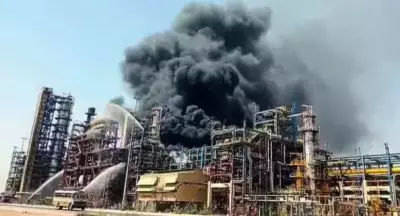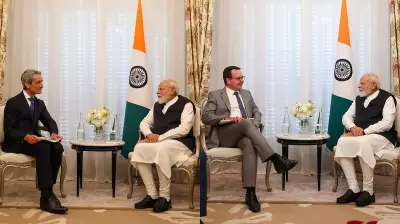
The global energy landscape has shifted permanently, and a return to pre-crisis conditions is unlikely, according to Jim Burkhard, Vice President and Head of Research for Oil Markets, Energy and Mobility at S&P Global Energy. In a briefing on the sidelines of the S&P Global Energy New Delhi Energy Briefing, Burkhard stated that countries are actively responding to recent disruptions by reassessing energy security strategies, diversifying supplies, and making new investment decisions.
Long-Term Impact on Energy Policy and Investment
Burkhard emphasized that the crisis will have lasting reverberations. "Well, the world's changed, and I don't think we'll get back to a pre-war situation because, one, the countries are going to react to this crisis. You're not simply going to go back to, OK, it's over. We're going to go back to how everything was," he told ANI. He noted that nations are exploring options such as expanding pipeline capacity in the Middle East to bypass the Strait of Hormuz, diversifying supply sources, increasing domestic oil and gas production, and adopting more electricity in transportation.
"So we're not going to go back to the way things were. The world never does. It always changes. And this crisis will reverberate in energy policy and investment decisions around the world, particularly in Asia, for a long time to come," Burkhard added.

Asia-Centered Crisis Affects Consumers Widely
Burkhard described the disruption as largely an Asia-centered crisis, impacting economies across South Asia, Southeast Asia, and Northeast Asia. He pointed out that countries like Japan, South Korea, and China utilized their strategic inventories to cushion the blow. However, the effects were felt by ordinary consumers. "But I think if you're a consumer, if you're a taxi driver in Jakarta, a farmer in Thailand, trying to secure LPG to cook for your family in India, yeah, you may have felt it in some way, shape or form. It hasn't been as bad as one would have anticipated. But I think the impact was there," he said.
Crude Oil Market Adjusts Better Than Expected
Regarding global crude oil prices, Burkhard noted that the market adjusted more effectively than anticipated, despite supply disruption fears. "The short answer is the world was able to adjust at a much lower price than anticipated," he said. Key factors included a significant decline in crude oil import demand from East Asia—particularly China, Japan, and South Korea—ample oil inventories before the crisis, and higher exports from the United States. These elements helped stabilize markets.
However, Burkhard warned of potential moderate upward pressure on oil prices in the coming months as companies replenish sharply depleted inventories. "We've had inventories fall at a record pace over the last two and a half months. So how comfortable will companies be with inventories at lower levels? We're going to find out. If they're not comfortable, they're going to be buying more oil, which could put some moderately upward pressure on prices over the coming months," he said.
India's Growing Role in Global Energy Demand
On India's energy outlook, Burkhard highlighted that the country remains a leading source of global energy demand growth and is emerging as the top contributor to oil demand growth worldwide. "India is a leading source of energy demand growth, and it's becoming the leading source of oil demand growth among any country in the world. Large market, dynamic market, it's growing," he said. He stressed that India would require multiple energy sources to meet its rising demand, advocating for an "all of the above" strategy encompassing biofuels, traditional oil and gas, and other solutions. "There's not a single solution. It's probably a number of different solutions that can come together to satisfy the growing energy demand in India," Burkhard added.
Oil Price Outlook and Geopolitical Factors
Burkhard provided an oil price outlook, stating that prices will continue to fluctuate based on market conditions and geopolitical developments, including those involving Iran and the United States. "Our centre of gravity for oil prices is around USD 75. And we'll have prices above it and below it. You know, there's no fixed spot. We never reach an end in oil prices. Like, oh, here we are. This is the oil price forever. No, we'll never have that," he concluded.