

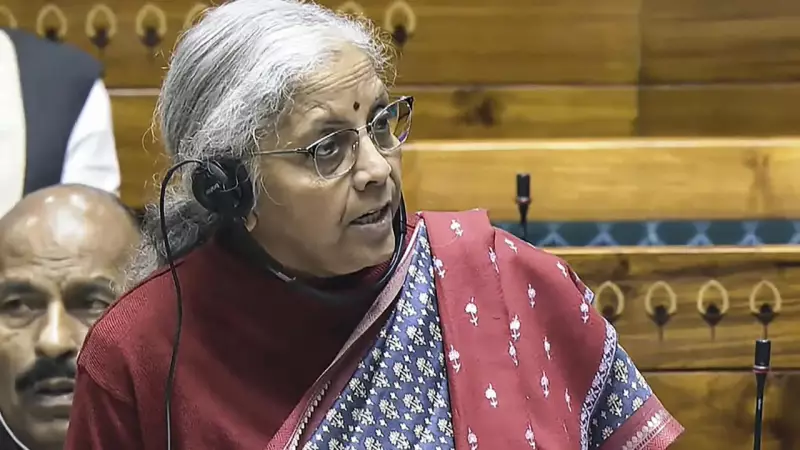
In a decisive move to prevent a potential drop in prices of so-called sin goods, Finance Minister Nirmala Sitharaman on Monday introduced two significant bills in the Lok Sabha. The proposed legislation aims to empower the government to levy new taxes on tobacco products and pan masala, ensuring these items remain heavily taxed even after the existing GST compensation cess is withdrawn.
New Tax Framework for Tobacco and Pan Masala
The first bill, the Central Excise (Amendment) Bill, seeks to replace the current compensation cess on tobacco with a new central excise duty. This duty will apply to a wide range of products including cigarettes, cigars, chewing tobacco, hookahs, zarda, and scented tobacco. The second bill proposes a dedicated health and national security cess specifically on pan masala.
Under the new excise structure for tobacco, the government will have the authority to impose duties based on quantity. For cigars and cigarettes, the levy could range from Rs 5,000 to Rs 11,000 per 1,000 sticks, depending on their length. Furthermore, the bill proposes a hefty tax of 60-70% on unmanufactured tobacco and a staggering 100% on nicotine and inhalation products. It is crucial to note that these charges will be in addition to the standard 40% GST rate already applicable to these goods.

Revenue Allocation and Opposition
The revenue generated from these new levies will follow distinct paths. The money collected from the excise duty on tobacco will become part of the divisible pool of tax revenues, which is shared between the central and state governments. In contrast, the proceeds from the health and national security cess on pan masala will be earmarked for funding public health initiatives and national security needs.
The introduction of the bills was met with some opposition in the House. TMC member Saugata Ray objected, arguing that while tobacco is harmful, the Central Excise (Amendment) Bill itself does not explicitly mention its health hazards. Despite this, government officials indicated the bills could be taken up for debate soon.
Background and Rationale
This legislative action comes ahead of the scheduled phase-out of the GST compensation cess, which is due to end by March 2026. Currently, tobacco and pan masala attract a 28% GST plus the compensation cess. While the cess collection is expected to meet its target of repaying bonds before the deadline, the government is proactively seeking a mechanism to maintain high taxation on these demerit goods. The move is designed to ensure that prices do not fall post-2026, thereby continuing to discourage consumption through fiscal policy.
The proposed tax structure underscores the government's dual focus: maintaining a stable revenue stream for federal distribution while directly channeling funds from specific harmful products towards health and security, aligning taxation with broader public welfare goals.






