

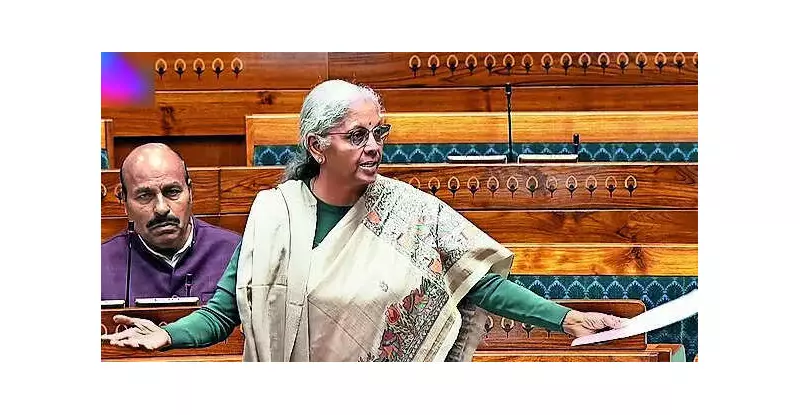
Finance Minister Nirmala Sitharaman provided a crucial clarification in Parliament on Wednesday, stating that the government's proposed levy on tobacco products is an excise duty and not a new cess. Her statement came during the discussion on the Central Excise (Amendment) Bill, which was subsequently passed by the Lok Sabha through a voice vote.
Not a New Tax, But a Continuation of Excise
Addressing the lower house, Sitharaman firmly dismissed the notion that the Centre was imposing an additional tax. "This is not a new law, this is not an additional tax or something that the Centre is taking away," she asserted. She corrected several Members of Parliament who had referred to the levy as a cess, explaining that it is, in fact, an excise duty which existed even before the Goods and Services Tax (GST) regime was implemented.
The minister emphasized that the revenue collected from this duty will be redistributed to the states according to the recommendations of the Finance Commission, ensuring no state receives fewer resources than mandated.

Keeping Cigarettes Unaffordable as a Deterrent
Sitharaman outlined the public health rationale behind the move. She stated that the government is introducing this excise duty to ensure the tax incidence on tobacco does not fall below the levels that existed under GST with the compensation cess. "In a way, we are saying cigarettes should not become affordable now because incidence has become less," she remarked while moving the bill.
She highlighted that before GST, tax rates on tobacco were increased annually to use high prices as a consumption deterrent. Citing a World Health Organization (WHO) observation, she noted that cigarette affordability has either stagnated or increased in India over the past decade, while cess rates have remained unchanged since GST's implementation in 2017.
Clarification on GST Compensation Cess and Proposed Levies
The Finance Minister also addressed allegations regarding the use of GST compensation cess funds. She clarified that the cess was collected for a specific five-year period to be given to states and has concluded. The funds were used, with the GST Council's authority, to repay loans taken for the back-to-back arrangements made to compensate states for revenue shortfalls during the COVID-19 pandemic.
The amended Central Excise Act seeks to empower the Centre to levy excise duty ranging from Rs 2,700 to Rs 11,000 per 1,000 sticks across various cigarette categories. Furthermore, the bill proposes:
- A levy of 60% to 70% on every kilogram of tobacco used for various purposes.
- A 100% levy per kilogram on chewing tobacco.
- A mandate for pan masala packs to display the retail sale price and other mandatory declarations.
The government's move reinforces its dual focus on safeguarding state revenues and upholding public health objectives by maintaining a high tax burden on tobacco products.






