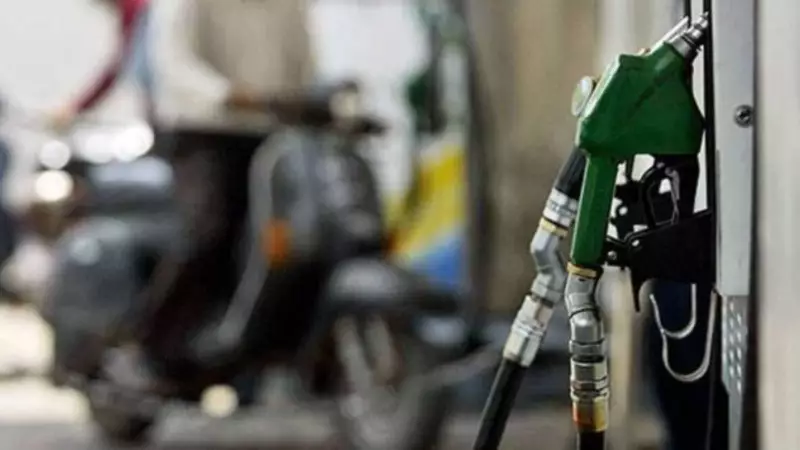
India's ambitious push towards blending 20% ethanol with petrol by 2025-26 marks a significant shift in the nation's energy strategy. While celebrated for cutting import bills and aiding farmers, this transition has created a glaring gap: the public has no clear view of what exactly they are paying for at the fuel pump. The current price breakdown published by authorities still reflects 100% petrol, obscuring the true cost structure of the blended fuel that now powers most vehicles.
The Dual Reality: Blended Fuel vs. Pure Petrol Pricing
From a mere 1.5% in 2013-14, the ethanol blending rate has surged, targeting a landmark 20% in the current fiscal year. This makes India one of the few large economies to achieve such a high biofuel integration. However, the pricing mechanism has not kept pace with this compositional change. The Ministry of Petroleum and Natural Gas and oil marketing companies (OMCs) continue to publish a price build-up for "petrol" that ignores the ethanol component entirely.
For instance, the latest price structure for Delhi lists a base price (ex-depot) of Rs 53.07 per litre, central excise duty of Rs 21.90, dealer commission of Rs 4.40, and State VAT of Rs 15.40, leading to a retail price of Rs 94.77. These figures correspond to pure petrol, not the E20 (20% ethanol) blend that is now the standard across retail outlets. This omission masks critical fiscal and consumer information.

Two Fuels, Two Tax Systems: A Recipe for Opacity
The core of the transparency issue lies in India's partially reformed fuel taxation. Ethanol and petrol are treated as entirely separate products under the tax regime. Ethanol used for blending attracts a 5% Goods and Services Tax (GST), while petrol remains outside the GST net, taxed via central excise and state-level VAT.
This creates a complex fiscal flow. OMCs purchase ethanol, paying GST on it, but cannot claim an input tax credit because the final product—petrol—is not under GST. Consequently, the GST paid on ethanol becomes a non-recoverable cost, making the ethanol component appear more expensive. Official data shows the weighted average procurement cost of ethanol in 2024-25 was Rs 71.32 per litre, compared to the petrol base price of Rs 53.07 per litre.
Furthermore, while ethanol blended into petrol is exempt from central excise duty, the state VAT is applied to the entire blended product, not just the petrol portion. This means ethanol, already taxed under GST, is effectively taxed again under VAT, with no public clarity on the final tax incidence or its impact on the pump price.
Why Clear Price Disclosure for Blended Petrol is Essential
The lack of a transparent price build-up for blended petrol hinders accountability and informed decision-making at multiple levels. As research associate Shifali Goyal points out, with ethanol forming one-fifth of every litre, treating the entire fuel as pure petrol distorts fiscal understanding. It prevents a meaningful evaluation of whether the blending programme genuinely lowers costs for the economy and consumers or simply reshuffles them.
Publishing a detailed breakdown for blended petrol, showing the share, procurement cost, and tax treatment of ethanol alongside petrol, would be a powerful reform. It would enhance fiscal coordination between the Centre and states, allow policymakers to accurately track the economic benefits of blending, and empower consumers. Drivers would finally see how each rupee they spend is divided between petrol, ethanol, taxes, and margins.
Blended petrol is now India's default fuel. It is time its price disclosure reflected its true composition and value. Transparency is not just about numbers; it's about building trust in a national programme that sits at the intersection of energy security, agricultural income, and consumer welfare.