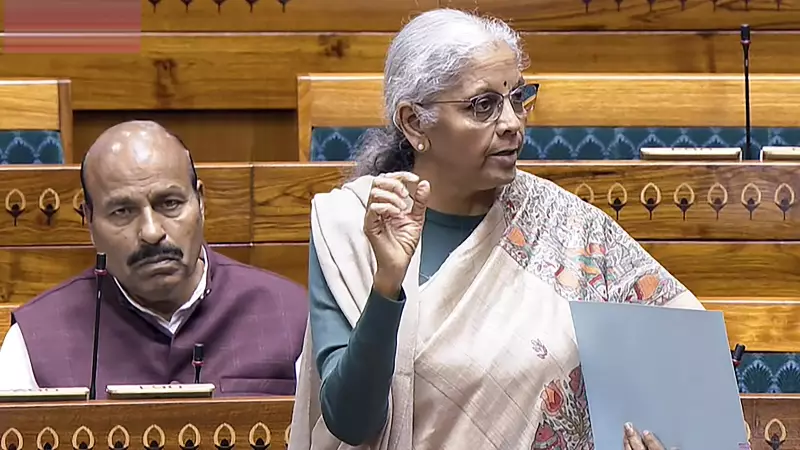
The Lok Sabha on Wednesday passed a key legislative amendment to impose an excise duty on tobacco and related products. The move, spearheaded by Union Finance Minister Nirmala Sitharaman, is designed to maintain the high tax burden on these so-called 'demerit' goods and prevent them from becoming more affordable.
Revenue Sharing with States a Key Feature
During the debate on the Central Excise (Amendment) Bill, Finance Minister Nirmala Sitharaman clarified the fiscal mechanics behind the decision. She emphasized that the revenue collected from this excise duty will become part of the central divisible pool. From this pool, a significant 41% will be shared with state governments.
Sitharaman was keen to distinguish this levy from a cess. "This is not a cess, this is excise duty. It existed before GST," she stated. She explained that the Centre had relinquished this duty earlier to facilitate the collection of the GST compensation cess. With the compensation period over, the authority to collect this duty is reverting to the Centre, but the proceeds will be redistributed, ensuring states get their constitutionally mandated share.

Preventing a Drop in Tax Incidence
The core rationale for the Bill, as presented by the Finance Minister, is to ensure that the total tax burden on tobacco products does not decrease. The GST law caps the maximum tax rate at 40%. With the GST compensation cess on tobacco now expired, the overall tax incidence would have fallen below current levels without a replacement levy.
"To ensure the incidence is not lower than what it was during GST with the compensation cess, we are bringing this excise duty. In a way, we are saying cigarettes should not become affordable now because incidence has become less," Sitharaman told the House. The Bill was ultimately passed by a voice vote.
Opposition Voices Concerns and Criticism
The discussion saw participation from 28 members, with several opposition MPs raising strong objections. Congress MP Sasikanth Senthil led the charge, arguing that the legislation's primary intent was to fill a "fiscal hole" created by flawed GST implementation and government borrowing.
He criticized the broader GST framework, stating, "The entire GST, which is supposed to be a cooperative federal structure, is not running the way it should be." His party colleague, Karti Chidambaram, urged the government to focus on a clearer roadmap for reducing tobacco consumption and providing alternative livelihoods for workers in the industry.
Other concerns were also highlighted:
- SP member Naresh Uttam Patel raised issues faced by bidi-rollers, tobacco leaf-pluckers, and small supari growers.
- TMC's Saugata Roy questioned whether fiscal measures alone could curb tobacco use, drawing a parallel to Bihar's liquor prohibition. He challenged the Finance Minister to show similar courage in tackling the public health issue holistically, including the welfare of tobacco workers.
The passage of the Bill on December 4, 2025, sets the stage for the continued high taxation of tobacco products in India, with a renewed focus on sharing the resulting revenue with states, even as the debate on its economic and social implications continues.