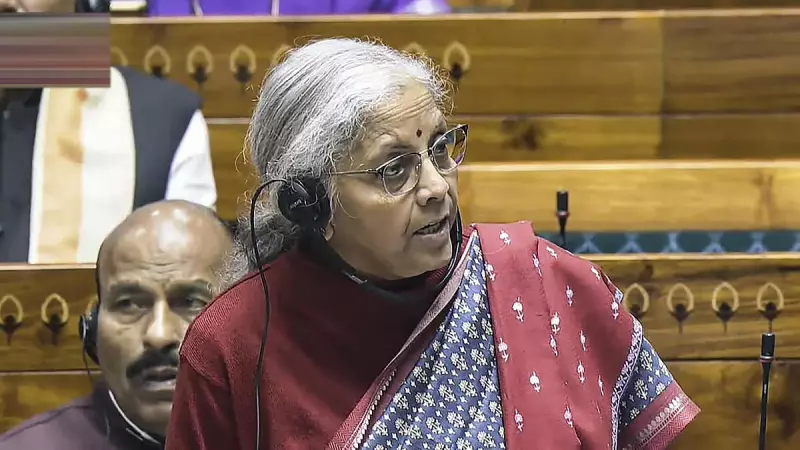
Finance Minister Nirmala Sitharaman has presented a significant legislative proposal in Parliament, aiming to formalize recent changes to the goods and services tax framework in Manipur. The minister introduced the Manipur Goods and Services Tax (Second Amendment) Bill, 2025, which is designed to replace an existing ordinance on the same subject.
Replacing the Ordinance with a Formal Law
The primary objective of the newly tabled bill is to provide a permanent legislative foundation for amendments that were initially enacted through an ordinance. This ordinance, known as the Manipur Goods and Services Tax (Second Amendment) Ordinance, was promulgated on October 7, 2025. Ordinances are temporary measures issued by the executive when Parliament is not in session, and they must be ratified by the legislature within a stipulated timeframe to become permanent law.
By introducing this bill, the government is following the standard constitutional process to convert the temporary ordinance into a full-fledged Act of Parliament. This move ensures the continuity and legal stability of the tax amendments introduced for the state of Manipur.

Implications for Manipur's Tax Structure
The passage of the Manipur GST (Second Amendment) Bill, 2025 will solidify the changes made to the state's indirect tax regime. While the specific details of the amendments are not outlined in the brief announcement, such bills typically address rate adjustments, compliance procedures, or the expansion or restriction of the tax base for certain goods and services.
This legislative action underscores the central government's role in facilitating and approving changes to state GST laws, as GST is a cooperative federalism model shared between the centre and the states. The bill's introduction in the Parliament session of December 2025 marks a key step in India's ongoing evolution of its unified tax system.
Next Steps in the Legislative Process
With the bill now introduced by the Finance Minister, it will undergo the standard parliamentary scrutiny. The process involves:
- Discussion and potential referral to a standing committee for detailed review.
- Debate and voting in both houses of Parliament—the Lok Sabha and the Rajya Sabha.
- Presidential assent after successful passage through both houses.
Once enacted, the bill will successfully replace the ordinance, providing a robust and debated legal framework for the GST amendments in Manipur. This transition from ordinance to act is a critical function of India's democratic law-making process, ensuring that executive actions receive legislative approval.