

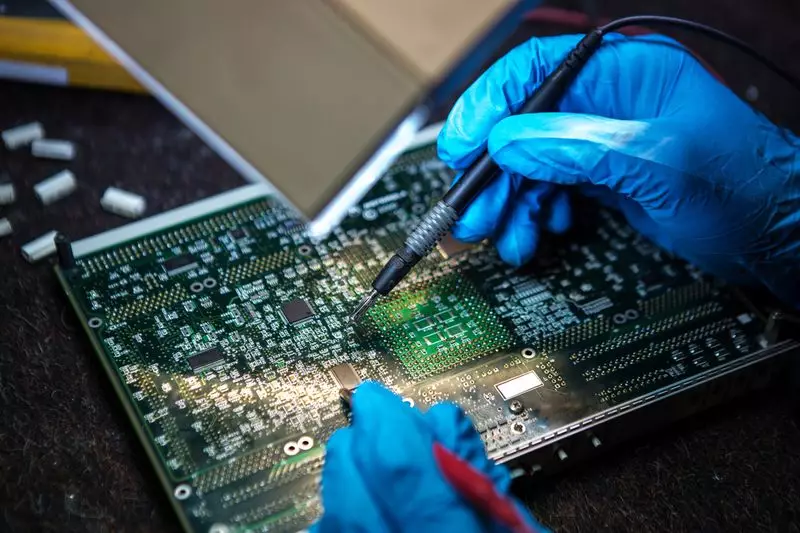
In a significant push to bolster domestic electronics manufacturing, the Indian government has given its green light to a substantial set of 22 new projects. These proposals, with a combined investment value of approximately Rs 41,000 crore, have been approved under the revised Production Linked Incentive (PLI) Scheme for IT Hardware. This move is poised to generate thousands of jobs and dramatically increase the country's production capacity for critical technology components.
Major Investment Inflow and Job Creation
The Union Minister for Electronics and Information Technology, Ashwini Vaishnaw, announced the approval, highlighting its expected impact. The sanctioned projects are projected to lead to a total production value exceeding Rs 3.25 lakh crore. Furthermore, this initiative is set to create direct employment for more than 75,000 individuals. A key focus of the scheme is to enhance the domestic manufacturing of laptops, servers, personal computers, and other crucial IT hardware, reducing reliance on imports and strengthening the supply chain.
Haryana Emerges as a Key Beneficiary
Among the states set to benefit, Haryana has secured a notable share of the investment. Three of the approved 22 projects are slated for establishment in Haryana. This development is expected to significantly boost the state's industrial landscape, bringing in advanced manufacturing units and associated employment opportunities. The specific details of the companies and the exact locations within Haryana are likely to be disclosed as the projects move into the implementation phase.

Broadening the PLI Scheme's Reach
The approval of these 22 proposals marks a major expansion of the PLI Scheme 2.0 for IT Hardware, which was officially notified in May 2023. The scheme offers incentives to manufacturers based on incremental sales of goods produced within India. The government's strategy is clear: to position India as a global hub for electronics system design and manufacturing (ESDM). By attracting large-scale investments, the policy aims to foster a robust ecosystem of component suppliers, design experts, and a skilled workforce, thereby increasing India's share in the global electronics market.
The minister emphasized that the approved applications represent a diverse mix of both domestic and international companies. This diversity is crucial for bringing in global best practices while empowering local players. The expected outcome includes not only meeting domestic demand but also creating a strong export potential for 'Made in India' IT hardware products. This approval round is a concrete step towards realizing the vision of an 'Aatmanirbhar Bharat' (self-reliant India) in the critical technology sector.






