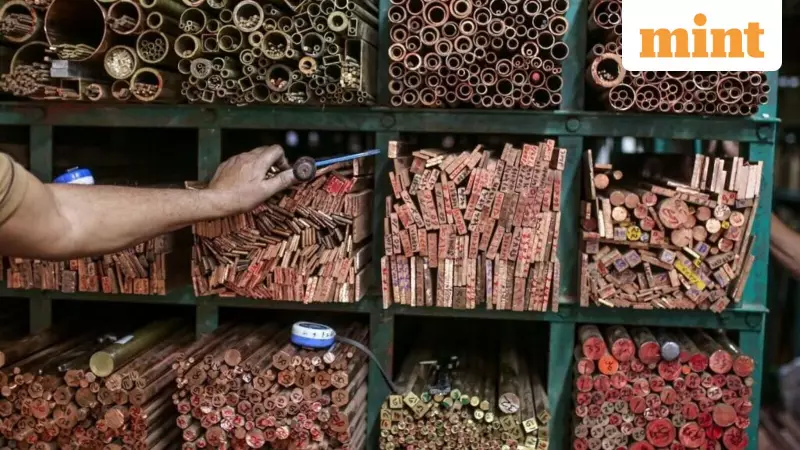
The global race to secure copper, the indispensable metal powering the artificial intelligence revolution and the green energy transition, has triggered a historic wave of consolidation in the mining sector. In the most significant move yet, mining behemoths Rio Tinto and Glencore confirmed late Thursday that they are in discussions to merge, a deal that would create the world's largest mining company with a staggering market value exceeding $200 billion.
The Red Metal's Unstoppable Surge
At the heart of these monumental talks is copper. Its unparalleled ability to conduct electricity makes it critical for everything from AI data centers and electric vehicles to renewable energy infrastructure and modern ammunition. This booming, multi-front demand is colliding with constrained supply, sending prices skyrocketing. U.S. copper prices surged 41% in 2025 and climbed further to close at a record high of $5.9245 per pound on Monday, January 10, 2026, driven by supply anxieties and potential tariff concerns.
Analysts project a severe supply shortfall in the coming years. S&P Global forecasts that demand will outstrip supply by a massive 25%, or 10 million metric tons, by 2040, unless production is significantly ramped up. "At stake is whether copper remains an enabler of progress or becomes a bottleneck to growth and innovation," warned Daniel Yergin, Vice Chairman of S&P Global. Reflecting its strategic importance, the U.S. Geological Survey added copper to its critical minerals list in November 2025, deeming it vital to national security and the economy.

Mergers: The Fast Track to Copper Dominance
Faced with this outlook, mining giants are choosing mergers and acquisitions as a quicker path to increase copper exposure than developing new mines, which can take decades. The Rio Tinto-Glencore discussion is the latest in a series of copper-focused deals. Last year, Anglo American agreed to merge with Canada's Teck Resources, a move that attracted an unsuccessful counter-bid from industry leader BHP.
"Mining megamergers are back…in most cases, the key to the proposed combination is copper," noted analysts at Jefferies. A combined Rio Tinto and Glencore would be a copper powerhouse. Copper would contribute 36% of the new entity's earnings, surpassing iron ore to become its largest business. Glencore brings assets like a major stake in a Chilean copper mine and plans to restart a mine in Argentina. Rio Tinto adds its Kennecott mine in Utah and a long-delayed Arizona project that could meet a quarter of U.S. copper demand once operational.
AI, Defense, and EVs: The Triple Engines of Demand
The demand drivers are powerful and diverse. The AI boom is a major new factor, as electricity-guzzling data centers require immense amounts of copper for wiring and cooling. BloombergNEF research estimates data centers will need over 4.3 million metric tons of copper in the next decade—equivalent to nearly Chile's annual production.
Simultaneously, the global push for decarbonization is accelerating. Demand for copper in electric vehicles alone is projected to jump from 1.3 million tons in 2025 to 2.3 million tons in 2030, according to Benchmark Minerals Intelligence. Furthermore, record defense spending and ammunition restocking are providing a significant boost. Copper is the U.S. Defense Department's second-most-used material.
Market volatility is heightened by the prospect of tariffs under a potential Trump administration, which has led to stockpiling. However, analysts at Goldman Sachs suggest clarity on tariffs could later reduce this inventory build-up. A key risk to demand remains the health of the Chinese economy, which accounts for roughly half of global copper consumption.
As the world's technological and environmental ambitions grow, the scramble for copper is reshaping one of the planet's oldest industries, proving that this red metal is now the ultimate strategic commodity of the 21st century.