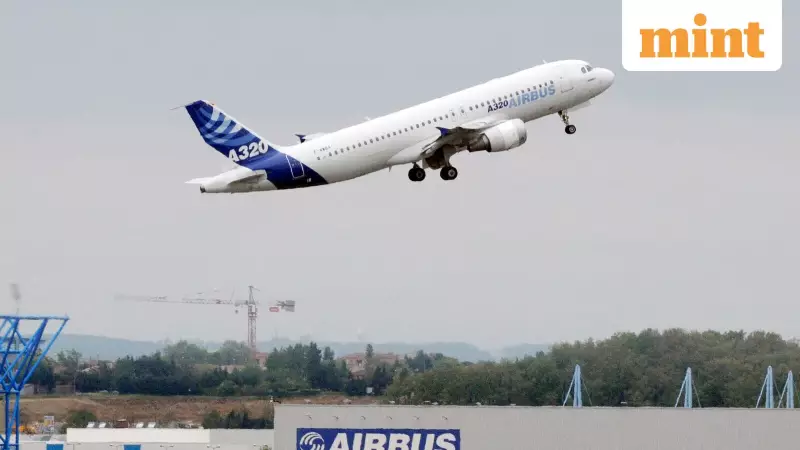
Global aviation is breathing a sigh of relief as Airbus announced on Monday that the widespread disruption caused by a critical software glitch is nearing its end. The plane-maker confirmed that less than 100 Airbus A320 family aircraft remain grounded worldwide, awaiting a mandatory software update. This signals a rapid return to normalcy for flight operations after a flaw potentially impacting around 6,000 jets was identified last week.
The Root of the Problem: Solar Flares and Flight Control
The software issue at the heart of this global aviation scare affected a vital system controlling the aircraft's nose angle, technically known as the 'angle of attack'. Investigations revealed that intense solar radiation from events like solar flares could corrupt critical data within the flight-control system. In a worst-case scenario, this corruption could trigger an uncommanded movement of the aircraft's elevator, causing the plane's nose to pitch down unexpectedly—a situation with potentially catastrophic consequences.
The alarming nature of the risk prompted global aviation regulators to mandate an immediate fix, adopting a strict "better safe than sorry" approach. Given that the A320 family is the world's most common passenger jet, with approximately 11,300 aircraft in operation globally, the scale of the required action was immense.

Discovery and the Path to a Fix
The glitch was thrust into the spotlight following a serious incident involving a JetBlue Airbus A320neo aircraft. The flight, traveling from Cancun, Mexico, to Newark in the United States, experienced an unexpected loss of altitude, resulting in injuries to passengers. Preliminary investigations pointed towards solar radiation as a possible culprit, setting off a chain reaction that led to the global grounding order for affected planes.
Fortunately, the solution to this high-stakes problem is relatively straightforward for most aircraft. The primary fix involves a software rollback to an older, stable, and tested version. For the vast majority of the impacted fleet, this process takes between two to three hours per aircraft. However, some older models require an additional step of replacing a specific piece of hardware alongside the software update.
Airline Operations Stabilize with Minimal Disruption
The global aviation industry has responded with remarkable speed to implement the necessary corrections. Airbus stated, "Out of a total number of around 6,000 aircraft potentially impacted, the vast majority have now received the necessary modifications." The company added that it is working closely with airline customers to modify the remaining jets and return them to service.
Most major carriers, including Indian operators Air India and IndiGo, as well as US giants like American Airlines, United, Delta, and European carrier Wizz Air, have successfully updated almost their entire fleets. These airlines managed to complete the work with minimal disruption to their flight schedules.
The notable exception has been JetBlue, the airline involved in the initial incident. Due to fleet scheduling challenges, JetBlue was forced to cancel approximately 70 flights on Sunday as it worked through the update process. The situation, however, is now rapidly improving as the final aircraft receive their critical software patches, allowing global air travel to resume its familiar rhythm.