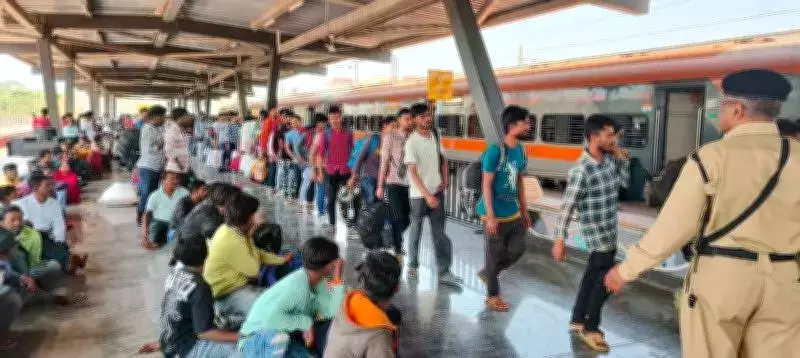
Bengaluru Railway Stations Implement Airport-Style Boarding for Holi Travel Surge
As thousands of passengers descended upon Sir M Visvesvaraya Terminal (SMVT) in Bengaluru for their Holi holiday journeys, they encountered an unexpected departure from the usual festival chaos. Instead of the typical scenes of overflowing platforms and frantic scrambles, travelers found orderly queues and a regulated boarding system reminiscent of airport procedures.
Structured Boarding System Introduced
In a pioneering crowd-control initiative for the Holi season, the South Western Railway (SWR), in collaboration with the Railway Protection Force (RPF), has implemented a structured boarding model at multiple stations. This marks the first time such comprehensive measures have been deployed specifically for Holi travel management.
The new system restricts platform access until trains arrive and are prepared for boarding. Passengers are then guided through organized entry points, with women, children, and senior citizens receiving priority access to ensure safer and more efficient embarkation.

Enhanced Security and Monitoring
Railway authorities have significantly bolstered security presence to enforce the new protocols. "Additional RPF personnel have been mobilized from Hubballi and Mysuru divisions," explained a senior RPF officer from the Bengaluru division. "We are maintaining strict queue discipline from ticket counters all the way to train doors, unlike previous holiday seasons."
Behind the scenes, a dedicated divisional 'war room' monitors live CCTV feeds to track crowd accumulation in real time. Senior officers are deployed across three shifts to ensure rapid coordination and immediate response to any developing situations.
Infrastructure and Capacity Enhancements
Recognizing the limitations of existing waiting facilities during peak periods, the railways have established temporary holding zones at key stations:
- Sir M Visvesvaraya Terminal (SMVT)
- KSR Bengaluru City Station
- Krishnarajapuram Station
- Yeshwantpur Station
These supplementary spaces can accommodate approximately 300 passengers each, preventing crowd spillage onto platforms and complementing permanent waiting halls.
Passenger Response and Operational Statistics
"It helps in managing the situation properly," noted Sumanth Atreyas, a passenger at SMVT station. "A similar approach was attempted during Chhath Puja but faced overwhelming crowds. The system has proven particularly effective for trains like the Amrit Bharat Express that feature more unreserved coaches."
Between February 27 and March 3, seven major railway stations in Bengaluru collectively handled approximately 20 lakh passengers:
- KSR Bengaluru
- Bengaluru Cantonment
- Yeshwantpur
- SMVT Bengaluru
- Krishnarajapuram
- Whitefield
- Kengeri
Special Train Operations
To accommodate the holiday surge, SWR is operating 56 Holi special trains comprising 856 trips across various railway zones throughout March. Additionally, coordinated operations with other zones will provide 134 special train trips.
These services connect numerous important destinations across India, including:
- Madar and Kollam
- Thiruvananthapuram and Kalaburagi
- Bidar and Dhanbad Junction
- Yog Nagari Rishikesh and Malda
- Delhi and Muzaffarpur
- Danapur and Jodhpur
Short-Distance Services to Alleviate Congestion
Anticipating particularly high demand for long-distance trains, SWR will also run 28 short-distance special services. These trains are designed to reduce congestion on regular express trains along major routes:
- Hubballi–Vijayapura
- Yeshwantpur Junction–Hindupur
- KSR Bengaluru City Junction–Ashokapuram
- Bangarapet Junction–SMVT Bengaluru
- Bengaluru Cantonment–Chikkaballapur
- KSR Bengaluru City Junction–Hassan
- Yeshwantpur Junction–Hosur
- Hospete–SSS Hubballi Junction
- Ballari–Davanagere
The comprehensive measures represent a significant shift in how Indian railways manage festival travel, prioritizing passenger safety and systematic boarding over traditional, often chaotic, holiday departure processes.