

West Bengal Accelerates Towards Clean Mobility with Stunning EV Adoption Rates
Kolkata: West Bengal is making significant strides in the transition to cleaner transportation, with electric vehicle (EV) adoption experiencing a remarkable surge. This growth is occurring even as the state continues to face challenges related to its charging infrastructure network.
Explosive Growth in EV Registrations Outpaces National Trends
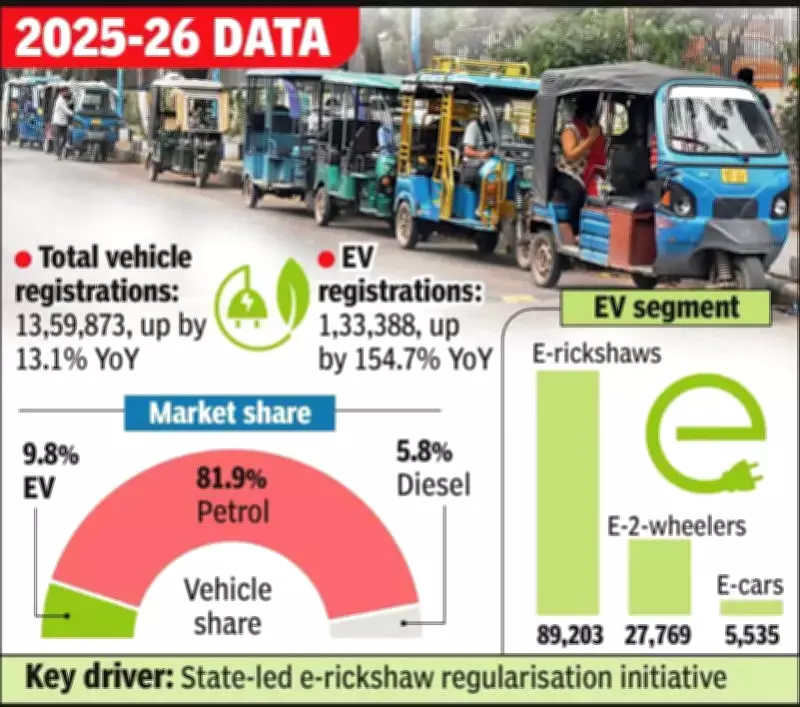
A comprehensive study conducted by Environcatalysts, which meticulously tracked the transport sector's evolution, reveals that EV registrations in Bengal skyrocketed by an impressive 154.7%. The numbers climbed from 52,327 units in the 2023-24 period to a substantial 133,388 units in 2025-26.
This dramatic increase has propelled EV penetration in Bengal to 9.8%, a figure that notably exceeds the national average of 8.2%. This shift underscores a significant change in consumer preferences towards more sustainable mobility options.

"The pace of electrification in Bengal is significant, especially when the public charging network is limited," emphasized Sunil Dahiya, founder and lead analyst at Environcatalysts. "It reflects both policy momentum and strong grassroots adoption, particularly within shared mobility segments."
Broader Automotive Market Expansion and Fuel Mix Evolution
The overall automotive market in Bengal is also on a steady growth trajectory. Total vehicle registrations increased by 13.1% year-on-year, rising from 1.2 million units in the fiscal year 2024-25 to 1.4 million units in FY 2025-26.
While petrol vehicles continue to dominate the landscape, accounting for 81.9% of total registrations in Bengal—a share much higher than the national average—their dominance has slightly waned. This represents a decline from 87.4% recorded just a year earlier.
Diesel vehicles maintain a niche but steady presence at 5.8%, primarily concentrated in goods carriers, tractors, and select private vehicles. Meanwhile, hybrid vehicles have gained considerable traction among premium buyers, registering a robust 52% year-on-year growth, as detailed in the report.
E-Rickshaws: The Driving Force Behind Bengal's Electric Revolution
Industry observers highlight that the most transformative changes are unfolding within the EV ecosystem. E-rickshaws, locally known as 'totos' in Bengal, are spearheading the state's electric revolution.
With 89,203 registrations in 2025-26, they constitute nearly 67% of all EVs on the road. "The e-rickshaw segment has become the backbone of electrification in Bengal," stated a transport department official. "It's affordable, efficient, and well-suited to both urban and rural mobility needs."
This growth is not solely driven by market forces. A major state-led regularization initiative played a pivotal role. Starting in October 2025, authorities mandated digital enrollment for over one million unregistered e-rickshaws, effectively bringing a large informal sector into the official framework, added Dahiya.
Momentum Across Other EV Segments and Infrastructure Concerns
Beyond three-wheelers, other EV categories are also gaining significant momentum. Electric two-wheelers saw a 15% rise, reaching 27,769 units. Electric cars nearly doubled, with registrations surging by 89.8% to 5,535 units. Passenger electric three-wheelers more than doubled as well, indicating broad-based adoption.
However, infrastructure challenges remain a pressing concern. Experts caution that the current rapid pace of EV growth could potentially outstrip charging availability if investments do not keep pace. "Charging infrastructure is the next critical frontier," noted an industry expert. "Without rapid expansion, it could become a bottleneck to sustained EV growth."






