

BMW Regains Top Spot in India's Luxury Car Segment After 13-Year Hiatus
In a significant shift within India's premium automotive landscape, BMW has narrowly outpaced its long-standing German competitor Mercedes-Benz during the March quarter of the 2026 fiscal year. This development marks the first time since 2012 that BMW has claimed the quarterly sales crown in the country's luxury car market.
Quarterly Sales Figures Reveal a Tight Race
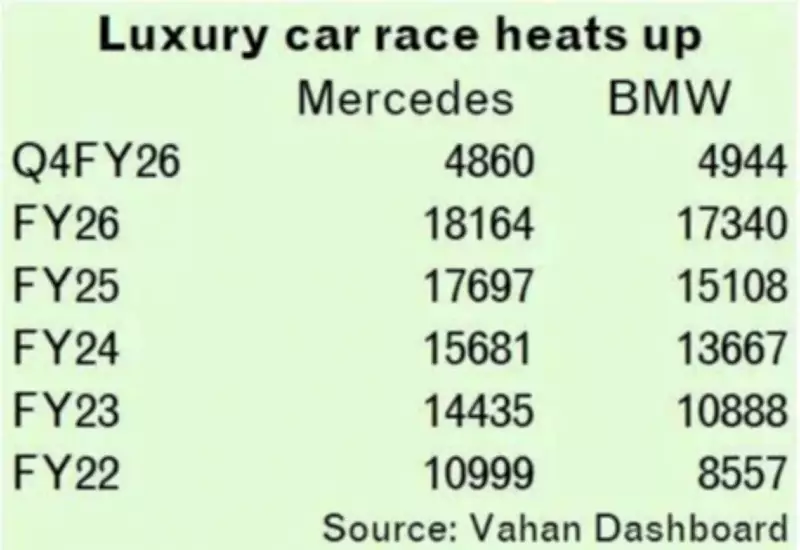
According to official data from the Vahan dashboard, BMW Group India reported sales of 4,944 luxury vehicles, which includes both cars and SUVs, in Q4 FY26. Meanwhile, Mercedes-Benz India recorded approximately 4,860 units sold during the same three-month period. Although the margin is slim, this achievement represents a milestone for BMW, which has been methodically closing the gap with its rival over recent years.
A Decade of Market Leadership and Strategic Shifts
The last instance of BMW leading the Indian luxury car market occurred in 2012, when it sold around 9,375 vehicles, placing ahead of Audi in second and Mercedes-Benz in third. However, the competitive dynamics shifted dramatically starting in 2013, as Mercedes-Benz launched an aggressive product expansion strategy. This initiative, often referred to as its first major "product offensive," emphasized:

- Introducing new models to the market
- Expanding its dealer network across the country
- Enhancing brand experience for customers
- Optimizing the total cost of ownership
While Audi briefly seized the top position from BMW in 2013, Mercedes-Benz's sustained efforts propelled it to become India's leading luxury carmaker by 2015. For the past decade, the three-pointed star has maintained its dominance through consistent product launches, network growth, and customer-centric initiatives.
BMW's Remarkable Growth Trajectory
BMW's recent quarterly victory is the result of a steady and impressive climb. The company has more than doubled its annual sales volumes in approximately four years, significantly narrowing the historical gap with Mercedes-Benz. A key driver of this growth has been the strong performance of BMW's premium electric vehicle lineup, which contributed to about 21% of its total sales in Q4 FY26.
Mercedes-Benz's Focus on the High-End Segment
Even as it continues its product offensive in India, Mercedes-Benz has increasingly concentrated on the high-end vehicle category. This strategic pivot is fueled by rising demand from an expanding affluent customer base. Currently, top-end models constitute roughly a quarter of Mercedes-Benz's total sales volume in India, with growth rates in the low double digits.
Future Outlook and Market Dynamics
The critical question now is whether BMW can extend its narrow lead and sustain this momentum in the upcoming quarters. For the full fiscal year FY26, Mercedes-Benz managed to retain its overall number one position, indicating that the annual battle remains fiercely contested. The evolving preferences of Indian luxury car buyers, coupled with both brands' electrification strategies and model introductions, will likely determine the market leader in the months ahead.






