Union Budget 2026 Unveils Major Push for Electronics and Technology Sectors
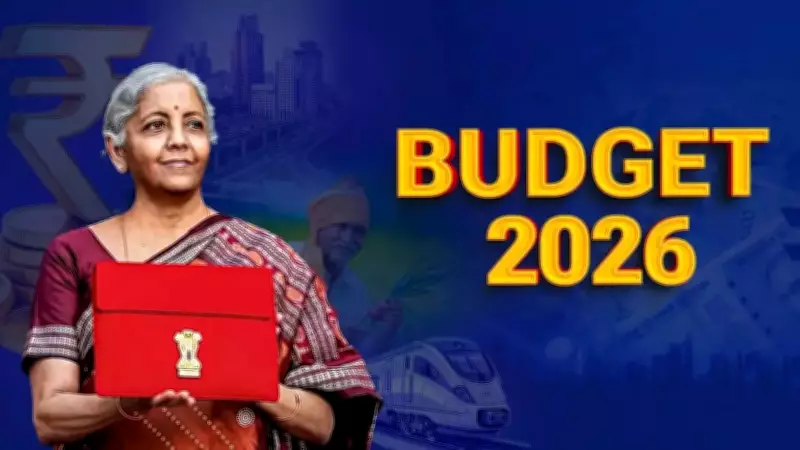
Presenting her ninth consecutive Union Budget on Sunday, Finance Minister Nirmala Sitharaman announced a comprehensive package of measures aimed at accelerating India's technological advancement. The budget includes significant allocations and policy initiatives targeting key sectors such as electronics manufacturing, semiconductors, and data center infrastructure.
Expanded Electronics Manufacturing Scheme
The government has substantially scaled up the Electronics Components Manufacturing Scheme, increasing its outlay to ₹40,000 crore. This expansion represents a major commitment to strengthening India's position in the global electronics value chain and reducing import dependencies.
Amit Khatri, Co-founder of Noise, commented: "The Union Budget 2026 sets a clear direction towards Viksit Bharat, anchored in inclusive growth and global competitiveness. The scaling up of the electronics components manufacturing scheme reinforces India's ambition to emerge as a world-class hub for consumer electronics."

Industry Leaders Welcome Budget Initiatives
Top executives from leading Indian consumer electronics companies have expressed strong support for the budget's technology-focused measures.
Sanjeev Agarwal, Executive Director & Chief Manufacturing Officer at Lava International Limited, stated: "The expansion of the Electronics Components Manufacturing Scheme is an encouraging move to strengthen India's electronics manufacturing ecosystem. For ECMS to deliver its intended impact, timely and effective implementation will be crucial."
Arijeet Talapatra, CEO at Itel India, emphasized: "The Union Budget 2026 delivers a clear and reassuring message for brands investing in India's electronics ecosystem. The increased outlay will help deepen localization, strengthen value chains, and improve cost competitiveness."
Semiconductor Mission 2.0 and Infrastructure Development
The budget also announced the India Semiconductor Mission 2.0, a significant initiative aimed at bolstering domestic semiconductor production capabilities. This move aligns with the government's broader Atmanirbhar Bharat vision and aims to ensure uninterrupted access to crucial technologies.
Additionally, the government has allocated ₹12.2 lakh crore for capital expenditure in the upcoming fiscal year, with particular focus on infrastructure development in Tier-2 and Tier-3 cities. This infrastructure push is expected to improve distribution efficiency and last-mile connectivity, driving consumer-led growth across the country.
MSME Support and Component Manufacturing Focus
Varun Gupta, Co-founder of GOBOULT, highlighted: "Budget 2026-27 places attention on how electronics are built, not just how much is produced. The expansion of the Electronics Components Manufacturing Scheme and the rollout of India Semiconductor Mission 2.0 strengthen the component layer of the ecosystem."
The budget also includes a ₹10,000 crore MSME Growth Fund aimed at developing Champion MSMEs and a ₹2,000 crore top-up to the Self-Reliant India Fund. These measures address the need for patient equity capital and long-term risk funding for small and medium enterprises.
Imran Kagalwala, Co-founder of Unix India, noted: "The Budget takes a constructive approach by continuing its focus on MSME support and electronics manufacturing. These initiatives help strengthen the foundation for sustainable growth in India's electronics manufacturing ecosystem."
Broader Economic Context
The budget announcements come as part of the government's broader vision to position India as a global leader in electronics and innovation. The emphasis on technology-led manufacturing, combined with continued integration with global markets through exports and long-term investment, signals a decisive intent to accelerate India's next phase of economic expansion.
Industry experts believe that these measures, if implemented effectively, will enable companies to design, innovate, and manufacture at scale within the country, ultimately benefiting consumers through improved product quality, durability, and accessibility across all regions of India.