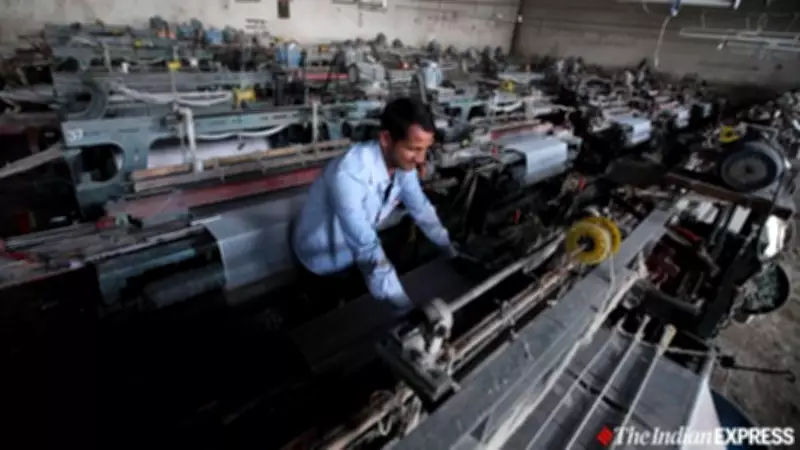
Union Budget 2026 Proposes Revitalization of 200 Legacy Industrial Clusters
In a significant move to strengthen India's manufacturing ecosystem, Finance Minister Nirmala Sitharaman announced a new scheme to revive 200 legacy industrial clusters during her Union Budget 2026 presentation on Sunday. This initiative aims to enhance cost competitiveness and operational efficiency through targeted infrastructure and technology upgrades.
Addressing Global Manufacturing Competition
The announcement comes at a critical juncture as India faces steep competition for manufacturing jobs from China and other East Asian economies. Sitharaman emphasized the need for strategic intervention, stating, "I propose to introduce a Scheme to revive 200 legacy industrial clusters to improve their cost competitiveness and efficiency through infrastructure and technology upgradation."
This policy push aligns with broader efforts to capitalize on global supply chain realignments and position India as a more attractive manufacturing destination.

NITI Aayog Report Highlights Manufacturing Gap
A recent NITI Aayog report underscores the urgency of such measures. It revealed that manufacturing contributes only 15-17% to India's GDP, a figure substantially lower than the 25-30% seen in East Asian economies like China and South Korea during their peak development phases.
The report argued that elevating manufacturing's share to 25% of GDP is crucial for achieving the Viksit Bharat vision by 2047. This growth is deemed essential not only for sustaining high economic expansion but also for generating quality employment at scale.
Existing Cluster Schemes and Future Directions
While specific details of the new scheme are awaited, several existing cluster-focused programs provide a foundation. For instance, the Common Facilities for Medical Devices Clusters offers financial assistance to bolster infrastructure, enhance domestic manufacturing capacity, and improve overall cluster quality.
The NITI Aayog report also highlighted challenges in sectors like auto components, where MSMEs often struggle with in-house design capabilities. It called for "seamless collaboration between government, industry, and the states" to drive technology adoption from fragmented experiments to coordinated transformation.
A National Priority for Advanced Manufacturing
The report positioned Advanced Manufacturing Leadership as a national priority under the India National Manufacturing Mission. It stressed that the coming decade presents an unprecedented opportunity to reimagine India's role in the global manufacturing landscape.
"The journey to 2035 is not merely about transforming our factories — it is about transforming lives, building resilience, and positioning India as an undisputed leader in advanced, high-value manufacturing on the world stage," the report concluded, framing the cluster revival scheme as a step toward this ambitious goal.