BYD Unveils Next-Generation Battery Technology and Aggressive Charging Infrastructure Plan
Chinese electric vehicle manufacturer BYD has launched its first major battery upgrade in six years, introducing the second-generation Blade Battery alongside ambitious plans to significantly expand its fast-charging network. This strategic move comes as the company seeks to regain momentum following a recent slump in domestic sales within China's competitive EV market.
Revolutionary Battery Performance and Specifications
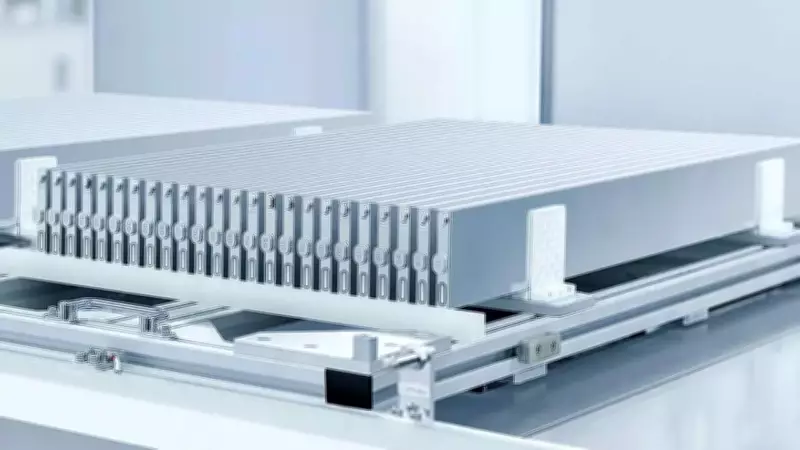
During a high-profile event in Shenzhen, Chairman Wang Chuanfu revealed that the new Blade Battery represents a substantial technological leap forward. The battery can charge from 20% to 97% in under 12 minutes and operates effectively at temperatures as low as minus 20 degrees Celsius. This enhanced performance provides vehicles with an impressive driving range of 777 kilometers on a single charge.
According to Wang, the higher-density battery technology can extend the range of BYD's premium models, including the Denza Z9GT and Yangwang U7, to more than 1,000 kilometers. The company has confirmed that the new battery has passed rigorous safety tests that exceed China's latest national standards, addressing concerns about EV battery safety that have been prominent in the industry.

Massive Fast-Charging Network Expansion
BYD has outlined an aggressive plan to expand its "Flash Charging" network to 20,000 stations by the end of 2026, with 2,000 of these stations strategically located along highways. This represents a substantial increase from the more than 4,000 stations the company had built as of March 5. This expansion aligns with China's national policy to double its charging infrastructure within three years, demonstrating BYD's commitment to supporting the broader EV ecosystem.
New Vehicle Models and Pricing Strategy
During a comprehensive three-hour livestream event, BYD introduced more than 10 new models equipped with the advanced Blade Battery across its various brands. The pricing strategy spans a wide range, from 155,000 yuan (approximately $22,463) for the Song Ultra EV to 1.3 million yuan for the luxury Yangwang U8L. This diversified approach aims to cater to different market segments while showcasing the battery's versatility across vehicle types.
Market Challenges and Analyst Perspectives
Despite these significant technological advancements, industry analysts remain cautious about BYD's immediate prospects for reversing its declining sales trend. Eugene Hsiao, an analyst at Macquarie, noted, "Given the weakness in the Chinese EV market, we don't expect market share to be easily recovered and remain watchful to see how volumes play out." This sentiment reflects broader concerns about consumer preferences shifting toward lower-priced vehicles in China's increasingly competitive EV landscape.
The battery launch coincides with Beijing's policy encouraging automakers to transition toward a value-driven market, moving away from destructive price wars and toward more differentiated, technologically advanced products. BYD has responded to this policy direction by introducing longer-range plug-in hybrids and seven-year low-interest financing plans, similar to offers from competitor Tesla.
Broader Market Context and Competitive Landscape
BYD continues to face challenges in recovering from a decline in domestic sales, which Chinese media has previously attributed to weakening technological leadership. Despite early 2025 innovation initiatives, the sales slide that began in the second half of 2025 has persisted, with further declines in January and February of this year. During this period, BYD was overtaken by rival Geely in market position.
The end of China's purchase tax exemption for electric vehicles and plug-in hybrids has created additional headwinds, benefiting traditional automakers like Volkswagen, which regained the top-selling position in China in January. This policy change has altered the competitive dynamics within China's automotive market.

Last year, BYD introduced assisted-driving features on models priced below $10,000 and promoted a five-minute super-charging system designed to compete directly with Tesla's charging technology. The company also launched the Han L sedan and Tang L SUV in April, though combined sales of these two models reached only about 49,000 units by January, representing a small fraction of BYD's total sales of 3.76 million vehicles during the same period.
Financial markets responded with mixed reactions to the announcements, with BYD shares in Hong Kong rising 1.2% in morning trade on Friday, while the company's Shenzhen-listed shares fell 0.3%. This divergence reflects the complex investor sentiment surrounding BYD's technological innovations versus its ongoing market challenges.