

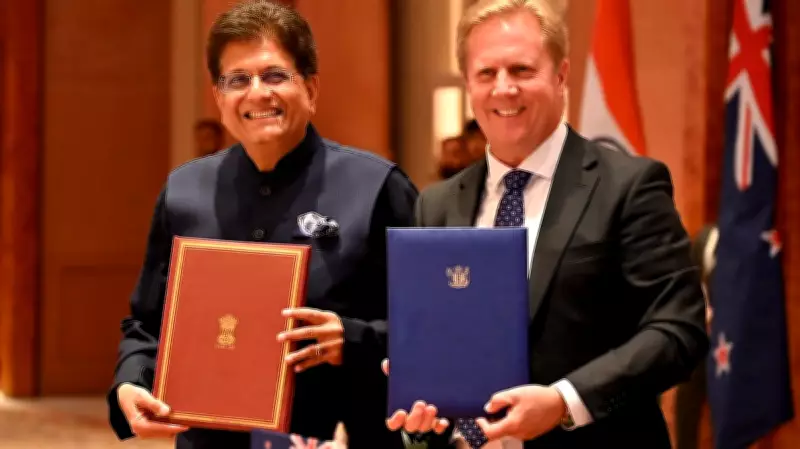
India and New Zealand have signed a landmark free trade agreement (FTA) aimed at fostering bilateral trade and driving investments worth $20 billion. The pact, finalized after years of negotiations, marks a significant step in strengthening economic ties between the two nations.
Key Provisions of the Agreement
Under the terms of the deal, India will provide duty elimination on 30 percent of New Zealand's tariff lines. This includes goods such as wood, wool, sheep meat, and leather-raw hides. The move is expected to boost exports from New Zealand and provide Indian consumers with access to high-quality products at competitive prices.
Investment and Trade Targets
The agreement aims to catalyze $20 billion in bilateral investments over the next decade. Both countries have committed to reducing non-tariff barriers and enhancing cooperation in sectors like agriculture, technology, and services. New Zealand, in turn, will offer improved market access for Indian goods and services.

Strategic Importance
This FTA is part of India's broader strategy to deepen economic engagement with the Asia-Pacific region. For New Zealand, it represents a crucial opportunity to diversify its trade partnerships and reduce reliance on traditional markets. The deal is expected to come into effect later this year after ratification by both parliaments.
Reactions and Next Steps
Indian officials hailed the agreement as a win-win for both economies, emphasizing its potential to create jobs and spur innovation. New Zealand's trade minister described it as a historic moment that will unlock new opportunities for businesses and consumers alike. The next phase will involve detailed implementation plans and monitoring mechanisms to ensure compliance.






