Mumbai's Charcoal Market Heats Up Amid LPG Supply Crunch
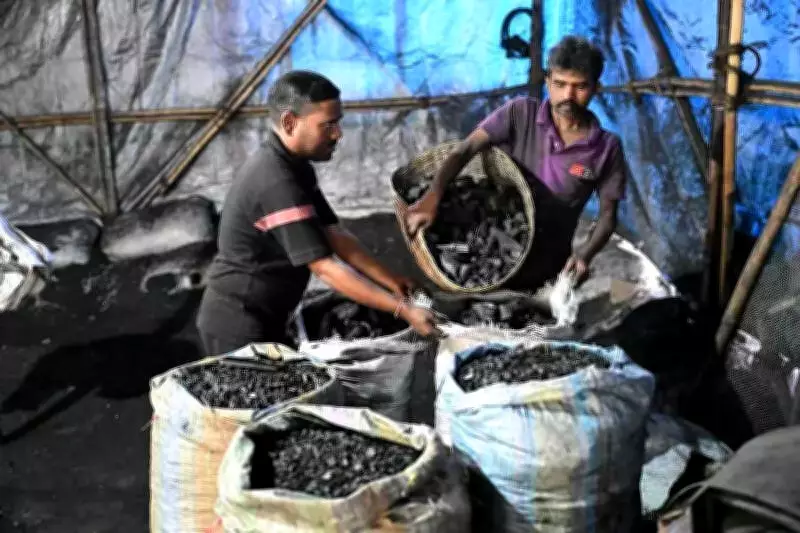
In a surprising twist to Mumbai's energy landscape, charcoal has emerged as an unlikely hero during the ongoing liquefied petroleum gas (LPG) shortage. The city's Sewri coal depot, a traditional hub for fuel distribution, is witnessing unprecedented activity as traders report skyrocketing sales of these wooden black nuggets. This comes despite charcoal being previously banned as a polluting fuel, though it has recently received a temporary reprieve from civic authorities.
Price Surge and Supply Chain Pressures
The retail price of charcoal has experienced a dramatic increase, jumping from Rs 35-38 per kilogram just a week ago to Rs 60-70 per kilogram in local markets today. Ashraf Manihar, who operates a coal shop on Andheri S V Road, confirmed this significant price hike. "The demand surge has been sudden and substantial," he noted, attributing it primarily to commercial establishments struggling to secure commercial gas cylinders.
Supplier Santosh Pathak provided additional context: "Although many hotels still prefer induction cooking, those who were purchasing 40 kg of charcoal are now buying 60 kg. The rates have increased despite this shift in consumption patterns." Pathak was quick to defend charcoal's environmental credentials, emphasizing that unlike mined coal, charcoal is not a polluting fuel when properly sourced and used.

Nationwide Demand Creates Supply Challenges
The sudden nationwide spike in charcoal demand has created significant supply chain disruptions for Mumbai traders. Abdul Quddus Choudhary, a trader based in Chandivli, described the growing difficulties: "Fewer trucks are arriving these days, and suppliers are becoming increasingly unresponsive to our calls." This scarcity is putting additional upward pressure on prices and availability.
Amirali Charania, owner of Charania Coal Corporation, detailed his company's experience: "We primarily supply to restaurants, hotels, and caterers who operate traditional tandoors and grills. In recent weeks, we've observed a clear and noticeable increase in both enquiries and actual demand from these commercial clients."
Culinary Preferences Driving Market Shift
Beyond mere necessity, culinary preferences are playing a crucial role in this market transformation. Many professional chefs maintain that charcoal imparts a unique flavor and aroma that cannot be replicated by electric or gas-based cooking equipment. This traditional cooking method, while sometimes perceived as less convenient than modern alternatives, offers distinct gastronomic advantages that are now being rediscovered.
Charania elaborated on the historical context: "Over the years, many restaurants shifted to electric tandoors, induction equipment, and gas-based 'bhattis' considering them more convenient and modern. However, the current situation has prompted a reassessment of these choices."
Future Outlook and Market Predictions
The current supply situation remains manageable according to industry insiders, but concerns are growing about future stability. Prices have already doubled in recent weeks, climbing from approximately Rs 30 per kilogram to Rs 60 per kilogram. If demand continues its upward trajectory, experts warn that rates could escalate further, potentially creating additional challenges for both suppliers and consumers.
The charcoal being sold in Mumbai markets is primarily sourced from Karnataka, with additional supplies coming from Tamil Nadu and smaller quantities from Gujarat. This regional supply network is now being tested by the unprecedented demand from commercial establishments including hotels, restaurants, canteens, educational institutes, and various institutional buyers who find themselves unable to reliably procure commercial gas cylinders.
As Mumbai navigates this unexpected energy transition, the humble charcoal nugget has unexpectedly become a valuable commodity, highlighting both the vulnerabilities in conventional energy supply chains and the resilience of traditional alternatives in times of crisis.