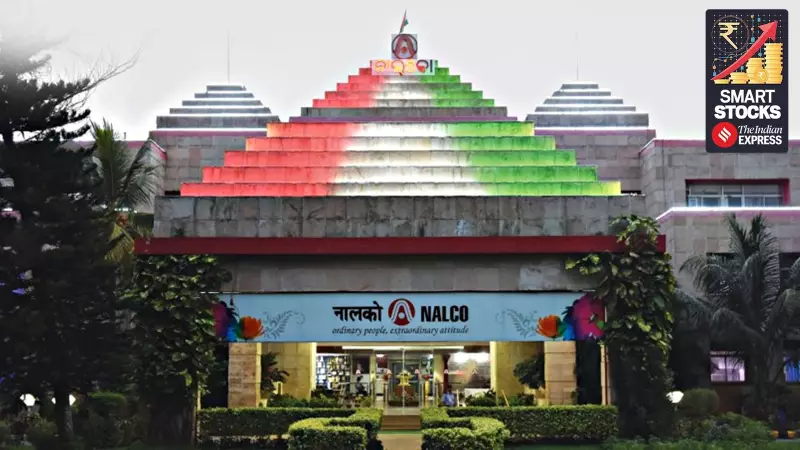
Why China's 45 MTPA Capacity Cap Marks a Turning Point for NALCO Investors
Aluminum producers in India, including NALCO, Hindalco, and Vedanta Ltd, are experiencing significant benefits from China's decision to cap its aluminum production capacity at 45 million tonnes per annum. NALCO, in particular, has witnessed a robust rally in its performance, but the critical question remains: can this momentum be sustained over the long term?
The Global Aluminum Landscape: China's Dominance and Policy Shift
For decades, the global aluminum industry has heavily relied on China to address supply shortages. Whenever gaps emerged, Chinese aluminum swiftly filled the void. Starting from a modest capacity of 4 MTPA in 2004, China's aluminum capacity skyrocketed to 45 MTPA by 2025, accounting for nearly 60% of the world's total capacity.
On March 28, 2025, China introduced a new Action Plan for its aluminum industry, spanning from 2025 to 2027. The cornerstone of this plan is the capping of capacity at 45 MTPA. This policy places a strong emphasis on decarbonization, incorporating measures such as benchmarks for green power usage, a ban on smelter operations in high-pollution areas, relocation of older, polluting smelters to regions with hydro and solar power, and increased utilization of aluminum scrap to meet demand.

Further disruptions followed in the global aluminum market. In July 2025, the United States imposed tariffs on aluminum imports, and the European Union is considering restrictions on aluminum scrap exports. These combined factors have propelled aluminum prices from $2,300 per tonne to $3,140 per tonne, creating a frenzied market environment.
NALCO's Position in the Aluminum Value Chain
The aluminum value chain consists of three primary stages: mining bauxite ore, refining bauxite into alumina, and smelting alumina into aluminum metal. In FY25, NALCO accounted for nearly 25% of India's alumina refinery capacity. However, its share in total aluminum metal production is notably lower, at approximately 11%.
Out of NALCO's 2.3 MTPA alumina production, about 1 MTPA is used internally for smelting aluminum metal, with the remainder exported. Thanks to its proximity to raw materials, NALCO has established itself as one of the world's lowest-cost alumina producers. Over the past decade, while alumina capacity has increased, NALCO's smelting capacity has remained stagnant at 0.46 MTPA. In contrast, Vedanta has consistently expanded its capacity and leads the market with 2.42 MTPA, projected to rise to 3.1 MTPA by FY27.
Despite this, NALCO has achieved a consistent increase in capacity utilization, from 80% in FY2015 to 100% today. This higher utilization has driven revenue growth, which, coupled with rising alumina and aluminum prices over the last six months, has resulted in a sharp improvement in business metrics.
Financial Analysis and Growth Prospects
NALCO's revenues are primarily derived from sales of alumina and aluminum metal. Between FY21 and FY25, revenue nearly doubled from Rs 8,900 crore to Rs 16,700 crore, largely fueled by higher pricing for both products. This trend was particularly evident between FY24 and FY25 due to significant increases in realizations.
Revenue growth is influenced by both value and volume. While the company has more control over volume, there has been zero volume growth in alumina and only a marginal increase in metal production due to higher utilization. Investors should exercise caution, as pricing for both products is market-driven and beyond NALCO's control. Volume growth and enhanced utilization are better indicators of management quality and future growth potential.
With utilization now near 100%, the company's future growth hinges on strategic expansions. NALCO is expanding its alumina refining capacity with a fifth stream expected to be operational by June 2026, adding 1 MTPA to reach a total capacity of 3.1 MTPA. To support this, the Pottangi bauxite mine is under development, with a capacity of 3.5 MTPA, anticipated to come online around April 2026.

Given the energy-intensive nature of aluminum smelting, NALCO has commissioned a new coal mine with a peak capacity of 4 MTPA. This is expected to reduce costs, as coal can be sourced at a discount of Rs 300-400 per tonne compared to market rates from Coal India. Additionally, plans are in place to expand aluminum smelting capacity by 0.4 MTPA, with operations expected by FY30.
Medium-Term Growth Levers and Valuation Considerations
Key growth drivers for NALCO in the medium term include the 1 MTPA alumina expansion and energy cost reduction through higher captive coal sourcing from Utkal mines. At an average alumina realization of approximately Rs 30,000 per tonne, the incremental capacity could generate around Rs 3,000 crore in additional revenue, representing about 18% growth on FY25 revenue.
In the aluminum metal segment, volume growth is not anticipated until FY30, and pricing remains volatile. If aluminum prices stabilize near FY25 levels and alumina expansion proceeds as planned, the bottom line could improve at a faster rate due to increased captive coal usage. Under this scenario, a profit after tax growth of 20% appears plausible.
Currently, the market is experiencing a metals rally, with aluminum prices surging due to China's capacity cap. NALCO's valuations are above the median, with price-to-book ratios at historical highs. For cyclical commodity companies like NALCO, price-to-earnings ratios typically move inversely with the cycle. At present levels, NALCO does not seem to be a value buy.
While NALCO's operating performance has improved significantly and has been fairly discounted, future business performance and stock price will depend on timely alumina production ramp-up and stable prices for alumina and aluminum. Although commodity pricing remains unpredictable, China's policy stance could keep aluminum prices structurally elevated in the long run.