

China's Automotive Revolution Puts Global Giants on High Alert
The relentless acceleration of China's auto industry is now causing significant unease among the world's largest and most established car manufacturers. Executives from Honda, Ford, and Toyota have publicly acknowledged that the competitive landscape is intensifying, driven overwhelmingly by the explosive growth of electric vehicles.
Electric Vehicle Sales Soar, Redefining the Market
The transformative shift is starkly evident in the sales data. In 2025, China witnessed the sale of over 13.17 million new energy vehicles, which includes both fully electric models and plug-in hybrids. This staggering figure represented nearly 60 percent of the nation's total automobile sales. For legacy automotive brands that remain heavily reliant on internal combustion engine vehicles, keeping pace with this rapid electrification has proven exceptionally challenging.
Honda Faces Steep Declines and Strategic Setbacks
Among the hardest hit is Honda. The company's struggles are highlighted by its recent decision to cancel two planned electric vehicles, the 0 SUV and the 0 Sedan. This move underscores the difficulties in achieving profitability in the EV segment. More critically, Honda's sales in China have plummeted dramatically. From a peak of 1.62 million units sold in 2020, the automaker's volume dropped to approximately 640,000–645,345 units in 2025. This represents a decline exceeding 50 percent. Compared to 2024, sales fell by 24.3 percent, marking the fifth consecutive year of decreasing figures for Honda in the Chinese market.

Toyota and Broader Japanese Brands Under Pressure
Toyota is confronting similar headwinds. Both Toyota and Honda reported lower year-over-year sales in China for March 2026, with Toyota's sales at 142,700 units, an 8 percent decrease. Factors such as rising fuel prices and a significant shift in consumer preference away from traditional petrol cars are eroding the historical stronghold of Japanese brands in this segment.
Chinese Agility and Speed Create a Formidable Advantage
A key differentiator is the remarkable operational speed of Chinese automakers. Many domestic companies can develop and launch a new vehicle in under two years, a process that typically takes legacy global brands twice as long. This efficiency gap is becoming a critical competitive concern. The Geely Xingyuan, for instance, emerged as China's best-selling model in 2025, exemplifying this rapid market responsiveness.
Global CEOs Voice Grave Concerns and Warnings
Honda CEO Toshihiro Mibe, after visiting a supplier facility in Shanghai, starkly admitted, "We have no chance against this," directly reacting to the swift production and scaling capabilities of Chinese firms. Ford CEO Jim Farley issued a stark warning, noting, "They have enough capacity in China with existing factories to serve the entire North American market, put us all out of business," pointing to the massive production scale already achieved.
Toyota's leadership echoed this sentiment. Koji Sato emphasized to suppliers, "Unless things change, we will not survive. I want everyone to acknowledge this sense of crisis." This statement from the world's largest carmaker serves as a serious alarm bell for the industry.
The Rise of Chinese Powerhouses Like BYD
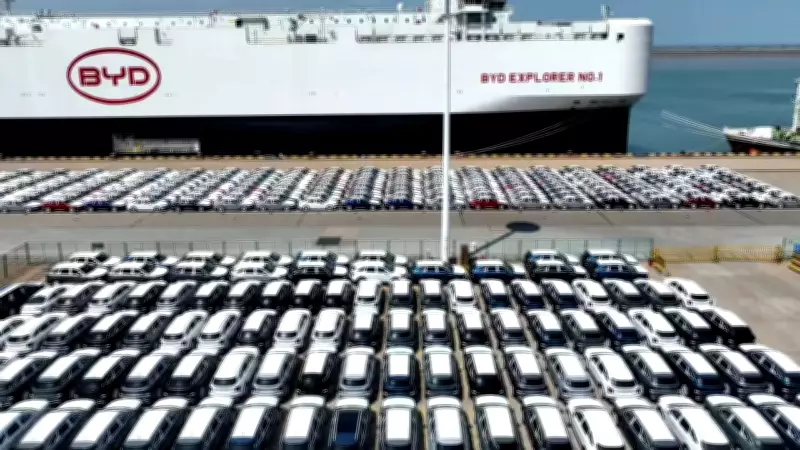
The challenge extends beyond any single company. Chinese brands, led by BYD which topped the NEV market in 2025 followed by Geely, Wuling, and Tesla, are expanding rapidly. Their success is fueled by shorter development cycles, robust supply chains, and aggressive pricing strategies. These automakers are not only dominating their domestic market but are also aggressively expanding their global footprint, reshaping the international automotive landscape.






