

China's Dark Factories: The Lights-Out Manufacturing Revolution
Picture entering a vast industrial facility where robotic arms assemble smartphones with relentless precision, operating in complete darkness without a single human worker in sight. This is not a scene from a science fiction film but the reality of China's pioneering dark factories, which are establishing unprecedented standards in global manufacturing through continuous, fully automated production cycles.
What Exactly Are Dark Factories?
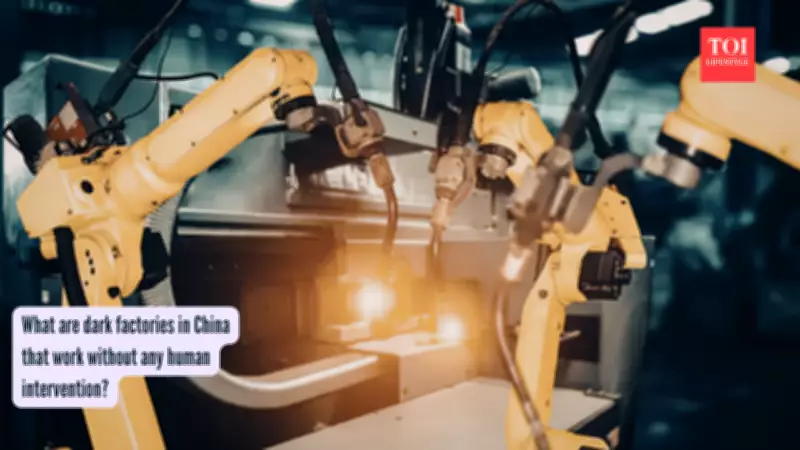
Dark factories represent the pinnacle of industrial automation—production plants that function entirely without human presence on the factory floor. These facilities rely exclusively on sophisticated machinery to handle every aspect of manufacturing, from component assembly and quality inspections to material transportation. The term "dark" originates from the absence of lighting requirements since no personnel are needed to work in these environments.
These advanced operations leverage a comprehensive ecosystem of technologies including industrial robots, LIDAR systems for navigation, infrared imaging cameras, Internet of Things (IoT) sensors, and artificial intelligence for real-time decision-making. This hyper-automated approach eliminates human intervention completely, resulting in dramatically increased production speeds and unprecedented operational efficiency.

Major Players Embracing the Dark Factory Model
China has emerged as the global leader in implementing dark factory technology, particularly within the electronics and electric vehicle sectors. Technology giant Xiaomi operates a facility in Changping that reportedly produces one smartphone every second without any floor workers, according to industry reports from BGR. Manufacturing powerhouse Foxconn has implemented lights-out production lines across multiple locations, with their Kunshan facility alone eliminating over 60,000 traditional manufacturing positions as reported by IEN.
In the electric vehicle battery industry, leading producers BYD and CATL have significantly expanded their robotic workforce, incorporating advanced machines and even humanoid robots throughout their manufacturing plants to maximize production capabilities and maintain competitive advantages.
The Transformative Impact on Employment
The proliferation of dark factories has created substantial shifts in China's labor landscape. According to Bloomberg data, the country's manufacturing workforce has contracted dramatically from approximately 115 million workers in 2013 to fewer than 85 million projected for 2025—representing a loss of over 30 million traditional manufacturing positions. This decline has occurred despite China's manufacturing exports reaching record levels in 2026, highlighting how automation enables greater output with significantly reduced human labor requirements.
Industry analysts at Gartner predict that approximately 60% of global manufacturers will adopt some form of dark factory technology or methodology within the coming years, suggesting this trend will continue expanding internationally.
Evolving Workforce Skills and Retraining Initiatives
While traditional manufacturing jobs are diminishing, employment is transforming rather than disappearing entirely. The automation revolution has created growing demand for specialized roles including robotics technicians, artificial intelligence specialists, cybersecurity professionals, and automation system supervisors. China has invested substantially in workforce retraining, allocating over $15 billion since 2020 toward advanced manufacturing education programs according to Bloomberg reports.
Human workers are increasingly transitioning to oversight, maintenance, programming, and optimization roles that occur outside the production floor. The International Federation of Robotics' World Robotics 2025 report confirms China's dominant position in industrial automation, documenting over 2 million operational factory robots in 2024—representing 54% of global industrial robot demand. China's robot density reached 392 robots per 10,000 manufacturing workers, significantly exceeding the global average of 141 robots per 10,000 workers.

This technological transformation represents both a challenge and opportunity for global manufacturing, as China's dark factories demonstrate how complete automation can redefine production paradigms while necessitating fundamental shifts in workforce development and economic planning.





