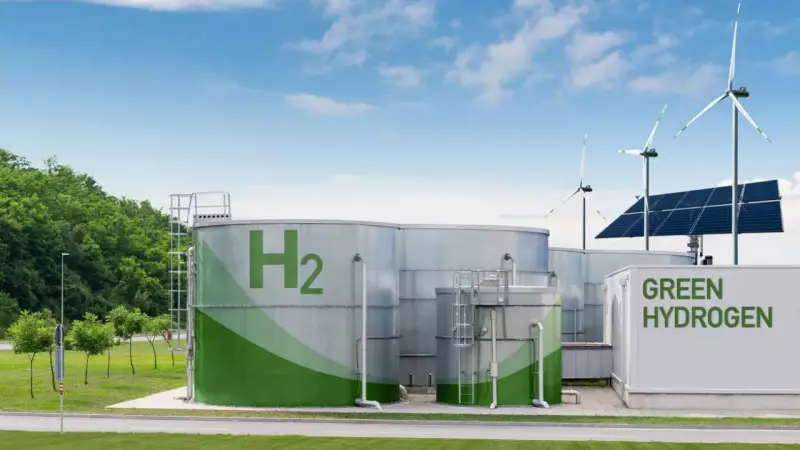
The Confederation of Indian Industry has made a strong appeal to the government. It wants clear mandates for green hydrogen use, backed by financial incentives. This move aims to accelerate demand creation and support India's shift toward a cleaner industrial economy.
Sectors Ready for Green Hydrogen Transition
CII identified key sectors that currently depend heavily on grey hydrogen. These include refining, fertilisers, and natural gas. The industry body believes these sectors can anchor large-scale demand for green hydrogen. However, this requires addressing the cost gap between grey and green hydrogen through effective policy support.
Greening mandates with incentives would help overcome economic barriers. They would provide certainty to producers and enable faster cost reductions through economies of scale.

Phased Implementation and Support Mechanisms
CII suggested a phased approach for green hydrogen blending mandates across different sectors. The body recommended several cost-offset mechanisms to support this transition:
- Carbon credit allocations for emissions saved
- Cross-subsidies, particularly in the fertiliser sector by offering cheaper natural gas when blended with green hydrogen
- Viability gap funding to ease the cost burden on industry and consumers
Public Procurement as a Catalyst
The industry body highlighted the decisive role public procurement could play in scaling up green hydrogen adoption. Large public infrastructure projects offer a ready channel to generate predictable demand for green hydrogen derivatives.
These projects include housing developments, railway networks, port facilities, and bridge constructions. Mandating green procurement would help establish anchored offtake agreements. It would reduce costs through scale and de-risk investments by offering producers bankable demand.
CII estimates significant demand could be unlocked through a specific approach. If 10–15 per cent of infrastructure-related materials used in public projects come from green hydrogen-based production, it would create substantial market pull. These materials include steel, ammonia, and cement.
Building on Clean Energy Momentum
CII Director General Chandrajit Banerjee emphasized building on India's clean energy expansion momentum. He noted that non-fossil fuel installed capacity reached 266.78 GW in 2025. This represents a 22.6 per cent increase over 2024, with 49.12 GW of fresh capacity added during the year.
"While this represented a record-breaking year in India's clean energy journey, the next level of development will come with important technologies like green hydrogen being promoted," Banerjee stated.
Industrial Clusters and Export Strategies
The industry body also advocated for developing industrial green hydrogen clusters with shared infrastructure and aggregated demand. Such clusters could enable smaller users to access green hydrogen at viable costs.
This would particularly benefit MSMEs in ceramics, glass, and chemicals sectors. These businesses currently face high grey hydrogen prices that limit their competitiveness.
On the export front, CII emphasized the importance of bilateral agreements with major potential importers. Key markets include Germany, the Netherlands, Japan, and South Korea. Building overseas demand requires harmonizing Indian certification standards with global frameworks and simplifying trade documentation.
CII further suggested granting "deemed export" status to green hydrogen and its derivatives. This status would allow them to qualify for incentives under existing export promotion schemes.
Attracting Private Capital
To attract private capital into early-stage projects, CII recommended government development of specialized financial instruments. These instruments would help make India's green hydrogen ventures globally competitive and attractive to investors.
The comprehensive recommendations from CII come at a crucial time for India's energy transition. As the country continues its clean energy expansion, green hydrogen represents a significant opportunity for industrial decarbonization and economic growth.