

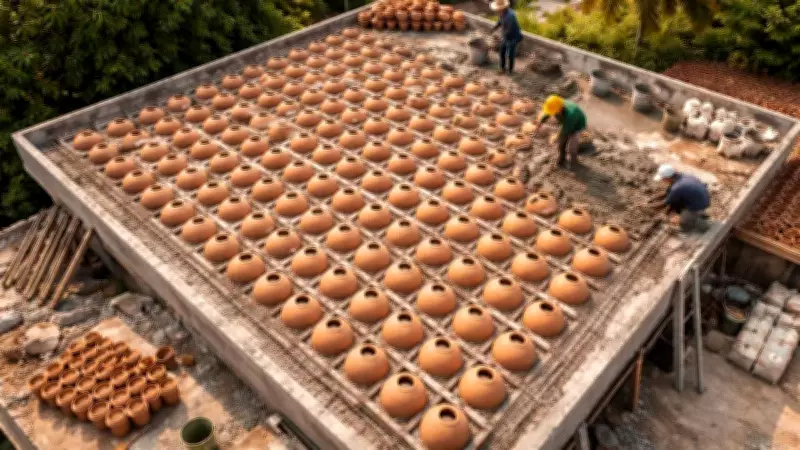
Clay Pot Roofing: Reviving a Traditional Method for Modern Comfort
As summer temperatures soar, many homes transform into oppressive heat traps, causing significant discomfort despite the constant whir of fans in every room. This common issue stems from conventional roofing materials, such as concrete slabs, which absorb solar radiation during the day and gradually release it indoors, elevating internal temperatures. While air conditioners offer temporary relief, they come with steep electricity bills and contribute to environmental degradation through high energy consumption and greenhouse gas emissions.
Understanding the Clay Pot Roofing System
Clay pot roofing presents a simple yet highly effective alternative that works in harmony with nature rather than against it. This method is part of the filler slab construction process, where inverted clay pots are strategically placed within the roof structure and then covered with a layer of concrete. Unlike solid concrete slabs, this approach creates numerous air pockets, resulting in a roof that is both lightweight and remarkably strong. The key innovation lies in these voids, which significantly enhance thermal insulation by slowing down heat transfer.
How Clay Pot Roofs Keep Interiors Cool
The cooling effect of clay pot roofs is grounded in a fundamental scientific principle: air is a poor conductor of heat. The air chambers formed inside the clay pots act as barriers, delaying the conduction of heat from the external roof surface to the interior of the building. Additionally, clay materials themselves have lower heat absorption properties compared to concrete. This dual mechanism ensures that indoor temperatures remain substantially lower than those in homes with standard roofs, providing natural comfort without mechanical cooling.

Cost-Effectiveness and Financial Viability
Clay pot roofing is not only an economical choice but also a financially sound investment. Clay pots are inexpensive and widely available, making them accessible for various construction projects. By partially replacing concrete with these pots, the overall demand for building materials is reduced, leading to lower material costs. A research paper published on ResearchGate, titled “Design and Analysis of Filler Slab Using Terracotta Fillers,” confirms that this method maintains structural integrity while cutting construction expenses. Furthermore, labor and energy costs are minimized, as the simplified construction process requires less time and resources.
Environmental Benefits of Clay Pot Roofs
The environmental advantages of clay pot roofing are substantial. By decreasing reliance on air conditioning systems, this method reduces energy consumption and associated greenhouse gas emissions. Moreover, it lessens the need for concrete, whose production is a major source of pollution due to cement manufacturing. This sustainable approach aligns with global efforts to combat climate change and promote eco-friendly building practices.
Year-Round Efficiency Across Seasons
While clay pot roofs excel at keeping homes cool during hot summer months, they also offer benefits in colder seasons. The same air spaces that block heat entry in summer help retain indoor warmth during winter, stabilizing interior temperatures throughout the year. This thermal regulation reduces the necessity for both air conditioners and heaters, contributing to long-term energy savings and enhanced comfort.
The Resurgence of Traditional Methods
In contemporary construction, concrete is often the default material, but its heat-retaining properties can lead to uncomfortably warm interiors. Traditional architectural designs, however, were thoughtfully crafted to account for local climatic conditions. With rising global temperatures and an increasing emphasis on sustainability, solutions like clay pot roofing are regaining popularity. This method demonstrates that effective solutions do not require complex technology; instead, they can emerge from the fusion of indigenous knowledge and sound engineering principles.
In today's world, where energy prices and heat levels continue to climb, embracing such innovative yet simple approaches becomes essential for creating comfortable, efficient, and environmentally responsible living spaces.






