Bombay High Court Mandates Automatic Approvals for Rooftop Solar Projects in Maharashtra
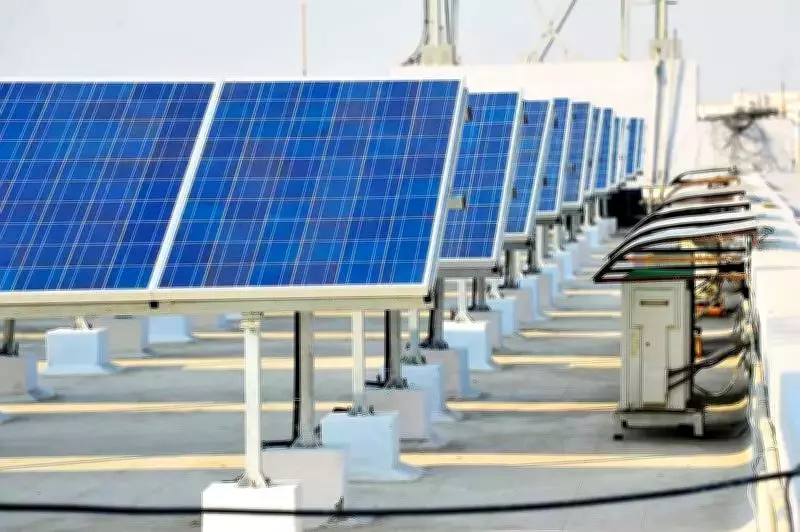
In a landmark ruling that promises to accelerate renewable energy adoption across Maharashtra, the Bombay High Court has issued a decisive directive to the Maharashtra State Electricity Distribution Company Limited (MSEDCL). The court has ordered the state utility to grant automatic approvals for all rooftop solar installations with capacities up to 10 kilowatts (kW), bringing its practices into strict alignment with central government regulations.
Court Disposes of Petition After MSEDCL's Undertaking
The court's order came while disposing of a writ petition filed by the All India Renewable Energy Association and other concerned parties. A division bench comprising Justices B P Colabawalla and Firdosh Pooniwalla formally recorded MSEDCL's undertaking to approve all complete applications upon receipt of the requisite fees.
The petition had challenged MSEDCL's controversial practice of capping solar capacity based on historical electricity consumption patterns. The petitioners argued that this practice directly violated the Electricity (Rights of Consumers) Rules, which explicitly mandate deemed approvals for rooftop solar projects up to 10kW without requiring cumbersome technical feasibility studies.

MSEDCL's Revised Approval Process and Timelines
During the court proceedings, MSEDCL provided crucial assurances regarding its revised approval framework. The utility committed to granting approvals up to the sanctioned load of a consumer's connection. Furthermore, for cases where the proposed solar capacity exceeds the existing sanctioned load, MSEDCL will process applications for load enhancement simultaneously with the solar approval, streamlining what was previously a fragmented process.
The utility has also established clear, tiered timelines for processing these approvals:
- Three days in metropolitan areas
- Seven days in other municipal regions
- Fifteen days in rural areas
MSEDCL acknowledged that cases requiring infrastructure augmentation, such as transformer upgrades, may take up to 90 days. Following these comprehensive undertakings, the petitioners chose not to press several key prayers, leading the court to dispose of the plea while directing MSEDCL to strictly adhere to its assurances.
Industry Experts Welcome the Directive
Solar energy expert Sudhir Budhay welcomed the court's directive, describing it as a significant step toward restoring consumer confidence and easing rooftop solar adoption in Maharashtra. "It is commendable that MSEDCL has accepted this position before the court and agreed to roll back the restrictive checks it had introduced on its online portal," Budhay stated.
However, Budhay also sounded a note of caution, pointing out that the earlier restrictive measures were software-driven and could potentially reappear without proper oversight. He emphasized the ongoing need for vigilance from consumers, industry stakeholders, and regulatory bodies to ensure MSEDCL's compliance with both the court order and central government rules.
Background of the Controversial Capping Practice
The controversy originated when MSEDCL began implementing caps on solar capacity during rooftop solar panel installations, a practice first reported by The Times of India. Several solar vendors and industry representatives raised concerns about this barrier, arguing that it contradicted the central government's push for simplified solar adoption under the Electricity (Rights of Consumers) Rules.
The court's intervention now establishes a clear legal precedent, ensuring that Maharashtra's electricity distribution policies align with national objectives for renewable energy expansion and consumer rights protection.