D2C Brands Power Mall Leasing Boom Across India
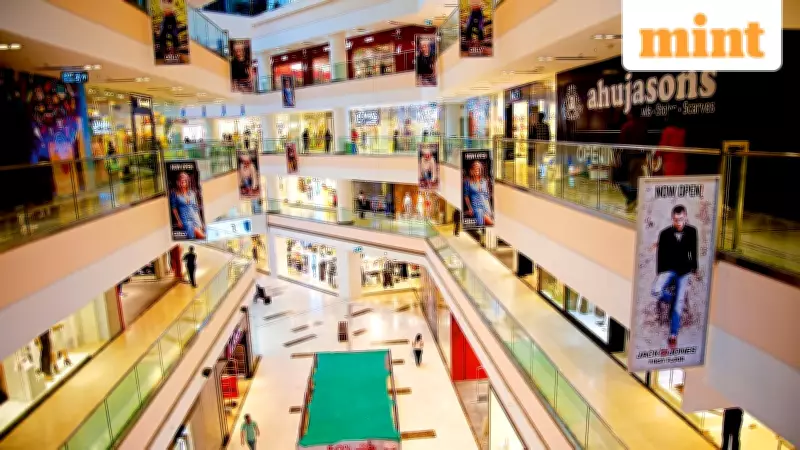
Direct-to-consumer (D2C) brands are emerging as a dominant force in India's retail real estate landscape, driving a significant mall leasing boom as rising online customer acquisition costs push these digital-first companies toward physical storefronts. According to a comprehensive report by Coldwell Banker Richard Ellis (CBRE), the world's largest commercial real estate services firm, D2C brands accounted for 27% of India's total retail leasing in 2025, marking a notable increase from 25% in the previous year.
Metro Cities Lead the Offline Charge
The shift toward physical retail spaces is most pronounced in India's top metropolitan areas. Mumbai has emerged as the epicenter of this transformation, with D2C brands responsible for 31% of total leasing activity in the city. Bengaluru follows closely at 27%, while Delhi captures 22% of the leasing share. Overall, retail leasing reached a record 8.9 million square feet in 2025, with 5.6 million square feet leased during the second half of the year alone.
Fashion and apparel brands have dominated this surge, establishing themselves as the primary drivers of mall expansion. They are followed by food & beverage outlets and jewelry retailers, all seeking to enhance their brand visibility and customer engagement through physical presence.

Strategic Advantages of D2C Brands
Pushpa Bector, senior executive director and business head at DLF Retail, highlights the unique advantages D2C brands possess. "D2C brands have a far better advantage over traditional brands as they have the database required to geo-target and reach their consumers," she explains. This data-driven approach allows brands like Lenskart, Chumbak, Bluestone, Snitch, and Souled to strategically select mall locations based on their existing online customer concentrations.
For mall operators, these brands represent valuable tenants that attract value-conscious young shoppers and increase overall foot traffic. DLF Retail employs a careful selection process, favoring brands that demonstrate potential for long-term success both online and offline. The company often starts with pop-up stores to gauge consumer traction before offering larger, permanent spaces.
Funding and Expansion Strategies
Abhinav Joshi, head of research for India, the Middle East and North Africa at CBRE, notes that this shift reflects broader demographic changes and substantial investor backing. "Gen Zs and millennials are already familiar with these brands through social media and online channels. Once they achieved visibility and secured private equity or venture capital funding, they started moving from online to offline," he observes.
Joshi estimates that nearly 30% of mall and high-street leasing is now driven by newer D2C brands, a share expected to rise further. Malls often present easier entry points than high streets, as developers show greater willingness to experiment with emerging labels to enhance the overall shopping experience.
Tier II and III Cities Emerge as Growth Markets
The expansion is not limited to metropolitan areas. Pradeep Krishnakumar, co-founder of Zouk, reveals that tier II and tier III cities are emerging as strong growth markets. "These cities are growing almost 2x for us online, and that's now translating into physical store expansion," he says. Brands are leveraging their online data to identify customer clusters and open mall stores in proximity to these concentrations.
Krishnakumar notes that while rental costs were initially higher for Zouk's early stores, they stabilized as the brand scaled. "By the next 15 stores, things got rationalised. Now we're getting better rentals, sometimes even better than traditional players," he adds, emphasizing that malls increasingly favor "proudly Indian" D2C brands capable of driving significant footfalls.
Sector Growth and Future Outlook
The D2C sector, valued at approximately $87 billion in 2025, is projected to nearly triple by 2030. This rapid growth is fundamentally reshaping India's retail real estate landscape. Backed by strong funding and aggressive expansion plans, leading D2C brands are increasingly willing to pay premium rentals for prime mall locations.

Sumit Jasoria, co-founder and CEO of fashion startup NEWME, underscores the strategic importance of physical retail. "Digital-only reach is no longer sufficient for long-term growth. Physical retail builds trust, enables discovery-led demand and strengthens brand engagement," he states. Currently, around 23% of NEWME's revenue comes from offline stores, with the remainder generated through its app and website.
CBRE's report also highlights that India remains significantly underpenetrated in quality retail real estate, with per capita mall space far below global benchmarks. This suggests substantial room for sustained growth as D2C brands continue their offline expansion. Joshi concludes, "Thirty per cent is already a very high share. I feel leasing from D2C will continue to grow."
The convergence of digital data, venture capital funding, and strategic mall partnerships is creating a powerful new dynamic in Indian retail, positioning D2C brands as key drivers of the country's evolving commercial real estate market.