

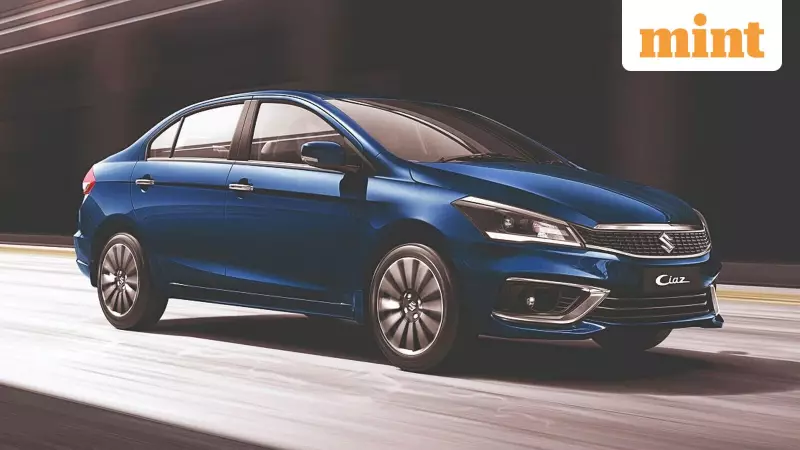
In a surprising turn of events, the Maruti Suzuki Ciaz, a midsize sedan that has already been discontinued by the automaker, has made headlines for a disappointing safety performance. The model, which once rivaled the Honda City and Hyundai Verna, has managed to secure only a one-star rating for adult occupant protection in the latest Global NCAP crash tests.
Is The Maruti Ciaz Still Available For Purchase?
Officially, Maruti Suzuki has pulled the plug on the Ciaz, and it is no longer part of the active product lineup. However, the sedan continues to be listed on the official Nexa website with its pricing details. This is because several dealerships across the country are still sitting on unsold stock of the vehicle, a result of the overall sluggish demand in the sedan segment.
For potential buyers, this presents an opportunity to negotiate significant discounts, as dealers are keen to clear this remaining inventory. So, while you cannot order a new one from the factory, finding a Ciaz at a showroom with a tempting price tag is still a possibility.

Detailed Breakdown of The Ciaz's Safety Score
The Global NCAP assessment revealed a stark contrast in the car's protective capabilities. In the Adult Occupant Protection (AOP) category, the Ciaz scored a low 20.86 points out of a possible 34, earning it a solitary star. For Child Occupant Protection (COP), it fared better with 28.57 points out of 49, translating to a three-star rating.
The test model was equipped with standard safety features like dual front airbags, seatbelt pretensioners, reminders, and Electronic Stability Control (ESC). Notably, it lacked side and head airbags, as well as advanced driver aids like autonomous emergency braking.
Why Did The Ciaz Score So Poorly?
The crash test report pinpointed several critical weaknesses. The most significant issue was the vehicle's unstable bodyshell and footwell area, which were deemed unable to withstand higher forces in a severe collision, compromising the cabin's integrity.
In the frontal impact test, while the heads and necks of the driver and passenger were well-protected, their chests showed poor protection. The driver's knees were at high risk from structures behind the dashboard. The side impact test showed reasonable protection for the head and pelvis, but the chest area was highly vulnerable.
For child safety, the car performed adequately when child seats were installed using ISOFIX anchors, protecting the dummies from head contact. However, it lost points because it does not offer three-point seatbelts for all rear seating positions, and the rear centre seat cannot properly accommodate a child restraint system (CRS).
The Final Verdict on a Discontinued Model
This crash test result serves as a stark postscript for the Maruti Suzuki Ciaz. It highlights that even vehicles from mainstream brands can have serious structural safety shortcomings. For consumers considering the remaining stock, the low safety rating is a crucial factor to weigh against the potential discounts on offer.
The news underscores the rapid advancement in vehicle safety standards in India, where newer models are increasingly being designed to achieve higher Global NCAP ratings. The Ciaz's result is a reminder of the safety compromises that were more common in the segment just a few years ago.






