India's First Private Gold Mine in Kurnool Set to Begin Production in May
From the era of Emperor Ashoka to the contemporary drive for an Aatmanirbhar Bharat, India's profound cultural and economic fascination with gold has remained unwavering. Now, in the arid, mineral-rich landscape of Andhra Pradesh's Kurnool district, a long-dormant aspiration is finally materializing into a tangible reality.
Jonnagiri: Where the Glitter Begins
The processing facility of Geomysore Services India Pvt Ltd's Jonnagiri gold project, heralded as India's inaugural large-scale private gold mine since Independence, is poised to become operational in the first week of May. Intense preparatory activities are currently underway at the plant as it undergoes pre-commercial operations, with management meticulously overseeing the transition to full-scale production.
Addressing Heavy Import Dependence
For decades, India's pursuit of gold has been characterized by significant reliance on foreign sources. The nation imports more than 800 tonnes of gold annually, exerting continuous strain on foreign exchange reserves. Domestic production has historically been constrained, with the state-operated Hutti Gold Mines remaining the sole substantial producer, yielding approximately 1.5 tonnes each year. The legendary Kolar Gold Fields, which ceased operations in 2000, left a considerable gap in large-scale gold mining within the country.

Public sector entities such as Navratna miner NMDC Ltd have ventured into gold mining through acquisitions of international mining companies and assets. Notably, NMDC has been extracting ore at the high-grade Mt Celia gold project, operated by its subsidiary Legacy Iron Ore Ltd, targeting key deposits at Blue Peter and Kangaroo Bore, with initial ore production achieved in early 2024.
Pioneering Private Sector Initiative
The Jonnagiri gold project, encompassing nearly 598 hectares across Jonnagiri, Erragudi, and Pagidirayi villages in Kurnool, signifies a groundbreaking private sector entry into India's gold mining landscape. Geomysore Services, supported by Thriveni Earthmovers & Infra—one of India's premier mine developers and operators—and Deccan Gold, is a publicly listed company on the BSE. This highly anticipated venture has already secured investments exceeding ₹400 crore.
Andhra Pradesh Chief Minister Chandrababu Naidu is scheduled to inaugurate the project in early May. "This is a landmark moment—not just for Andhra Pradesh, but also for India's broader gold mining ambitions," remarked Mukesh Kumar Meena, Principal Secretary of Mines and Geology for Andhra Pradesh.
Accelerated Project Development
The processing plant was commissioned within an impressive 13-month timeframe. "Jonnagiri exemplifies what India can achieve when vision, technology, and execution converge. We are not merely constructing a mine; we are establishing a benchmark for responsible, efficient, and globally competitive mining in the nation," stated B Prabhakaran, Founder and Managing Director of Thriveni Earthmovers.
The project is underpinned by substantial resource estimates, with certified resources amounting to 13.1 tonnes of gold. Exploratory data suggests potential reserves could reach up to 42.5 tonnes. At peak capacity, the mine is projected to produce up to 1,000 kg of refined gold annually over the next 15 years.
Sparking a Golden Mining Future
"The success of this project should incentivize numerous investors to enter the gold and critical mineral sector, which is imperative for India both commercially and strategically," emphasized Dr. Hanuma Prasad Modali, Director of Geomysore and Managing Director of Deccan Gold.
He highlighted that numerous untapped gold and critical mineral deposits across India could be developed through sustained exploration efforts. "India should target producing at least 50 to 100 tonnes of gold per annum within the next decade." Deccan Gold is concurrently developing a gold mine in Kyrgyzstan and exploring resources including copper, nickel, lithium, and tungsten both domestically and internationally.

Social Integration and Community Engagement
Jonnagiri is also being developed as a socially integrated initiative, with programs focusing on education, healthcare, sanitation, drinking water, and skill development in neighboring villages. This emphasis on what industry experts refer to as a "social licence to operate" has fostered acceptance and support from local communities.
The Chandrababu Naidu-led NDA government has played a facilitative role, aligning the project with its industrial development objectives and assisting with regulatory clearances.
Analysts note that while the project may not immediately overhaul India's gold import expenditures, it represents a structural transformation—signaling the country's renewed readiness to harness its own mineral wealth.
From Rocks to Riches: The Transformation Process
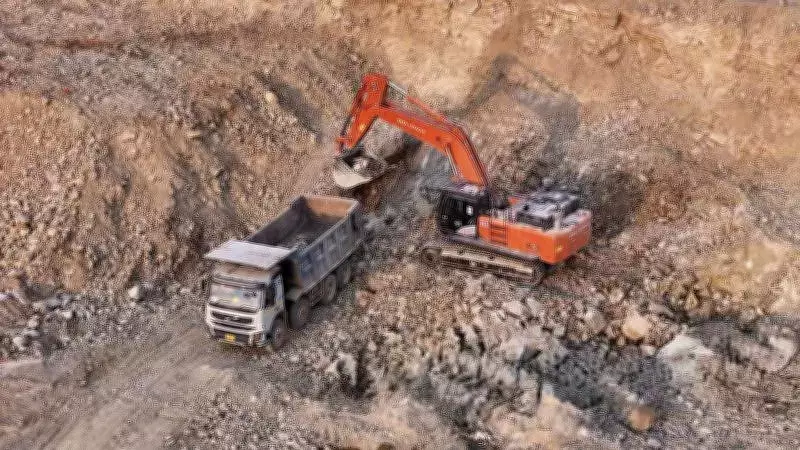
Before sunrise over Kurnool's rugged terrain, the quiet of the Jonnagiri gold fields gradually yields to a mechanical symphony—drills penetrating the earth, controlled explosions fracturing ancient rock, and massive excavators delving through layers that have concealed their treasures for millennia.
What transpires here is a form of modern alchemy, where ordinary stone is meticulously processed into precious gold. At the Geomysore Services gold project in Jonnagiri, the journey commences with open-pit mining:
- Precision Drilling and Blasting: Hard rock formations are broken down through exact drilling and controlled blasting to expose gold-bearing ore.
- Material Transport: Large dumpers convey the mined material to the processing plant.
- Crushing and Grinding: The ore undergoes systematic crushing and grinding into fine particles.
- Gravity Separation: The powdered ore is initially subjected to gravity separation to recover coarse gold early in the process.
- Carbon-in-Leach System: Finer material enters this critical stage, where a cyanide solution dissolves the remaining gold, which is then adsorbed onto activated carbon.
- Extraction: Through elution and electro-winning, the gold is separated and collected as a dense sludge.
- Smelting: Intense heat in smelting furnaces ultimately transforms this residue into doré bars—solid, gleaming evidence of an extraordinary metamorphosis from rock to riches.