GMRL Board to Finalize Gurgaon Railway Station Metro Link This Week
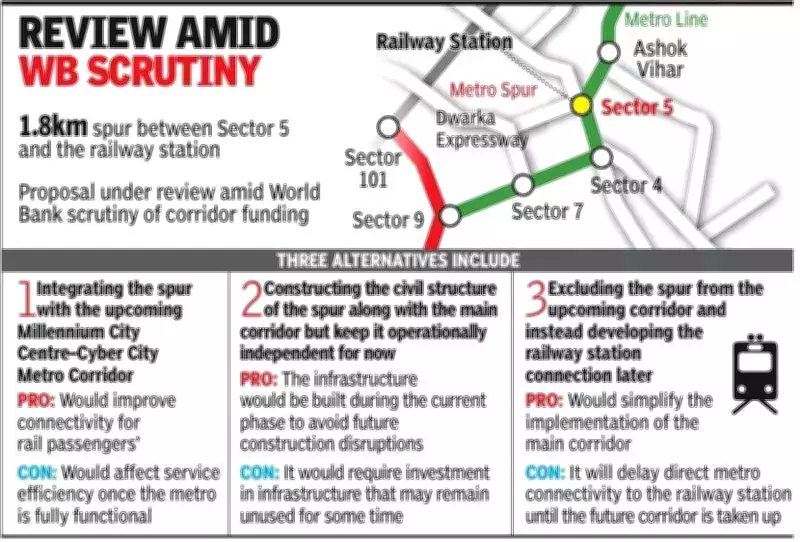
The Gurgaon Metro Rail Limited (GMRL) board is scheduled to convene this Wednesday to make a crucial final decision regarding the integration of the city's railway station with the upcoming Millennium City Centre–Cyber City metro corridor. This pivotal meeting will determine the future of a proposed 1.8-kilometer metro spur designed to link Sector 5 directly with the railway station, addressing long-standing connectivity gaps in the city's transportation network.
Three Alternatives Under Scrutiny Amid Funding and Operational Concerns
Authorities are currently evaluating three distinct alternatives for the railway station spur, each with its own set of operational and financial implications. The review comes amid heightened scrutiny from the World Bank, which is examining funding for the main corridor project. The World Bank has previously advised that the railway station spur be processed separately since it was not part of the originally sanctioned plan. Including it in the current project could potentially delay funding approval for the Millennium City Centre–Cyber City corridor.
Furthermore, statutory requirements for the additional line, including comprehensive environmental and social impact studies, remain pending. These factors add layers of complexity to the decision-making process as the board weighs the best path forward for Gurgaon's metro expansion.

Detailed Analysis of the Three Proposed Options
Option One: Full Integration with Main Corridor
The first option involves fully integrating the spur with the upcoming Millennium City Centre–Cyber City Metro Corridor from the outset. This approach would provide immediate metro access to the railway station as soon as operations begin, significantly enhancing connectivity for rail passengers. However, officials have raised concerns about operational challenges. The main corridor is designed to run trains at a high frequency of approximately every two minutes. Adding a spur to such a busy line could create scheduling conflicts and potentially affect overall service efficiency once the metro becomes fully functional.
Option Two: Construct Now, Operate Later
A second alternative proposes building the spur infrastructure concurrently with the main corridor but keeping it operationally separate for the time being. Under this plan, the physical construction would be completed during the current phase to avoid future disruptions and additional costs. Train services on the spur, however, would only be integrated with the Millennium City Centre–Cyber City corridor once the proposed railway station–Bhondsi corridor is developed. This strategy supports future expansion without disturbing main-line operations but requires upfront investment in infrastructure that may remain unused for an extended period.
Option Three: Defer to Future Development
The third option is to exclude the spur entirely from the Millennium City Centre–Cyber City corridor and develop the railway station connection later as part of the proposed railway station–Bhondsi metro line. This would simplify the execution of the main corridor and avoid any potential delays or complications. However, it would also postpone direct metro access to the railway station until the future line is undertaken, leaving a critical connectivity gap in the interim.
Background and Context of the Metro Project
The 28.5-kilometer metro corridor between Millennium City Centre and Cyber City was approved in June 2023 but did not originally include a direct link to the railway station. Initial plans relied on a skywalk for connectivity, which has been deemed insufficient for the growing needs of the city. The current deliberations mark a significant shift in addressing this oversight, with the GMRL board poised to chart a new course for Gurgaon's urban mobility.
"The matter will be put up before the board to take the final decision," stated a GMRL official, underscoring the importance of Wednesday's meeting. The outcome will not only impact immediate transportation options but also shape the long-term development of Gurgaon's metro network, influencing how residents and commuters navigate the city for years to come.