

Goa's Electric Vehicle Adoption Thrives Without Government Subsidies
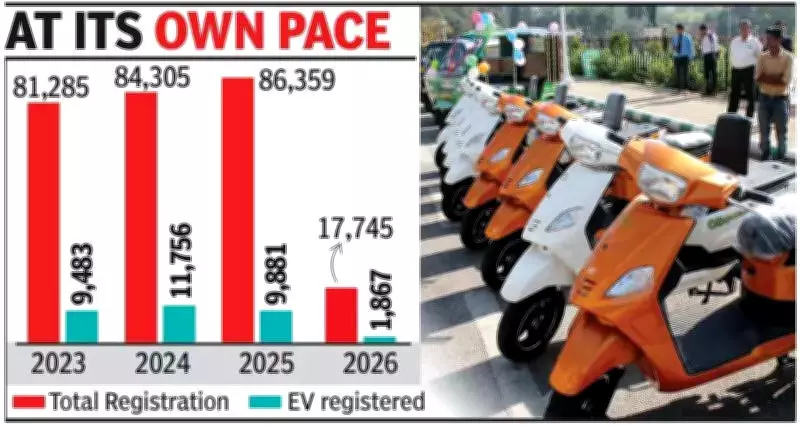
In a significant development for sustainable transportation, the state of Goa has demonstrated robust growth in electric vehicle (EV) adoption, with an average of 11% of all vehicles sold over the last four years being electric. This trend persists even after the state government discontinued purchase subsidies in 2024, highlighting a strong consumer shift towards eco-friendly mobility.
Steady EV Sales Figures Amid Policy Changes
Since 2023, a total of 32,987 electric vehicles have been sold in Goa. The sales momentum has continued unabated, with approximately 9,881 EVs purchased in 2025 alone. From January to March 19, 2026, an additional 1,867 EVs were sold, underscoring the sustained demand despite the absence of financial incentives.
This resilience in the EV market is particularly noteworthy given the state's previous subsidy scheme, which offered up to Rs 15,000 for two-wheelers and up to Rs 1 lakh for cars. The subsidy was disbursed in a single instalment upon purchase, aimed at accelerating EV adoption across segments, especially in mass categories like two-wheelers, public transport, and goods carriers.

Infrastructure Expansion and Government Initiatives
The Goa Energy Development Agency (GEDA) has proactively moved a fresh proposal to the state government to implement a new modified scheme for EV purchases. A senior government officer revealed that most consumers opt for two-wheeler EVs compared to four-wheelers, indicating a preference for affordable and practical electric mobility solutions.
To support this growing EV ecosystem, the state government has significantly increased EV infrastructure. A key decision involves the model for setting up EV charging stations, where the government bears 50% of the cost, with charging station developers covering the remaining half. This initiative aims to ensure that Goans face no issues related to charging their vehicles, thereby encouraging more residents to transition to electric options.
Vehicular Population and Environmental Goals
Goa's vehicular population has risen to 14.5 lakh by December 31, 2025, marking an increase of nearly one lakh vehicles from the 13.5 lakh recorded in 2024, according to the Economic Survey 2025-26. With a state population of 15.8 lakh residents, this translates to about 91 vehicles for every 100 people, highlighting the high density of vehicles in the region.
Over the last decade, around 50,000 EVs have been registered in Goa. The original subsidy scheme, launched in December 2021, sought to drive rapid adoption of battery electric vehicles (BEVs) with ambitious targets:
- Achieve 25% of all new vehicle registrations by 2024
- Improve air quality by reducing greenhouse gas emissions
- Lower noise levels and decrease fossil fuel usage in the transport sector
Additionally, the scheme intended to foster job creation in various EV-related sectors, including driving, sales, financing, servicing, retrofitting, and charging infrastructure.
Future Prospects and Consumer Behavior
The continued purchase of EVs in Goa, even after subsidy discontinuation, suggests a maturing market where consumers are increasingly valuing environmental benefits and long-term cost savings. The government's focus on enhancing charging infrastructure appears to be a critical factor in sustaining this growth, addressing range anxiety and convenience concerns.
As the state moves forward, the proposal from GEDA could further catalyze EV adoption, potentially reintroducing incentives or new support mechanisms. This ongoing evolution positions Goa as a notable example of how regional markets can embrace electric mobility through a combination of policy support, infrastructure development, and consumer awareness, ultimately contributing to broader environmental and economic goals.






