

Government Intensifies Push for PNG as LPG Shortage Persists
The Indian government has escalated its efforts to promote Piped Natural Gas (PNG) as a strategic alternative amidst a deepening Liquefied Petroleum Gas (LPG) crisis. Both fuels have been designated as 'top priority' by authorities in response to ongoing geopolitical conflicts affecting energy supplies, but their fundamental characteristics diverge significantly.
Understanding the Core Differences Between PNG and LPG
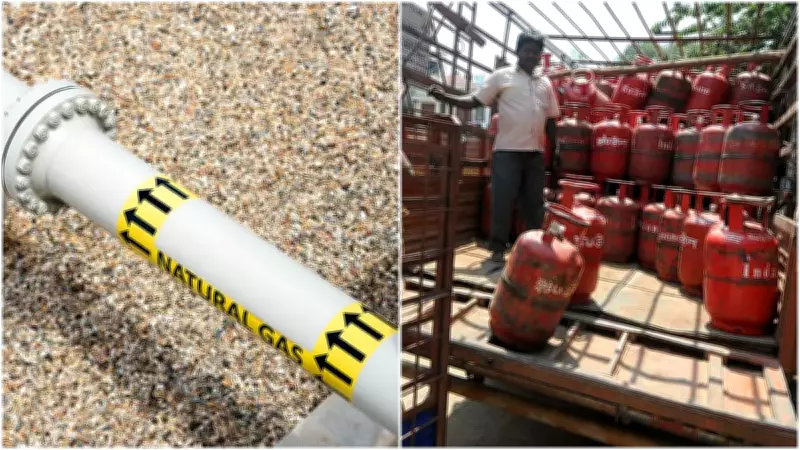
Usage and Application: PNG, or Piped Natural Gas, is delivered through an underground pipeline network directly to households and industries, offering a continuous supply without the need for storage cylinders. In contrast, LPG, or Liquefied Petroleum Gas, is stored in pressurized cylinders and requires periodic refills or replacements, making it more susceptible to logistical disruptions during crises.
Environmental Impact: PNG is generally considered a cleaner fuel with lower carbon emissions compared to LPG. It burns more efficiently, producing fewer pollutants, which aligns with India's sustainability goals under initiatives like the National Clean Air Programme. LPG, while cleaner than traditional solid fuels, has a higher carbon footprint and can contribute to air quality issues if not properly managed.

Supply and Infrastructure: The supply chain for PNG relies on extensive pipeline infrastructure, which provides greater stability and reduces dependency on transportation networks. However, its availability is limited to urban and semi-urban areas with established gas grids. LPG, on the other hand, has a wider reach across rural and remote regions due to its portable cylinder-based distribution, but this system is vulnerable to supply chain bottlenecks, especially during conflicts or economic sanctions.
Government Strategy and Future Implications
In light of the current LPG crisis, the government is accelerating the expansion of PNG networks under schemes like the City Gas Distribution (CGD) project. This move aims to enhance energy security, reduce import dependence, and provide a reliable alternative for consumers. Experts suggest that a dual-fuel approach, leveraging both PNG and LPG based on regional infrastructure, could mitigate future shortages and support India's transition to cleaner energy sources.
The push for PNG reflects a broader shift towards sustainable and resilient energy systems, emphasizing the need for diversified fuel options to safeguard against global market volatilities.






