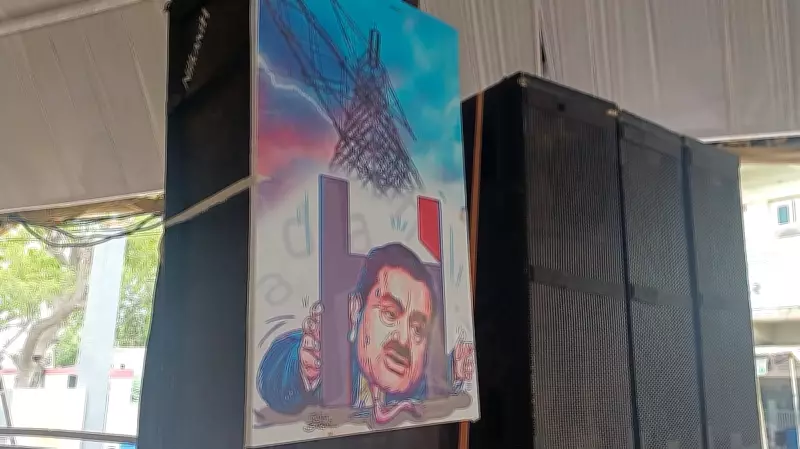
Farmers in Gujarat’s Kutch district are resisting Adani Power’s plan to install high-voltage transmission lines across their agricultural land, arguing that the acquisition serves a private company’s profit rather than public good. The protest has gained momentum, with farmers demanding that the project be reclassified as non-commercial or they be given alternative terms.
What is the dispute about?
Adani Power is building a 765 kV transmission line to evacuate electricity from its Mundra thermal power plant. The line passes through fertile farmlands in Kutch, requiring the installation of towers and overhead cables. Farmers claim the project will disrupt irrigation, reduce crop yields, and lower land values. They argue that the Land Acquisition Act permits compulsory acquisition only for public purposes, not for private profit.
State government’s offer
In response to the protests, the Gujarat government agreed to pay farmers 100% of the compensation amount upfront, instead of the usual instalments. This is a significant concession, as standard practice involves phased payments. However, farmers remain unsatisfied, insisting that the core issue is the purpose of acquisition. “We are not opposed to development, but it should not be for private profit. The government must declare this a public project or compensate us accordingly,” said a farmer leader, according to local reports.

Impact on the project
The standoff threatens to delay the transmission line, which is critical for Adani Power to supply electricity to Gujarat’s grid. The company has already invested heavily in the Mundra plant. If the line is not completed on time, Adani Power may face penalties or forced curtailment of output. According to industry sources, the project’s deadline is December 2026, and any prolonged delay could push it into 2027.
Broader implications
The dispute highlights a growing conflict between renewable and conventional energy projects in India. While the government promotes solar and wind farms, coal-based plants like Mundra face local opposition. Legal experts note that the Land Acquisition Act’s “public purpose” clause is often contested in court. In 2024, the Supreme Court ruled that land acquired for a private company can be considered public purpose only if the project serves a clear public interest. The Kutch farmers’ case may set a precedent for similar disputes across India.
What next?
Talks between farmer representatives and district officials are ongoing. The farmers have threatened to escalate the protest if their demands are not met. Meanwhile, Adani Power has not commented officially, but sources say the company is exploring alternative routes that would avoid the most fertile lands. However, this would increase costs and may require fresh environmental clearances.