

Gujarat's Industrial Crisis: LPG Shortage Threatens Mass Exodus of Migrant Workers
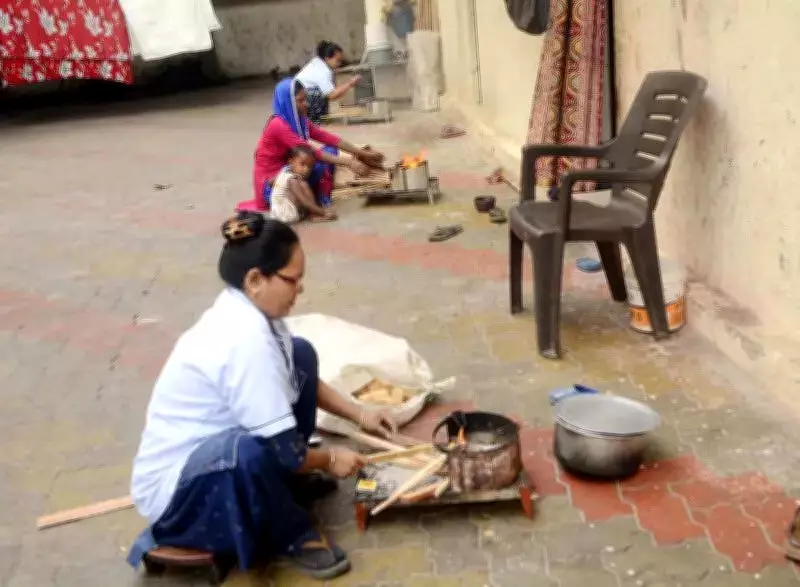
In the industrial zones of Gujarat, an unprecedented crisis is unfolding as manufacturers struggle to retain their migrant workforce amid a severe shortage of cooking gas cylinders. The situation has become so dire that industrialists are now resorting to arranging bundles of cooking wood for their employees, creating makeshift outdoor kitchens to prevent workers from abandoning their jobs.
Desperate Measures in Rajkot and Metoda
For the past two weeks, industrialist Parth Ganatra has been dedicating significant time to organizing cooking wood supplies for his 50 workers at his Metoda GIDC unit. Every evening, smoke now billows from temporary chulhas outside the labor colony as workers prepare their meals using this primitive method.
"I cannot afford to lose my workforce," Ganatra explained. "Procuring this wood is challenging, but I had to find a solution to keep my operations running."

This unusual scene reflects a growing emergency across Gujarat's manufacturing hubs, where industries fear that continued supply disruptions could trigger a large-scale departure of migrant workers to their home states of Bihar, Uttar Pradesh, and Odisha.
Critical Dependence on Commercial LPG
Major industrial clusters including Shapar-Veraval and Metoda in Rajkot, along with the ceramic manufacturing center of Morbi, rely heavily on migrant labor. Most workers reside in factory-provided labor colonies where they depend almost exclusively on commercial LPG cylinders for cooking.
Unlike subsidized domestic cylinders, commercial LPG carries no government subsidy but was previously readily available. Supply chain disruptions following conflicts in West Asia have now created severe shortages that threaten industrial stability.
The Rajkot Chamber of Commerce and Industry has formally alerted district authorities about the gravity of the situation. In their representation, RCCI stated that micro, small, and medium enterprises with resident workers are facing acute LPG shortages, making it increasingly difficult to retain employees who have begun returning to their native places.
Scale of the Workforce Impact
Industry associations estimate that approximately 100,000 migrant workers are employed in casting and forging units across Rajkot's industrial areas. Meanwhile, Morbi's ceramic industry alone employs nearly 400,000 workers, most of whom rely on commercially supplied LPG cylinders for daily cooking needs.
District Collector Om Prakash has acknowledged the crisis, stating that authorities are working to ensure migrant workers face no difficulties in obtaining cooking gas. "We have emphasized that gas supply for cooking purposes must be maintained at pre-conflict levels," Prakash assured.
Dahej's Unique Housing Challenge
In Bharuch district, the heavily industrialized Dahej cluster presents a different dimension of the migrant worker challenge. Despite hosting over 400 industrial units across chemicals, petrochemicals, pharmaceuticals, and other sectors, Dahej lacks any dedicated labor colonies.
This three-decade-old situation forces thousands of migrant workers into makeshift accommodations arranged by contractors in nearby villages or farmhouses. Approximately 10,000 workers reside in about 15 villages surrounding Dahej, where even small single-room units command rents between ₹3,000 and ₹5,000 monthly.
Harish Joshi, President of the Vilayat Industries Association, emphasized that "migrant workers form the backbone of manufacturing units, but it's becoming increasingly difficult to prevent them from leaving."
Systemic Disruptions and Alternative Solutions
The LPG shortage has disrupted the established system where contractors typically arrange transport, accommodation, and canteen facilities for workers. Several canteen services have scaled down operations, while tiffin services run by local families have seen increased demand but at sharply higher costs.
Labor contractor Nirmal Shah from Dahej reported that uncertainty over fuel availability has already prompted some workers to return home. "Many companies have begun arranging electric cooking equipment to ensure workers can prepare meals," Shah noted.

Amrut Gadhiya, President of the Shapar-Veraval Association, explained that workers prefer commercial gas connections due to minimal paperwork requirements. "Many units are providing connections, but supplies are insufficient, creating a major struggle to retain the workforce," Gadhiya stated.
Government and Industry Response
Oil Marketing Companies have initiated special camps across industrial clusters to distribute 5-kilogram LPG cylinders to workers. According to Sanjib Kumar Behera, Executive Director and State Head of Indian Oil Corporation in Gujarat, the three government OMCs sold 74,622 five-kilogram cylinders between March 23 and April 4.
"On average, more than 5,700 small cylinders are being sold daily across the state," reported Behera, who also serves as State-Level Coordinator for OMCs. During this period, 22,553 cylinders were issued for new connections while 57,503 were sold under the Free Trade LPG category.
In Surat alone, approximately 21,000 cylinders were distributed through organized camps in various industrial areas. Gujarat typically experiences demand for around 200,000 five-kilogram cylinders, highlighting the scale of the current intervention.
The crisis underscores the delicate balance maintaining Gujarat's industrial productivity, with both government authorities and private enterprises scrambling to find sustainable solutions before the migrant workforce decides to seek opportunities elsewhere.





