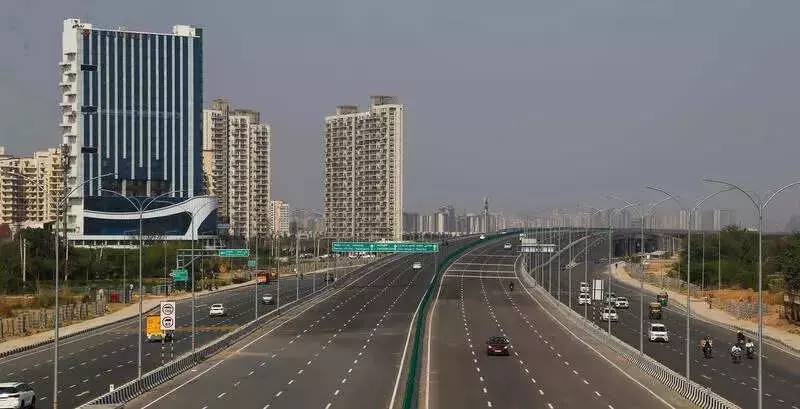
Gurgaon Residents Demand Bus Services on Dwarka Expressway to Ease Commute Woes
Residents living in newly developed sectors along the Dwarka Expressway have taken a significant step. They have written formal letters to the Prime Minister of India and the Chief Ministers of Delhi and Haryana. Their primary request is clear. They want the introduction of dedicated, high-frequency bus services. These buses would connect metro stations in Delhi's Dwarka area with Gurgaon, often called the millennium city.
Severe Gaps in Public Transport Highlighted
In their detailed letters, the residents pointed out severe problems. They highlighted critical gaps in last-mile and intercity public transport. This issue persists despite rapid residential and commercial growth along the entire Dwarka Expressway corridor.
Residents explained the current situation. The absence of reliable bus connectivity forces thousands of daily commuters to use other options. People now rely heavily on private vehicles, app-based cabs, or informal transport methods. This reliance worsens several existing problems. Traffic congestion increases, travel time extends, and pollution levels rise.

Sunil Sareen, deputy convenor of the Dwarka Expressway Gurgaon Development Association, shared his views. "We are witnessing massive development along the Dwarka Expressway," he said. "Housing societies, offices, schools, and healthcare facilities are becoming operational. However, public transport has not kept pace with this growth. There is an acute shortage of dependable bus connectivity between Dwarka metro stations and new sectors in Gurgaon. This makes daily commuting both difficult and expensive for residents."
Daily Struggles and Economic Impacts
Residents provided specific examples of their daily struggles. They noted that the lack of scheduled and frequent bus services creates severe congestion. Service roads and arterial junctions face the worst problems, especially during morning and evening peak hours.
The situation deteriorates further during special periods. Traffic restrictions and pollution-control measures like the Graded Response Action Plan (GRAP) create additional challenges. During these times, commuters find themselves with very limited alternatives for travel.
Medhavi Saluja, a resident of Imperial Gardens in Sector 102, described her personal experience. "My college is located in Delhi," she explained. "My parents have to drop me off and pick me up from the Sector 21 metro station every single day. With no reliable public transport available, both my studies and my parents' work schedules suffer significantly. Cab fares have also increased sharply after toll collection started on the Dwarka Expressway."
The financial impact is real and measurable. Earlier, cab fares between Gurgaon's Sector 102 and the Sector 21 Dwarka Metro station typically cost between Rs 300 and Rs 350. After toll collection began on the expressway, the same trip now costs commuters between Rs 550 and Rs 600. This represents a substantial increase in daily travel expenses.
Residents also flagged broader economic consequences of poor connectivity. One resident from Shapoorji Pallonji Joyville in Sector 102 shared a business perspective. "Although we own factory land in Gurgaon, we were compelled to set up our operations in Delhi's Najafgarh area," the resident said. "This decision resulted directly from the absence of adequate public transport. Private vehicles may work for business owners, but our workers depend entirely on buses. That essential connectivity simply does not exist here at present."
Unrealized Potential and Current Bus Operations
The residents made an important observation about the expressway's original vision. They noted that authorities envisioned the Dwarka Expressway as a high-capacity urban corridor. However, without a robust bus network integrated properly with the existing metro system, its full potential for sustainable mobility remains completely unrealized.

Currently, the Gurugram Metropolitan City Bus Limited (GMCBL) operates around 150 buses. These buses run on 23 different routes across the city. Despite this network, several large residential, industrial, and corporate clusters remain poorly connected. Areas along the Dwarka Expressway face particular challenges in terms of last-mile access.
Some improvements may arrive later this year. Authorities expect to induct around 200 electric buses into the existing fleet. Residents have urged authorities to prioritize high-demand corridors like the Dwarka Expressway when deploying these new buses.
Official Response and Future Considerations
Vishwajeet Chaudhary, the CEO of GMCBL, responded to the residents' concerns. He confirmed that the matter is under active consideration by the authorities. "Requests from citizen groups are being duly taken up for consideration," Chaudhary stated. "Our teams are identifying potential new routes. Once we induct new buses into our fleet, these underserved areas will also be brought under comprehensive public transport services."
The residents' campaign highlights a growing urban challenge. As Gurgaon expands rapidly along major corridors like the Dwarka Expressway, public transport infrastructure must evolve simultaneously. Without this parallel development, residents face increasing commute difficulties, higher expenses, and worsening urban congestion.