

Gurgaon's Major Infrastructure Boost: Rs 755 Crore Elevated Corridor on SPR
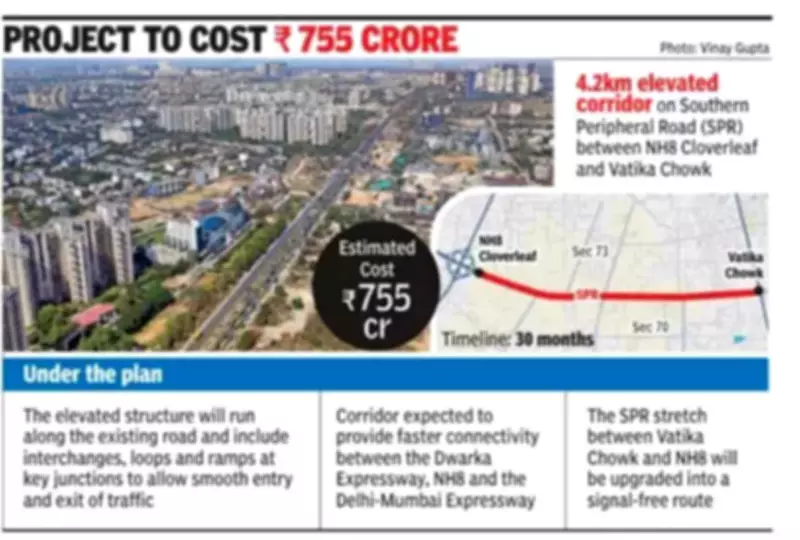
In a significant move to address growing traffic congestion, Gurgaon is set to construct a 4.2-kilometer elevated corridor along the Southern Peripheral Road (SPR) between NH8 and Vatika Chowk. The Gurugram Metropolitan Development Authority (GMDA) has invited requests for proposals (RFP) for this ambitious project, estimated to cost Rs 755 crore. This initiative aims to transform the busy stretch into a signal-free corridor, enhancing connectivity between major highways and the rapidly developing residential and commercial sectors along SPR.
Project Details and Timeline
The elevated structure will run along the existing road, with a design similar to grade-separated access systems developed along Dwarka Expressway. Once completed, the corridor is expected to provide faster connectivity between Dwarka Expressway, NH8, and the Delhi-Mumbai Expressway, while reducing pressure on key junctions such as Vatika Chowk and Subhash Chowk. The project is anticipated to take around 30 months to complete once the contract is awarded, translating to over seven months per kilometer of construction.
Key features include:

- An eight-lane elevated corridor between Vatika Chowk and NH8.
- A six-lane surface road with provision for two-lane service roads on each side.
- Two-lane ramps at key intersections to ensure smoother traffic flow.
- An interchange at NH8 for seamless connectivity with the national highway.
Enhancing Urban Mobility and Economic Growth
GMDA CEO PC Meena emphasized that Gurgaon is witnessing rapid urban expansion, making high-capacity road infrastructure a key priority to support the city's growing mobility needs and sustain economic growth. The proposed upgrade will benefit residents and commuters from several sectors located along and around the SPR corridor, including newly developing residential and commercial clusters. This project is part of ongoing efforts to strengthen the city's road infrastructure and create a more efficient, future-ready urban mobility network.
The agency selected through the tender will not only construct the corridor but will also be responsible for its operation, management, and maintenance for 10 years after completion, a GMDA official stated.
Future Phases and Connectivity Plans
Officials revealed that an interchange at Vatika Chowk is planned as part of Phase II, which will further strengthen connectivity between SPR and the Sohna elevated corridor. Documents are being prepared, and the tender for this phase will be floated soon. SPR has emerged as a key mobility corridor, linking Golf Course Extension Road, Sohna Road, Dwarka Expressway, and Delhi-Gurgaon Expressway. Rapid residential development along the stretch has significantly increased traffic over the past few years, leading to frequent congestion at intersections.
The project will also offer an alternative route for commuters traveling between Dwarka Expressway, southern Gurgaon, and Sohna or Faridabad, reducing dependence on congested intersections within the city.
Logistical Challenges and Resident Concerns
Before construction begins, authorities will need to shift several utilities along the route, including high-tension power lines and underground utilities such as gas pipelines. Approximately Rs 40 crore has been allocated for utility shifting in the project estimate. Most of the right of way is clear, with minimal trees along the stretch, and necessary permissions will be obtained if required.
Residents, while supportive of the project, have raised concerns about traffic management during construction. Neehar Ranjan, a resident of BPTP Astaire Gardens, noted that traffic on SPR has increased significantly, especially after the opening of Dwarka Expressway, with both heavy vehicles and commuter traffic multiplying over the years. He urged authorities to ensure minimal disruption to daily traffic, as SPR serves as a main arterial road for several sectors and housing societies, with thousands depending on it for their daily commute.
This elevated corridor project represents a critical step in addressing Gurgaon's infrastructure challenges, promising improved travel times and reduced congestion for its growing population.






