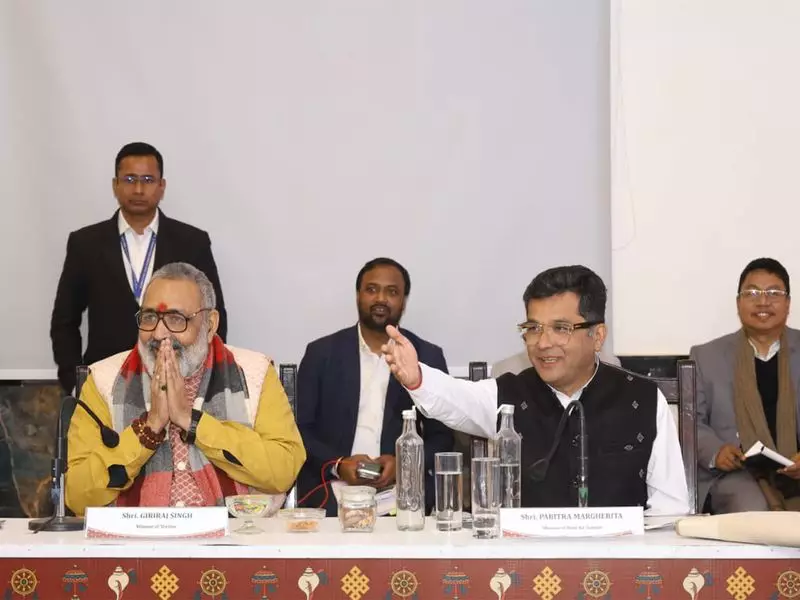
In a significant move to propel India's textile sector onto the world stage, a high-level conclave in Guwahati has laid down a comprehensive future roadmap. The event, which brought together key stakeholders from the industry and government, was addressed by Union Minister of State for Textiles and Railways, Pabitra Margherita.
Strategic Vision for a Global Leadership Role
The minister emphasized the government's unwavering commitment to transforming India into a dominant global textile hub. He outlined that the strategy hinges on a powerful combination of policy support, massive infrastructure development, and a sharp focus on sustainable practices. The conclave, held on February 24, served as a pivotal platform to align national ambitions with ground-level execution.
Margherita detailed the central role of the PM MITRA (Mega Integrated Textile Region and Apparel) Parks scheme in this vision. This flagship initiative is designed to create world-class industrial ecosystems that will attract large-scale investment, foster innovation, and boost employment. The parks are envisioned as integrated hubs that will streamline the entire textile value chain, from spinning and weaving to processing and garmenting, all under one roof.

Key Pillars of the Roadmap
The roadmap charted at the Guwahati meeting is built on several critical pillars. First is enhancing competitiveness through modern infrastructure and ease of doing business. Second is a strong push for sustainability, encouraging the adoption of eco-friendly materials and processes to meet global demand. Third is the integration of technology and skill development to create a future-ready workforce.
The minister specifically highlighted the immense potential of the Northeastern region, with Assam at its core, in this national mission. The region's unique strengths in raw materials like silk and its strategic location for trade with Southeast Asia position it as a crucial player in India's textile export growth.
Expected Outcomes and National Impact
The successful implementation of this roadmap is expected to yield transformative results. It aims to significantly increase India's share in global textile trade, generate millions of new jobs across formal and informal sectors, and boost the rural economy by strengthening the farm-to-fashion linkage. The focus on sustainability is also set to open doors to premium international markets that prioritize ethically produced goods.
The conclave concluded with a reinforced sense of purpose among industry leaders and policymakers. The collective resolve is to move beyond isolated efforts and work in a synchronized manner to realize the vision of 'Make in India for the World' in the textile domain. The detailed action plans emerging from Guwahati are set to guide investments and policy interventions in the sector for the coming years.