

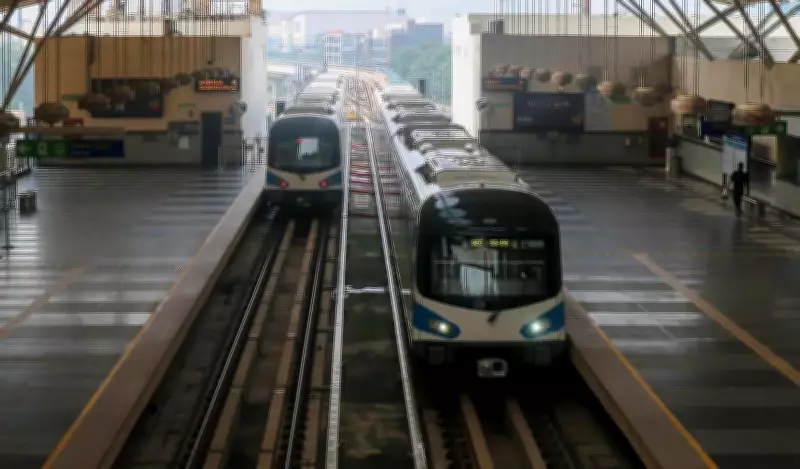
Haryana Rapid Metro Embraces Solar Energy to Tackle Rising Operational Costs
In a strategic move aimed at enhancing financial sustainability, the Haryana Mass Rapid Transport Corporation (HMRTC) has announced plans to explore solar power solutions for its Rapid Metro network in Gurgaon. This initiative comes in response to escalating electricity expenses, which now constitute nearly 20% of the system's operational costs, posing a significant financial challenge.
Escalating Energy Expenses Drive Solar Exploration
According to recent data from HMRTC, power and traction expenses surged to over Rs 11 crore between April 2025 and January 2026, marking a notable increase from over Rs 9 crore in the same period the previous year. With electricity costs alone accounting for approximately one-fifth of the total operational expenditure, they have emerged as one of the largest cost components for the metro system.
A senior HMRTC official emphasized the importance of this shift, stating, "The board has decided to explore solar energy solutions, including installation of solar panels at the stations, depot, and other available infrastructure, to reduce power and traction costs. Since electricity expense contributes a significant portion of our operational expenditure, the aim is to optimise these costs and improve overall financial performance. While we have moved towards operational surplus, controlling energy expenses will be key to sustaining it."

Feasibility Studies and Broader Renewable Energy Initiatives
During a board meeting last month, HMRTC management was also directed to examine the feasibility of procuring solar power from Indian Railways to run metro operations. This approach aims to further curb energy costs and enhance operational profitability, aligning with broader trends in the mass transit sector.
Similar renewable energy mechanisms have been successfully adopted by other organizations operating mass transit systems across India. For instance, the Delhi Metro Rail Corporation meets a significant share of its power demand through renewable sources, sourcing around 350 million units annually from the Rewa Solar Park and generating an additional 40 million units through rooftop solar installations. This accounts for roughly one-third of its total power consumption, setting a precedent for HMRTC's efforts.
Financial Performance and Ridership Growth Amid Challenges
The Rapid Metro network, which currently spans 11.7 km and connects key office hubs along Golf Course Road with an interchange at Sikanderpur station linking it to the Delhi Metro Yellow Line, has shown improvement in both ridership and revenue. However, expenditure pressures persist.
Total income rose to Rs 58.9 crore during April 2025 to January 2026, compared to over Rs 42 crore in the same period last year. Despite this growth, total expenditure also increased to over Rs 58 crore from Rs 51.3 crore. As a result, the system posted a marginal surplus of Rs 0.22 crore this year, largely aided by higher non-fare revenue, whereas it recorded a deficit of Rs 9.2 crore in the previous year.
In terms of ridership, passenger footfall has increased steadily, with average daily ridership now hovering around 53,000 passengers, up from nearly 47,000 last year. Total ridership grew by 13.5% between April 2025 and February 2026, reaching 1.7 crore passengers, compared to 1.5 crore in the corresponding period last year.
Conclusion: A Step Towards Sustainable Urban Mobility
The exploration of solar power solutions by HMRTC represents a proactive step towards reducing dependency on conventional energy sources and improving the financial health of the Rapid Metro network. By leveraging renewable energy, the corporation aims to not only cut costs but also contribute to environmental sustainability, setting a benchmark for other urban transit systems in India.






