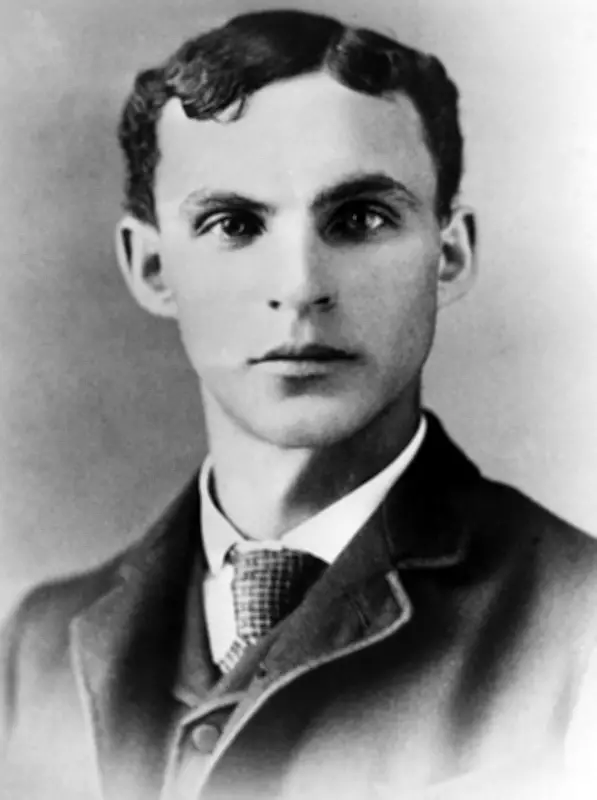
The invention of the assembly line is often portrayed in history as a 'eureka' moment, where the idea struck Henry Ford while working alone in his workshop. However, the true story is far more complex and fascinating. The moving assembly line did not materialize out of thin air; it emerged from the open-mindedness of an inventor who looked beyond his own industry.
The Meatpacking Inspiration
In the early 1900s, Ford and his team spent considerable time studying work processes in other industries. One notable visit was to Chicago's meatpacking plants, where butchers used a 'disassembly line' to process carcasses. Although it may seem odd for an automaker to learn from butchers, the efficiency lessons were invaluable. In these plants, a carcass moved past workers, each performing a repetitive task, effectively dismantling the animal piece by piece.
The transition from disassembly to assembly was a pivotal moment. According to an article from UC Davis, Ford was not the inventor of the wheel but figured out how to make it move in a straight line. The meatpacking plant provided a conceptual prototype: if disassembly could be done stage by stage, then assembly should work similarly.

Adapting the Blueprint of Flow
This new approach allowed Ford to abandon the traditional method of having a crew work on a stationary car. Instead, through a well-planned chain of processes, the car moved to the worker. This adaptation was not straightforward. Ford's team integrated principles from conveyors and gravity slides, commonly used in grain elevators and breweries, to create a smooth production flow.
The greatest virtue of the assembly line was its elegant simplicity. With a defined order of operations, the plant became an organism in action. Each worker attended to a small, specific task, eliminating wasted movement and searching for tools. This brought order to the chaos of the factory floor, enabling production to be scheduled and predicted with unprecedented precision. This innovative adaptation revolutionized production by organizing labor and machines efficiently, making cars affordable products of a system.
The Team Behind the Transformation
Despite popular belief, the assembly line was not an individual triumph. As explained in the journal Animal Frontiers, Ford's disassembly line in meatpacking predated and anticipated his assembly line. The paper highlights that this was not a coincidence but a fundamental principle of staged movement. The industrial advance was a team effort, where teams learned and improved upon each other's ideas.
Ford was less a visionary and more a connector. By studying meatpacking, grain handling, and brewing, he identified the commonality of repetitive motion arranged to eliminate waste. Before the Model T could be assembled faster than any previous car, the factory itself was transformed from a mere workplace into a new way of organizing men and machines.
A Broader Perspective
This broader perspective helps us understand that the assembly line was not just a piece of machinery; it was a cultural shift. It changed how managers thought about labor and how the world perceived the cost of goods. The car was no longer a luxury item hand-built by artisans; it became a product of a system. This legacy of cross-industry learning is perhaps the most important lesson from Ford's story. It reminds us that progress often starts when someone realizes that a problem in their own field has already been solved by someone else in a completely different domain.
Today, this reasoning is as relevant as ever, evident in fast-food kitchens and software development rooms. We live in a world shaped by Henry Ford's visit to a butcher shop, reminding us that stepping out of our comfort zone is not just courteous but essential for innovation. The story of the assembly line teaches us that innovations do not necessarily arise from inventions but can come through creative adaptation of existing concepts.