

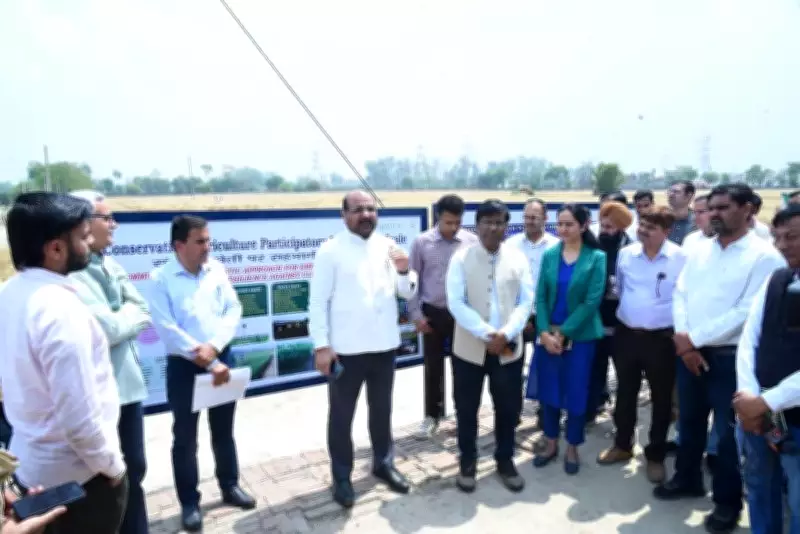
ICAR Director General Dr. ML Jat Highlights Transformative Research at CSSRI Karnal
During a significant visit to the Central Soil Salinity Research Institute (CSSRI) in Karnal, Haryana, Dr. ML Jat, the Director General of the Indian Council of Agricultural Research (ICAR), underscored the institute's pivotal role in advancing agricultural science. He commended CSSRI for its innovative research aimed at tackling soil salinity and waterlogging, which are critical challenges for farmers in India and globally.
Focus on Sustainable Agricultural Practices
Dr. Jat elaborated on how CSSRI's work is transforming farming practices through sustainable solutions. The institute has developed technologies and management strategies that help mitigate the adverse effects of soil salinity, thereby enhancing crop productivity and ensuring food security. He highlighted that these efforts align with ICAR's broader mission to promote climate-resilient agriculture and support the livelihoods of millions of farmers.
Key Research Areas and Innovations
In his address, Dr. Jat pointed out several key areas where CSSRI has made substantial contributions:

- Soil Reclamation Techniques: Advanced methods for reclaiming saline and alkaline soils, making them suitable for cultivation.
- Water Management: Efficient irrigation systems and drainage solutions to combat waterlogging and reduce salinity buildup.
- Crop Varieties: Development of salt-tolerant crop varieties that thrive in challenging soil conditions.
- Farmer Training Programs: Initiatives to disseminate knowledge and technologies to farmers, empowering them with practical skills.
He emphasized that these innovations are not only scientifically robust but also economically viable, ensuring widespread adoption across agricultural communities.
Impact on National and Global Agriculture
Dr. Jat noted that CSSRI's research has far-reaching implications, contributing to national food security and environmental sustainability. By addressing soil health issues, the institute supports the government's initiatives like the Soil Health Card Scheme and promotes sustainable farming practices that reduce dependency on chemical inputs. Globally, CSSRI's expertise in salinity management positions India as a leader in agricultural research, with potential applications in other regions facing similar challenges.
He concluded by reaffirming ICAR's commitment to fostering such transformative research, urging continued collaboration between scientists, policymakers, and farmers to build a resilient agricultural ecosystem.






