India Achieves Historic Power Capacity Addition Milestone
The Government of India announced on Sunday that the nation has added a record-breaking power generation capacity of 52,537 megawatts (equivalent to 52.5 gigawatts) from all energy sources during the initial ten months of the 2025-26 financial year. This monumental achievement has propelled the total installed power capacity to an impressive 520.6 GW as of January 2026, marking a significant leap forward in the country's energy infrastructure.
Renewable Energy Dominates Capacity Expansion
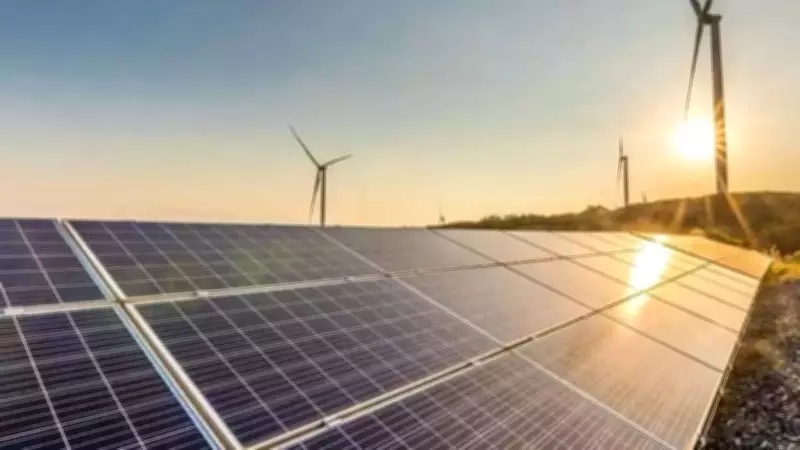
According to official statements from the Ministry of Power, over 75% of this unprecedented capacity addition originated from renewable energy sources, with the remaining portion contributed by thermal power plants. This development underscores India's accelerating transition towards sustainable and clean energy solutions, aligning with global environmental goals and domestic policy initiatives.
"This marks the highest ever capacity addition in a single year, surpassing the previous record of 34,054 MW (34 GW) achieved during FY 2024-25," the ministry emphasized in its official release. The statement further highlighted that the installed capacity witnessed a robust growth of nearly 11% within just ten months compared to the preceding financial year, reflecting the rapid pace of development in the power sector.

Detailed Breakdown of Capacity Additions
The government provided a comprehensive breakdown of the capacity additions across various energy sources:
- Renewable energy sources contributed a substantial 39.7 GW, comprising 35 GW from solar power and 4.6 GW from wind power installations.
- Large hydroelectric projects added 3.4 GW during the fiscal year.
- Thermal power sources contributed 8.8 GW to the overall capacity.
- Nuclear power added 700 MW, further diversifying the energy mix.
Adjustments and Current Capacity Status
Officials clarified that while the installed capacity was recorded at 475.3 GW in March 2025 according to Central Electricity Authority reports, certain non-operational capacities were subsequently written off. Specifically, approximately 2 GW of coal-fired plants, 4.4 GW of gas-based facilities, and 100 MW of nuclear capacity had been under prolonged outage and were removed from the total capacity calculations, providing a more accurate representation of functional infrastructure.
As of the latest data, India's power capacity composition stands as follows:
- Fossil fuel-based capacity: 248.5 GW
- Non-fossil fuel capacity: 272 GW, indicating a slight lead for cleaner energy sources
Future Projects and Planning Pipeline
The momentum in power sector development shows no signs of slowing, with numerous projects currently under construction or in advanced planning stages:
- Under Construction: 158 GW of renewable energy projects (including solar, wind, and hybrid), 39.6 GW of thermal plants, 13 GW of hydro-electric facilities, and 6.6 GW of nuclear power installations.
- Contracts Awarded: 22.9 GW of coal- and lignite-based projects have already been assigned to developers.
- Planning Stages: An additional 24 GW of conventional power capacity is undergoing various planning processes. Simultaneously, 48.8 GW of renewable energy projects, 4.3 GW of hydro-electric initiatives, and 7 GW of nuclear power plants are also in the planning pipeline, ensuring sustained growth in the coming years.
This comprehensive expansion strategy demonstrates India's commitment to enhancing energy security, meeting growing electricity demand, and progressively increasing the share of renewable sources in its energy portfolio. The record-breaking capacity addition not only strengthens the national grid but also positions India as a global leader in energy transition and sustainable development.