

In a strategic shift to revitalize its electric mobility ambitions, India is preparing to host a major Global Electric Vehicle (EV) Summit in the first quarter of 2025. This high-profile event, spearheaded by government think tank NITI Aayog, aims to attract crucial investments and tackle persistent supply chain vulnerabilities that have hampered growth.
A Sequel to MOVE: New Focus on Investment and Supply Chains
According to sources familiar with the development and a concept note reviewed by Mint, the summit is planned for March-April 2025. It will be positioned as a follow-up to the 2018 MOVE Summit inaugurated by Prime Minister Narendra Modi. Preparatory talks have already commenced involving the Ministry of Heavy Industries, along with domestic and international experts and think tanks.
The summit marks a critical recalibration of India's EV strategy. This comes after recent global supply chain disruptions, notably a rare-earth magnet crunch, and a lukewarm response to earlier initiatives designed to lure major global EV manufacturers to set up shop in India.

A primary goal is to secure investments from both domestic and global institutions to create manufacturing scale within the country. Furthermore, the event seeks to establish a platform for Indian businesses to integrate more deeply into global EV value chains.
Policy Pivot: From Incentives to Mandates for Key Segments
The upcoming gathering will concentrate on formulating domestic policy mandates to accelerate EV adoption, with a special emphasis on electric trucks and buses. These segments are slated for incentives under the flagship PM E-Drive scheme until the financial year 2027-28. While two- and three-wheelers also benefit from this scheme, their incentives are set to expire in March 2026.
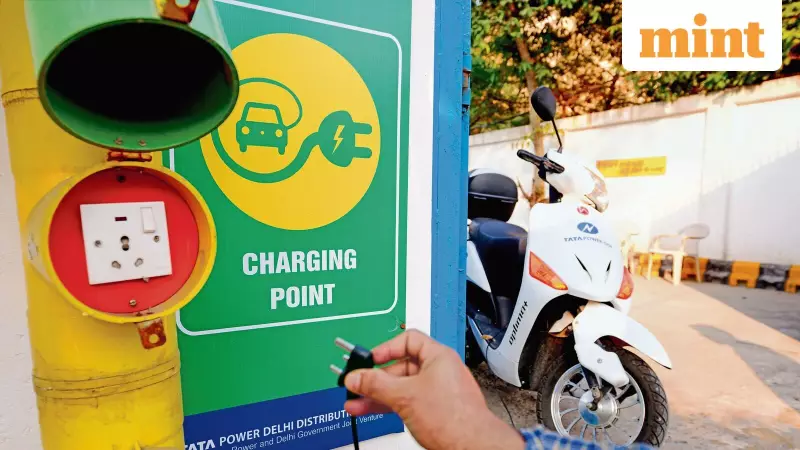
This focus aligns with NITI Aayog's shifted stance, observed in August, towards creating mandates alongside incentives. The summit's agenda will also cover supply chain management in light of the rare-earth crisis, emerging technologies, and the development of robust EV charging ecosystems.
India's previous attempt to attract foreign investment through the 'Tesla scheme' (SPMEPCI) in March 2024, which offered import duty concessions for manufacturers investing at least $500 million locally, did not succeed in bringing the US EV giant on board.
Addressing the Rare-Earth Challenge and Market Realities
The push for the summit is directly influenced by global supply chain pressures. A shortage of rare-earth magnets, triggered by China's export controls in April 2025, exposed a critical vulnerability. China controls roughly 90% of global rare-earth processing, and these components are vital for EVs, defence, and renewables.
In response, India had to tweak its PM E-Drive scheme rules to allow e-truck and e-bus makers to import motors containing these magnets and still receive incentives. To build long-term resilience, the Union Cabinet recently approved a ₹7,280-crore incentive package to establish five rare-earth magnet manufacturing plants in India.
Despite supportive policies like the PLI schemes for auto and advanced chemistry cells (ACC), and consumer subsidies under FAME and PM E-Drive, India's EV penetration remains modest at 7.66% in 2024, compared to a global average of 16.48%, as per a NITI Aayog report. While electric three-wheeler adoption is high, other segments like two-wheelers, cars, buses, and trucks have lagged.
Ashim Sharma of Nomura Research Institute noted that while India's EV sector shows promising growth, major challenges include expanding charging infrastructure and ensuring supply chain resilience for materials like rare earths and batteries.
The market, however, holds significant potential. Valued at about $54 billion in 2025, it is projected to double to $110 billion by 2029. Over 2 million EVs have been registered in India so far in 2025, accounting for nearly 8% of all new vehicle registrations.

In related developments, Vietnamese automaker VinFast has expressed strong interest in the Indian market. CEO Pham Sanh Chau stated that India is a key strategic market and revealed plans to introduce new models, including a 7-seater and potentially electric buses and two-wheelers in 2026. The company aims to expand its dealership network to 100 outlets in 60 cities.
Queries sent to NITI Aayog, the Ministry of Heavy Industries, and Tesla regarding the summit did not receive a response by the time of reporting.





