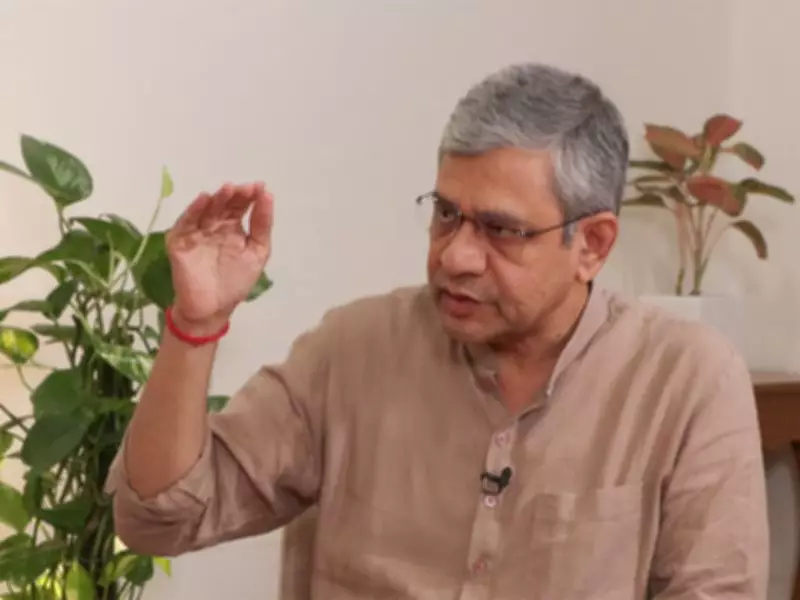
Union Minister for Electronics and Information Technology Ashwini Vaishnaw stated that comparing India's semiconductor manufacturing capabilities with those of Taiwan and South Korea is not very accurate, given the decades-long head start these countries have in building their ecosystems. In an exclusive interview with ANI, Vaishnaw emphasized that India, a relatively new entrant in the field, can leverage widespread artificial intelligence (AI) adoption and the next phase of its semiconductor mission to carve a strong position globally.
Context of Comparisons
Vaishnaw noted that South Korea has maintained a robust semiconductor industry for decades, while Taiwan derives nearly 40 percent of its economy from electronics and semiconductors. These nations have nurtured their ecosystems over four to five decades. In contrast, India began its journey only a few years ago. Therefore, direct comparisons in semiconductor or AI fields would be misleading, he said.
AI Adoption as an Advantage
The minister underscored that AI diffusion across industries could become a major advantage for India. Countries that effectively use AI to boost productivity and achieve widespread AI integration are likely to reap significant benefits from the current technological wave. He observed that AI is already being deployed across various sectors in India, with industries increasingly utilizing AI models and tools provided under the government's AI Mission. Approximately 700 small AI models have been made available free of cost through the mission.

Progress Under Semiconductor Mission
Highlighting achievements under the Semiconductor Mission, Vaishnaw revealed that India has commenced commercial semiconductor production at two facilities. The first chip, manufactured by Micron, began commercial production on February 28, 2026, while a chip by Kaynes started production on March 31, 2026. These are the first commercially manufactured chips in India. A total of 12 semiconductor plants have been approved under the mission, with two already operational. A third facility, CG Semi, is expected to start commercial production in July, and four more units are anticipated to be operational by the end of the year.
Semicon 2.0 Priorities
Vaishnaw outlined the priorities for the upcoming Semicon 2.0 programme. Under the first version of the semiconductor mission, about 40 startups focusing on semiconductor chip design emerged and are now receiving venture capital funding, marking progress in the deep-tech startup ecosystem. In Semicon 2.0, design will be the top priority, he emphasized.
Make in India and Electronics Growth
Defending the broader Make in India initiative, Vaishnaw highlighted that India's electronics production has grown sixfold over the past decade, while exports have increased eightfold. In 2025, electronics became India's third-largest export category, and mobile phones emerged as the country's single-largest exported item last year. The electronics sector has generated approximately 2.5 million new jobs in recent years.
Looking ahead, the minister expressed optimism about growing global interest in India's electronics and semiconductor ecosystem. He anticipated that the second version of the semiconductor mission would attract even larger international participation and investments.