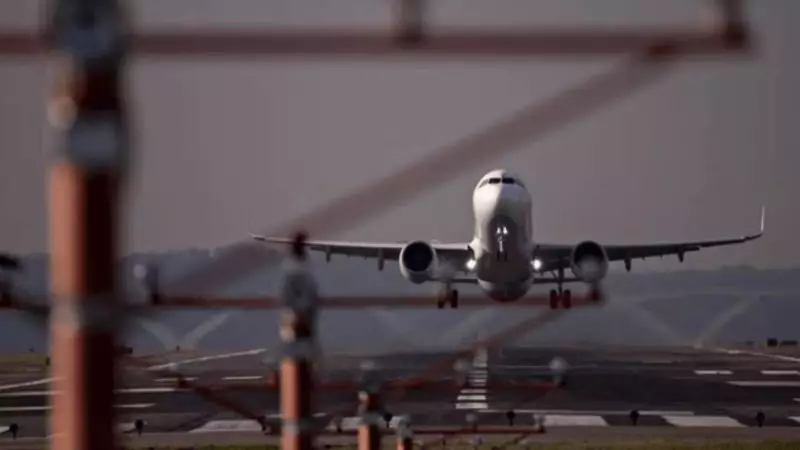
Major Indian airlines IndiGo and Air India are currently avoiding Iranian airspace. This decision comes amid escalating tensions between the United States and Iran. The rerouting is impacting flight operations to several key regions.
Flight Operations Face Significant Disruptions
Air India flights heading to North America are now taking longer westward routes. Avoiding Iranian airspace adds approximately one hour of extra flying time. To accommodate the need for additional fuel, passenger capacity on these flights may need to be reduced. Sources indicate Air India is now utilizing Iraqi airspace for routes that previously crossed Iran.
IndiGo's Regional Network Hit Hard
IndiGo, which does not operate flights to North America, is experiencing substantial operational challenges. Services to Commonwealth of Independent States (CIS) countries, Turkey, and Europe are already affected. These flights are facing longer durations and some cancellations.

If IndiGo must continue flights to CIS nations like Uzbekistan and Kazakhstan while completely avoiding Iran, a major problem arises. The new, longer flight paths would exceed the range of the airline's Airbus A320 aircraft. This situation would force the planes to make refueling stops in third countries.
Industry sources suggest that prolonged inaccessibility of Iranian airspace could force IndiGo to reconsider the viability of these routes. The range limitations of its narrow-body fleet present a significant constraint.
Recent Closure Triggered Immediate Chaos
The situation intensified early on Thursday when Iran suddenly closed its airspace for several hours. This abrupt move caused widespread flight delays and cancellations for international carriers, including the two Indian airlines.
Air India had to call back three of its US-bound flights from Delhi and Mumbai. In a separate incident, an Air India Airbus A350 jet sustained substantial engine damage upon its return to Delhi. The damage occurred when the engine ingested a cargo container during taxiing in low visibility. India's aviation safety regulator, the Directorate General of Civil Aviation, is investigating this event.
Most of IndiGo's flights to and from CIS countries were cancelled for Thursday and Friday. Flights to Istanbul and Europe faced significant delays as they took longer paths around Iran. Data from Flightradar24 showed that an IndiGo flight from Tbilisi was the last non-Iranian passenger plane in the airspace before the closure. Another IndiGo flight from Baku had to return to its origin city.
Airlines Adopt Cautious, Day-to-Day Approach
Although Iran reopened its airspace after a few hours, the airlines remain cautious. Industry sources confirm that both Air India and IndiGo continue to avoid the region for now. They cite the unpredictable situation and are evaluating conditions daily to prioritize passenger safety.
The backdrop involves large-scale anti-government protests in Iran and a violent state crackdown. Threats of potential US military intervention have increased regional instability. Airlines globally avoid overflying active conflict zones as a standard safety practice.
Official Statements from the Carriers
Air India issued a passenger advisory explaining the situation. "Due to the emerging situation in Iran, the subsequent closure of its airspace, and in view of the safety of our passengers, Air India flights overflying the region are now using an alternative routing, which may lead to delays. Some Air India flights where currently rerouting is not possible are being cancelled," the statement read.
IndiGo also released an advisory, stating, "Due to the sudden airspace closure by Iran, some of our international flights are impacted. Our teams are working diligently to assess the situation and support affected customers by offering the best possible alternatives."
The ongoing geopolitical tensions and Pakistan's existing ban on Indian aircraft using its airspace compound the operational difficulties. If Iranian airspace remains frequently closed or unsafe, challenges for Indian aviation on westbound routes could intensify further.