

Indian Auto Industry Reports Robust Growth in March and FY26
Major automobile manufacturers in India have reported impressive double-digit growth in wholesale dispatches during the month of March. This positive trend comes despite ongoing geopolitical tensions in West Asia, which have not significantly dampened consumer demand within the domestic market. However, industry leaders have highlighted that these international conflicts are creating substantial cost pressures that are beginning to affect operations.
Price Hikes Announced by Leading Manufacturers
In response to these mounting financial challenges, several prominent auto makers have already announced price increases effective from April 1. Companies including Tata Motors, JSW MG, BMW, Mercedes-Benz, and Audi have confirmed price adjustments ranging between 0.5% and 2%. These hikes are directly attributed to rising input costs and increased logistics expenses. Market leader Maruti Suzuki has also indicated plans to raise prices in the near future, signaling a broader industry trend.
Strong Performance in Financial Year 2025-26
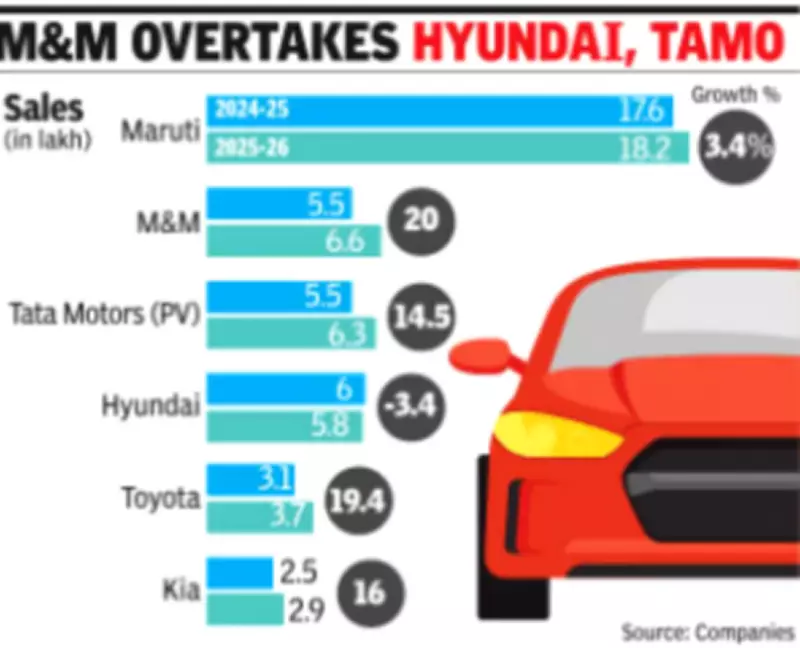
The automotive sector demonstrated remarkable resilience throughout the last financial year. Industry estimates provided by Tata Motors and Maruti Suzuki reveal that total passenger vehicle dispatches climbed to approximately 47 lakh units in FY26, up from 43.3 lakh units in FY25. This represents a healthy growth rate of 8.2% year-over-year.

Maruti Suzuki maintained its dominant position with domestic sales reaching 18.2 lakh units in 2025-26. Mahindra & Mahindra (M&M) recorded particularly strong performance, selling 6.6 lakh units in FY26 to surpass both Tata Motors and Hyundai. Tata Motors sold 6.3 lakh units during the same period, while Hyundai moved 5.8 lakh units.
Geopolitical Factors Driving Cost Pressures
Despite the robust demand environment, automotive executives have expressed growing concerns about rising costs linked to geopolitical uncertainty. Partho Banerjee, Head of Marketing and Sales, emphasized the challenging situation, stating, "Cost pressures are the only headwind we are facing and we need to take a call on how much cost we need to pass on to the customer. Right now we are absorbing the cost, but we cannot keep on absorbing it indefinitely."
Industry insiders note that longer shipping routes and increased component costs are contributing significantly to these financial pressures. While production plans remain unchanged for now, companies are closely monitoring the situation.
Analyst Perspectives on Future Challenges
Gaurav Vangaal, Associate Director at S&P Global Mobility, observed that March volumes benefited from year-end sales targets and festive demand. However, he issued a cautionary note about upcoming challenges: "Rising input costs, a weaker rupee, and ongoing supply chain disruptions are set to weigh on demand in the months ahead."
Shailesh Chandra, Managing Director and CEO of Tata Motors Passenger Vehicles, offered a more optimistic long-term view while acknowledging risks: "Growth momentum is expected to sustain, led by SUVs, CNGs, and EVs. The industry will need to closely monitor geopolitical developments to mitigate potential supply-side risks."
Ravi Bhatia, President of JATO Dynamics India, noted that the demand base has strengthened following GST 2.0 implementation, though significant risks remain on the horizon.
The Indian automotive industry finds itself at a critical juncture—enjoying strong sales growth while simultaneously navigating complex cost challenges arising from global geopolitical tensions. How companies manage this balance between maintaining demand and addressing rising expenses will determine the sector's trajectory in the coming months.






